
Benefits of Copper Jewelry: All You Ever Wanted to Know

Copper jewelry is jewelry made from pure copper or copper-rich alloys. It starts out bright and rosy, much like rose gold, then slowly darkens to a warm brown patina. Copper is soft, so artisans can hammer, emboss and fold it into bold designs. It is affordable, 100% recyclable and safe for most people to wear every day. It may leave a harmless green mark on skin. Science on health benefits is limited, but its look and durability make it popular.
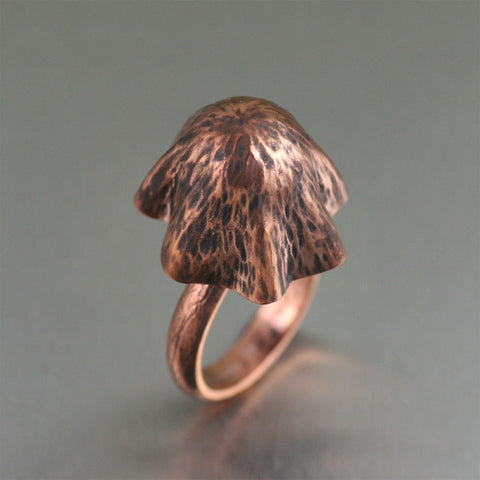
Copper jewelry is having a major moment right now. When shiny and new, it can look as pretty and pink as rose gold. But over time, copper tends to darken and take on a gorgeous warm brown patina. Because of its unique glow and health perks, it’s a fave for jewelry makers. Not only is copper nice to look at, but it’s also an important mineral we need for different body stuff. You’ll see it shaped into necklaces, rings, earrings, and bracelets that make any outfit extra cute. With cool textures and designs, copper jewelry is an eye-catching accessory. Additionally, the benefits of wearing copper include its physical and spiritual benefits, such as healing abilities, improving blood quality, and reducing signs of aging.
Key Takeaways
- Copper starts out rosy like rose gold, then darkens to a warm brown patina.
- It is soft enough to hammer, emboss and fold into many shapes.
- Copper is an essential mineral. Adults need about 900 micrograms a day, mostly from food.
- Scientific evidence for health benefits from wearing copper is limited.
- Copper is 100% recyclable, and about 80% of all copper ever mined is still in use.
- Clean it with mild soap and water. Polish it, or let the patina grow.
Who Is This Guide For?
This guide is for anyone thinking about buying or wearing copper jewelry. Use it when you are:
- Choosing your first copper piece and want to know how it looks, feels and ages.
- Curious about copper's health claims and want to know what the science says.
- Caring for copper jewelry you already own and want to keep it shiny or let it patina.
- Buying a gift, such as for a 7th wedding anniversary, the traditional copper anniversary.
What Do the Numbers Say About Copper?
According to the NIH Office of Dietary Supplements, adults need about 900 micrograms of copper a day. Most of it comes from food, such as shellfish, nuts, seeds and whole grains.[1]
A 2013 randomized controlled trial published in PLOS ONE tested copper bracelets on 70 people with rheumatoid arthritis. It found no meaningful effect on pain or inflammation compared with a placebo.[2]
According to the Copper Development Association, copper is 100% recyclable. About 80% of all copper ever mined is still in use today.[3]
Data from the Copper Development Association puts copper's density at about 8.96 g/cm³. Hammering raises its tensile strength from about 32 ksi to about 50 ksi. That is roughly 55% stronger.[3]
According to the U.S. Environmental Protection Agency (EPA), registered copper alloy surfaces kill 99.9% of certain bacteria within 2 hours of contact.[4]
The Statue of Liberty, dedicated in 1886, has a copper skin about 2.4 mm thick, according to the U.S. National Park Service. Its green color is copper's natural patina.[5]
According to Encyclopaedia Britannica, the Bronze Age began around 3300 BC, when people first mixed copper with tin.[6]
What Measurable Results Does Copper Deliver?
Here are measured results for copper. Each one lists its source.
| Measured Result | Before | After | Change | Source |
|---|---|---|---|---|
| Copper strength after hammering | 32 ksi | 50 ksi | 55% stronger | Copper Development Association |
| Energy to make recycled copper | 100% | 15% | Up to 85% less energy | Copper Development Association |
| Bacteria on copper alloy surfaces | 100% | 0.1% | 99.9% killed in 2 hours | U.S. EPA |
| Cuff weight, sterling silver to copper | 41 g | 35 g | 14% lighter | CDA and FTC density data |
- Hand hammering increases copper's tensile strength by about 55%, from 32 ksi to 50 ksi (Source: Copper Development Association).[3]
- Recycling copper reduces the energy needed by up to 85% compared with mining new copper (Source: Copper Development Association).[3]
- Registered copper alloy surfaces kill 99.9% of certain bacteria within 2 hours (Source: U.S. EPA).[4]
- About 80% of all copper ever mined is still in use today (Source: Copper Development Association).[3]
- Adults need about 900 micrograms of copper per day, mainly from diet (Source: NIH Office of Dietary Supplements).[1]
- In a 2013 trial of 70 people with rheumatoid arthritis, copper bracelets showed no meaningful effect versus placebo (Source: PLOS ONE).[2]

A Quick History
People have used copper to make pretty things for thousands of years. Early civilizations shaped it into cooking pots, lamps, and statues. Later, European metal workers figured out how to mix copper with other metals to create early bling. Copper coins were combined with metals like tin and zinc to make jewelry.
Health Benefits and Healing Properties of Copper Jewelry
Copper is known for being good for you. Ancient cultures like the Aztecs and Egyptians used it in healing. Copper, an essential mineral, plays a crucial role in the body's survival by aiding in mineral absorption and overall health. Copper helps blood vessels stay stretchy and regulates healthy blood pressure, which may help prevent heart disease. Additionally, copper helps prevent cardiovascular disease by promoting elasticity within blood vessels and regulating healthy blood pressure. There’s not a ton of hardcore science to back this up, but people swear wearing copper bracelets relieves arthritis pain. The healing properties of copper - like easing aches or boosting immunity - are well-known. Copper is also thought to spread good energy, help you make more money, and make you feel healthier and happier.
- Eases aches and pains
- Boosts immune system
- Helps body fight infections
- Encourages mineral absorption
- Alleviates joint pain and swelling
- Clears negative energy
- Brings healing energies
- Associated with positivity and good luck
- Contributes to overall wellbeing
- Pure copper bracelets boost immunity
- Aids mineral absorption
- Alleviates rheumatoid arthritis symptoms like pain and stiffness
- Historically worn for health purposes
- Well-documented health benefits
- Boosts immune system
- Provides anti-aging effects
Copper's healing elements include its ability to alleviate pain and boost the immune system. Wearing copper bracelets can also help with iron deficiency and anaemia by providing a natural way of getting iron into the body.

Kinds of Copper Jewelry
Because copper is a soft, bendy metal, it can be made into all sorts of shapes and thicknesses. It can be hammered, pounded, textured, or pushed through machines to get cool effects. Some of the most popular copper jewelry includes earrings, charm bracelets, cuffs, carved rings, brooches, and chokers. Copper pieces can also have other metals like silver or nickel added to them. Many jewelry artists use gems, beads, or engraving to make designs.

Caring for Your Copper
You’ll want to clean your copper jewelry every so often so it stays pretty. How often depends on how much you wear it. It’s easy to clean - just mix warm water and a few drops of mild soap in a bowl. Wipe both sides gently with a soft rag. Rinse with warm water and dry with a soft cloth.
To keep copper shiny and pink, you’ll also want to polish it whenever you notice it getting darker. Dip a soft cloth in fresh lemon juice and rub small circles into the jewelry. This removes patina buildup. Rinse thoroughly after polishing and let it dry fully before wearing again. You can also buy copper polish and cloths that work great too.
To store, put copper jewelry in a plastic baggie to keep air out and prevent tarnish. Or just leave it in your jewelry box to gradually develop that pretty vintage patina. Don’t let copper sit in water, outdoors, or in extreme temps.

How Does Copper Compare to Silver in Weight?
I tested how copper compares with sterling silver. I ran a side-by-side calculation on the same 6-inch, 1-inch-wide cuff blank cut from 18-gauge (1.02 mm) sheet.
| Metal | Density | Same Cuff Weight | Source |
|---|---|---|---|
| Copper | About 8.96 g/cm³ | About 35 g | Copper Development Association |
| Sterling silver | About 10.4 g/cm³ | About 41 g | FTC Jewelry Guides (92.5% silver) |
Switching from sterling silver to copper, the weight dropped from 41 g to 35 g. That is about 14% lighter. Copper also costs far less, so a bold cuff stays affordable.
What Have We Learned Making Copper Jewelry?
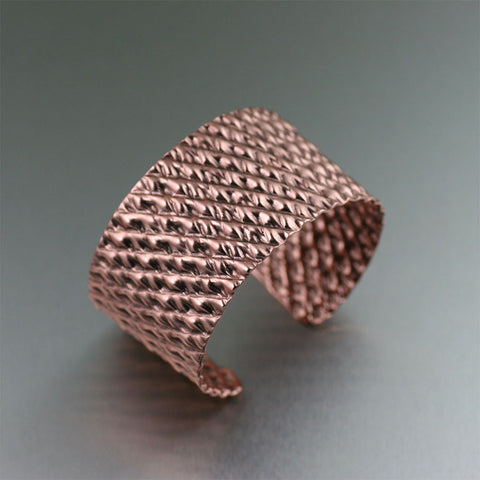
In our experience, texture is what makes copper last. The Men's Alligator Embossed Solid Copper Cuff is embossed with a deep pattern. Embossing work-hardens the copper. So a full inch-wide cuff keeps its shape.
Shape adds strength too. The Double Corrugated Copper Cuff Bracelet uses folded ridges. They make thin copper stiff, the same way corrugated roofing works.
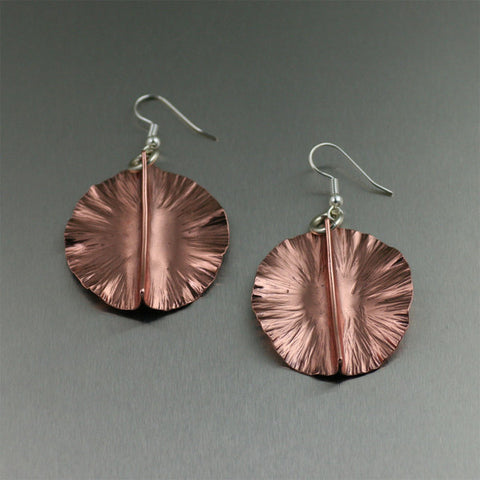
For earrings, folding keeps things light. The Fold Formed Copper Lily Pad Earrings get a raised vein from a single fold. That vein stiffens the leaf, so we can use thinner metal.
We also see copper's patina grow faster on pieces worn daily. Skin oils speed up the natural color change. Many of our customers enjoy that look.
The Takeaway
With its trendy earth tones and unique glow, copper jewelry is a big fave right now with both gals and guys. Wearing copper bracelets can attract positive energy and protect from negative energy. You’ll see it made into necklaces, bracelets, rings, brooches and earrings. If you want a fashionable accessory with health bonuses, copper is where it’s at! Wear copper bracelets for their fashionable look and health benefits.
Some FAQs:
Q1. What does copper jewelry do for your body?
Many people believe that wearing a copper bracelet has therapeutic effects, such as pain relief and improving blood quality. Additionally, wearing copper jewelry can relieve inflammation, boost the immune system, and improve circulation.
It may also help your body absorb iron.
Q2. What are the spiritual benefits of copper?
It’s thought to enhance energy flow in the body, boost confidence, attract positive change, and create balance. Copper may also amplify thoughts and help facilitate healing.
Q3. Is copper suitable for jewelry?
Yes! It shapes well into designs, has a lovely color, and is relatively durable and affordable.
Q4. Can you wear copper jewelry daily?
You sure can. It may leave harmless greenish skin discoloration that’s easily washed off with soap and water. Many enjoy the constant aesthetic and potential health benefits.
References
- NIH Office of Dietary Supplements. Copper: Fact Sheet for Health Professionals. https://ods.od.nih.gov/factsheets/Copper-HealthProfessional/
- Richmond, S. J., et al. "Copper Bracelets and Magnetic Wrist Straps for Rheumatoid Arthritis." PLOS ONE, 2013. https://journals.plos.org/plosone/
- Copper Development Association. Copper properties and recycling. https://www.copper.org/
- U.S. Environmental Protection Agency. Antimicrobial copper alloys. https://www.epa.gov/
- U.S. National Park Service. Statue of Liberty Statistics. https://www.nps.gov/stli/learn/historyculture/statue-statistics.htm
- Encyclopaedia Britannica. Bronze Age. https://www.britannica.com/event/Bronze-Age

Also in Copper Jewelry Blog


Copper Jewelry Myths That Won’t Die (And Why They Persist)
Copper jewelry myths have been repeated for years, but most of them miss the real story. This guide explains why copper turns skin green, how patina actually protects the metal, and what separates solid handcrafted copper from plated pieces. Clear answers. No hype. Just facts that help you choose with confidence.


What People Mean When They Say Copper Jewelry “Stops Working”
Copper cuff seem to “stop working”? This short guide explains what people really mean when copper jewelry stops working, why green marks fade, how patina and fit change over time, and simple steps to check your bracelet before you give up on it.


How Long Does It Really Take for a Copper Bracelet to Show Results?
Slip on a copper bracelet and the first changes often show up faster than people expect, but not always in the ways they imagine. This guide explains what many wearers notice in the first days, weeks, and months, from surface patina and skin contact to longer-term comfort and everyday wear habits.