
How the Copper in My Jewelry Is Verified


Key Takeaways
| Question | Short Answer |
|---|---|
| How is copper jewelry verification done for John’s cuffs? | It starts with formal mill reports that list the chemical makeup of each copper batch, then continues with studio records that tie each cuff back to that report. |
| What purity level does the copper reach? | The inspection report for one current batch lists copper at about 99.997 percent, with other elements present only in trace ppm amounts, which is higher than the 99.9 percent spec. (See Report Below) |
| Why should a shopper care about mill reports? | They give proof that a cuff is really solid copper, not a random alloy or copper colored plating, which matters for color, patina, and skin comfort. |
| Can copper cuffs be checked again after they are made? | Yes, non destructive XRF testing can scan a finished cuff to confirm its metal content without hurting the piece. |
| How do John’s cuffs differ from many plated bracelets? | John starts from solid mill verified copper, forms the textures directly into that metal, and keeps a clear trace from mill certificate to finished bracelet. |
Is This Copper Cuff Actually Copper, Or What?

Have you ever slid a copper cuff over your wrist and then had a tiny voice ask, “Wait, is this even real copper?” I hear that question alot in my studio, even when the hammer marks are still fresh on the metal.
Why should you have to guess what is touching your skin all day? You really should not, and I am a bit stubborn about that. So before a strip of metal ever bends into a bracelet, I already know exactly what is in that copper, because the mill has handed me a formal report that spells it out line by line.
What does a mill report have to do with a pretty hammered cuff that sits next to your watch? It has everything to do with it, which sounds dramatic, but it is true in a very boring paperwork sort of way. That sheet tells me the alloy, the purity, the strength, and even which batch the copper came from, so I can trace your cuff back to a specific melt of metal.
You might wonder, “Is this just some fancy marketing trick with extra paper?” It is actually the opposite, because the report is not written by me at all. It is written by the producer that melts and draws the copper, and it follows engineering standards that people use for big projects, not just jewelry. I just borrow that serious, slightly nerdy world and point it toward the little bracelet on your wrist.
If you like earthy style and slow patina but you also like proof, you sit in the exact sweet spot this article is for. You want the feel of a handmade cuff, but you also want to know why the copper itself can be trusted, and that is exactly what copper jewelry verification is about in my shop.
Why Copper Purity Matters For A Cuff You Wear All Day
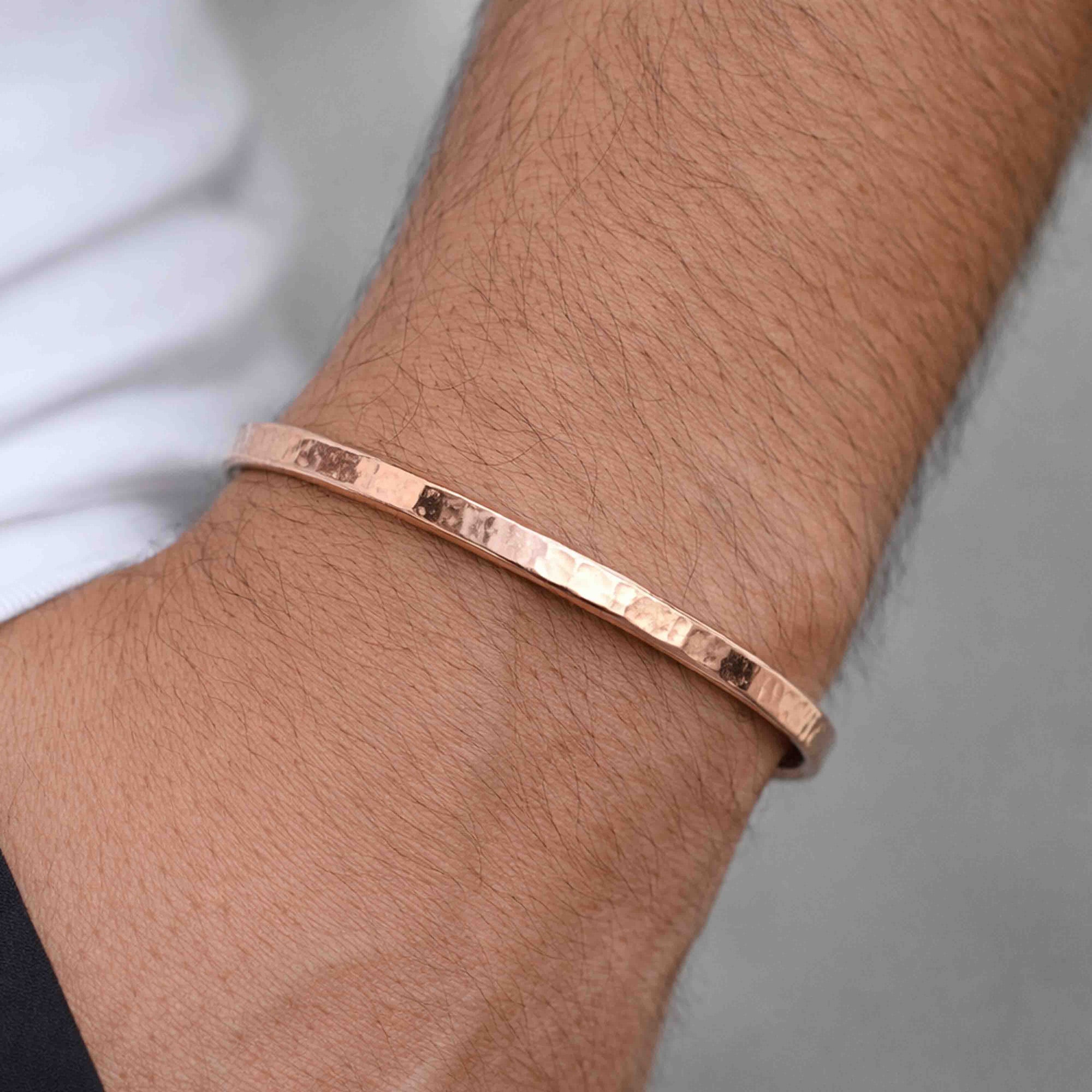
What changes if the copper in a cuff is very pure, instead of some mystery blend? At first glance, the difference looks tiny, but your wrist feels it over time.
Color is the first place purity shows up. Have you ever seen a cuff that looks a little dull brown right out of the box and thought, “Shouldn’t copper look richer?” The answer is yes, it should, and consistent color comes from consistent composition. When the copper content is high and the other elements stay in tight ranges, the metal stays that warm, deep orange tone that people expect instead of drifting muddy or flat.
How about patina, that slow change that sometimes makes people nervous and other people weirdly happy? A high purity copper cuff will darken and sometimes go a soft brown or russet over time. If you see harsh, uneven spots or surprise colors, it can mean the surface or the alloy has extra stuff in it. Pure copper gives you a more predictable patina story, which sounds like a small nerdy thing, but it matters if you plan to wear the same cuff for years.
Do people with sensitive skin need to care about purity too? They usually care the most, even if they do not use that word. If you react badly to nickel or other metals, you do not want a copper-colored alloy that hides unknown ingredients. Mill verified copper lets me check for those elements in the report before that metal ever gets close to your skin.
And yes, some customers ask me about joint comfort, stiffness, and all the wellness stories they have heard around copper. I never promise outcomes, because jewelry should not pretend to be medicine, but I do make one promise clearly. If you choose one of my verified copper cuffs, the metal that touches your skin is actually copper, not a random mix with a thin reddish face. That is the starting point for any honest talk about what the bracelet might feel like in daily life.
What A Mill Report Is In Plain Language
So what is this “mill report” thing I keep waving around in my head, and why should you care about a piece of paper with tiny numbers? In simple terms, a mill report, or mill test report, is the metal producer’s birth certificate for that specific batch of copper.
Who writes it, me or the mill? The mill does, and that point matters. The report comes from the company that melted, cast, and drew the copper rod or bar, and it follows standards that engineers, builders, and machine shops use every day. They are not writing it just for one jewelry guy in San Francisco; they are writing it because industry expects proof, and I piggyback on that expectation for your bracelet.
Mill Report

What exactly is on that report? You usually see the product description, the standard it meets, the size, the order or lot number, and a table with chemical composition. In one of my recent certificates (shown above), the specified copper minimum is set at about 99.99 percent, and the actual measured value comes in around 99.997 percent. The other elements sit down in low parts-per-million ranges that barely move the needle.
Does this sound technical, maybe a bit too technical for a bracelet that looks so simple? It can, but once you know that a cuff starts life with that kind of documentation, the whole piece tells a different story. You are no longer looking at some anonymous metal strip shaped into a curve; you are looking at copper that has been checked against accepted standards before my tools ever touch it.
And here is one more quiet question that matters. Would you rather trust a claim printed in a catalog, or numbers that came off certified lab instruments at the mill? I trust the instruments, and I think most people would if they saw how much work goes into those reports, even if the document itself looks a little dry and sleep-heavy at first glance.
Inside A Copper Mill Report: Fields That Actually Matter
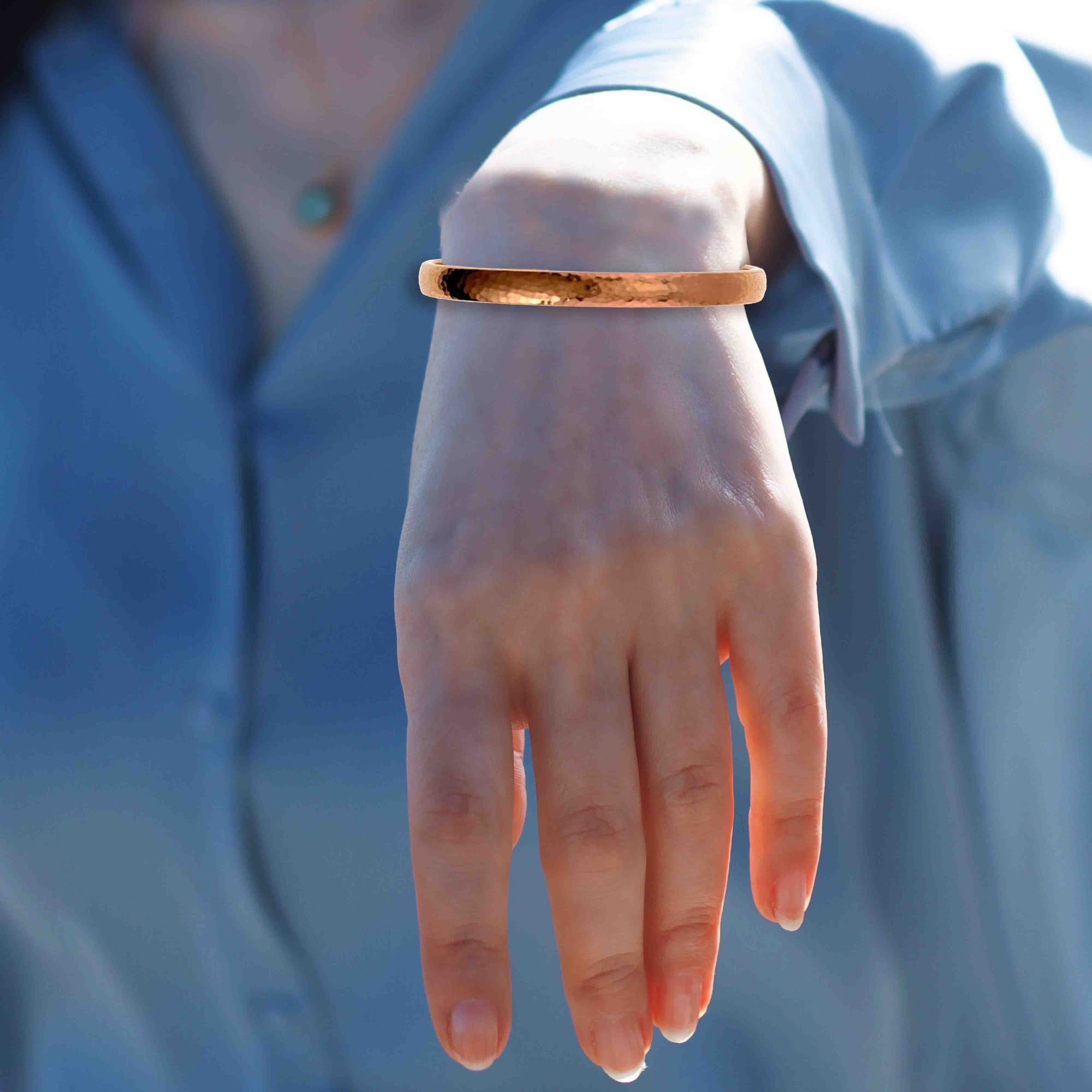
If you opened a mill report for your cuff’s copper today, would it look like secret code? It often does the first time, but the main fields are more friendly than they seem.
Which parts should you actually look at and which parts can you ignore while you sip your coffee? Here are the fields I care about most as a jewelry designer and metal worker:
| Report Field | What It Means In Plain Words | Why It Matters For Your Cuff |
|---|---|---|
| Product description | The alloy type, form, size, and temper. | Confirms I got the exact copper bar or rod I ordered, so thickness and hardness will match my design. |
| Order / lot number | A unique ID for that exact batch of copper. | Lets me trace a finished bracelet all the way back to one melt of metal. |
| Chemical composition | Percent of copper and tiny amounts of other elements. | Shows the copper purity hits the level I want for color, patina, and skin comfort. |
| Mechanical properties | Strength, hardness, ductility values. | Tells me how far I can bend, hammer, and texture without cracking the cuff. |
| Standards and specs | References like ASTM numbers. | Shows the copper meets known industry rules, not just somebody’s opinion. |
| Mill identity and origin | Name and location of the producer. | Adds transparency about where the metal was born before it reached my bench. |
Why does that little order number matter so much? Imagine you own a specific 7mm Domed Copper Cuff and later you have a question about the copper. If I have kept my records right, I can look up which bar that cuff came from, which report belongs to that bar, and what the certificate said about the composition. One tiny series of numbers glues together the entire story.
And that chemical table with its long list of elements, does it really help a shopper? It does when you want to know if the copper is actually above 99.9 percent, or if there is more of a certain element that can affect color or feel. I see those numbers before I ever start cutting slugs for cuffs, so by the time you see a bracelet, the metal already passed that quiet test.
How I Use Mill Reports Before I Even Pick Up A Hammer
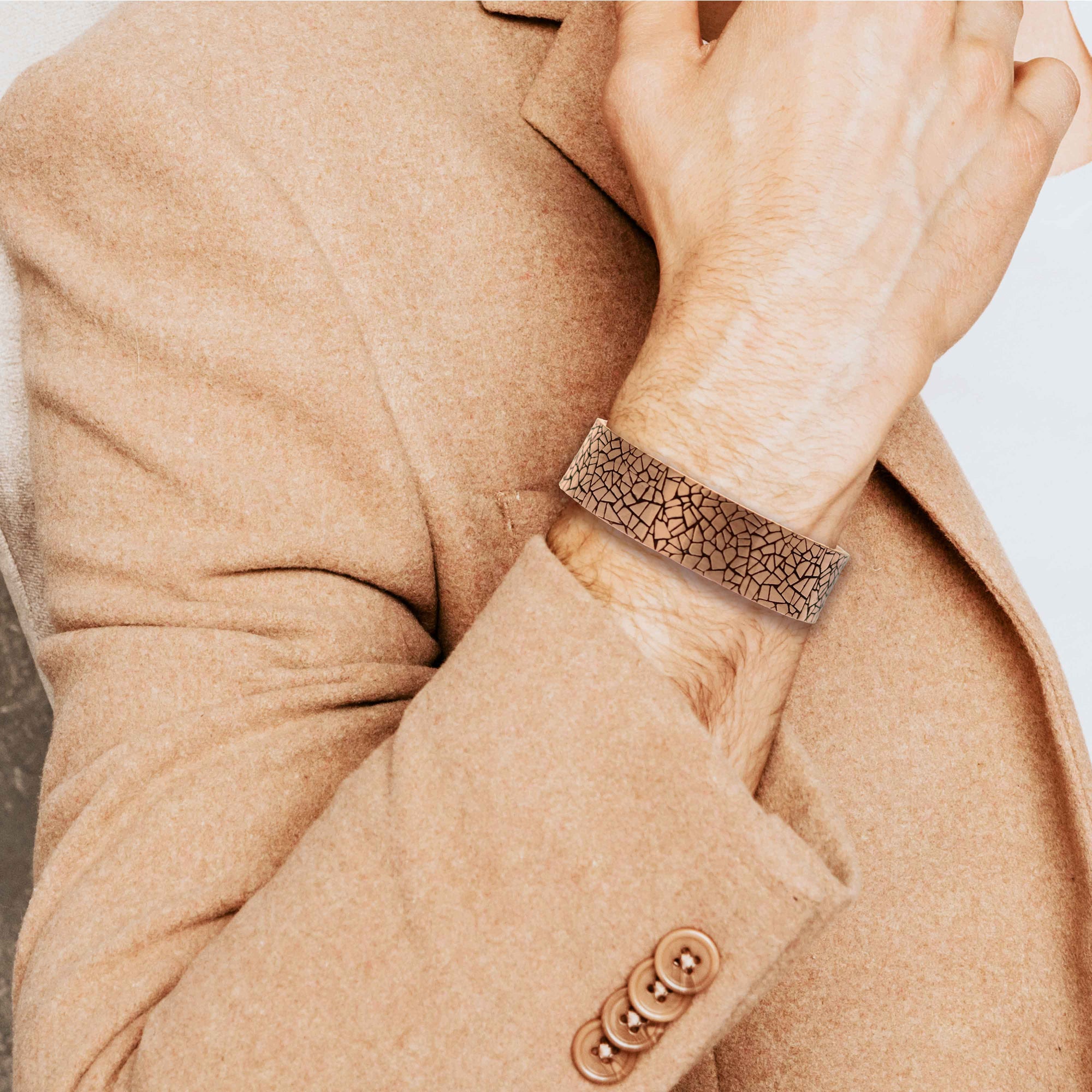
So what happens in my studio the day a new delivery of copper comes in, and how do those reports show up in real life? The answer looks a bit like a mix of warehouse day and science class, but with more hammers waiting.
First, I check the labels on the copper against the packing slip. Does the size match what I ordered, is the temper correct, are the bars or rods straight and clean? Then I pull the mill report that came with that shipment and match the order number on the paper to the markings on the bundles. If those numbers do not line up, my tools stay on the bench.
Have I ever had a time when something felt off? Yes, once the report had a spec line that did not match what I usually order, and the numbers made my eyebrows climb up farther than they should. I called my supplier, asked a few stubborn questions, and they found that the wrong certificate had been attached. The metal itself was fine, but without the correct report, that batch was not going to turn into cuffs in my studio.
After I am satisfied that the documentation fits, I log that order number into a simple studio record. Which designs will this batch feed? Maybe a run of slim stacking cuffs, a series of bark textured men’s cuffs, and a few wider domed pieces. Those notes let me say later, “This group of cuffs all came from copper batch X,” instead of just hoping my memory does not wander off.
You might wonder if this process slows me down. It does slow me a bit on day one, but it speeds the whole story in the long run. When a customer writes with a question about a specific cuff, I can reach back to that mill report instead of shrugging and hoping, and that feels much better than guessing on metal that will live on someone’s wrist for years.
From Mill To Wrist: One Verified Copper Cuff Journey
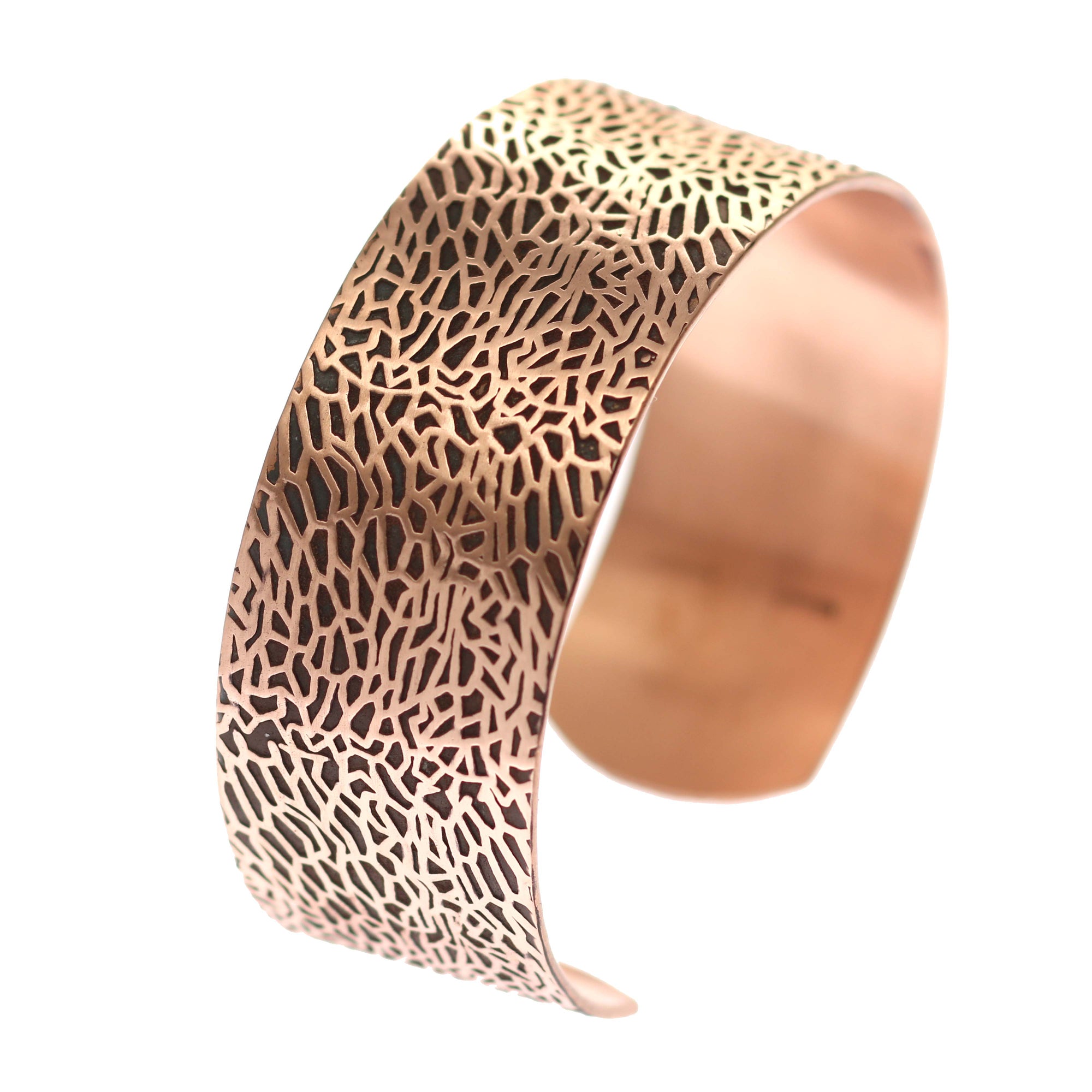
What does the full trip from mill certificate to finished cuff look like if we follow one piece of copper all the way through? Let us walk that line slowly.
First stop is the mill itself, where copper is melted, cast, and drawn into rod or bar that matches the spec. The mill runs its tests, logs the results, and prints the report that shows composition and properties. That is where your cuff’s story quietly starts, even though you never see that room or smell that metal.
Next, the copper travels to my supplier and then on to my studio in San Francisco. When it arrives, I match the order numbers, check the report, and decide which designs this batch will feed. A thicker rod might become bold men’s cuffs with deep embossed patterns, while a narrower size might turn into lighter hammered cuffs that stack well.
Then the real hand work starts. I cut lengths, round the ends, and anneal the copper so it moves under the hammer instead of fighting. Have you ever watched metal slowly curve under repeated strikes and thought, “How does it not crack?” The answer ties back to those mechanical properties in the report; they tell me how far I can push the metal during forming.
Once the shape is right, I add texture: bark, hammered, mosaic, bubble, or a clean brushed finish. Each pattern needs a slightly different balance of force and support, but all of them stay within the limits that the report and my own testing suggest. After that, I smooth sharp edges, burnish the surface, and seal or leave the metal bare depending on the design.
By the time the cuff rests in a box with my name on the tag, the paper trail goes all the way back to that original mill report. It is a long journey for a simple curve of copper, but that long journey is why I can answer a very short question from you with more than just “trust me.”
Skin, Sensitivity, And Wellness Questions: How Documentation Helps

Why do so many messages start with “I have sensitive skin, will this bother me?” or “Will this cuff turn me green?” I never get tired of those questions, because they show that people are paying attention to what touches their body.
A mill report cannot tell me how every single wrist on earth will react, but it does tell me which elements are present and in what tiny amounts. If you worry about nickel, for example, that table lets me see whether nickel was detected or sits down below the test limit. It also shows me if there are strange levels of lead or other elements that have no place in jewelry.
What about the green marks that sometimes show up under copper cuffs, do they mean the metal is fake? They usually mean the metal is reacting with sweat and skin acids to form copper salts on the surface, which can happen even with very pure copper. For many people the mark wipes off with soap and water, and some folks even see it as a sign that the copper is “doing something,” though that part is very personal. Documentation does not stop that chemistry, but it tells you that the base metal is honest copper, not a coating over something unknown.
Do I hear wellness questions, like “Will my wrist feel better in a week?” I do, almost daily. My answer stays calm and a bit boring: copper cuffs are jewelry, not medical devices. Some people feel better, some feel nothing at all, and the studies are mixed. What I can promise is that if you are buying a copper bracelet because you want copper on your skin, mill reports and careful sourcing make sure you actually get copper, which is the only honest starting point for any wellness hopes.
For shoppers who want to read more about how people describe their experiences, the article on copper jewelry feelings and experiences shares real questions and stories in more depth, in case your curiosity still taps you on the shoulder after this section.
Myths About “Real Copper” Jewelry That I Hear All The Time

Why do some myths about copper keep showing up like a song stuck on repeat? They sound simple, and simple stories are hard to shake once they settle into people’s heads.
Here are a few I hear most often, along with the quieter facts that sit behind them:
-
“If it is heavy and reddish, it must be pure copper.”
Weight and color can give hints, but alloys and plating can fool both. A heavy base metal with a copper colored finish can still feel solid, so only chemical data and real documentation close the loop. -
“Any copper colored metal counts as copper jewelry.”
This one sneaks in through catalogs alot. Some bracelets use brass, bronze, or other alloys with reddish tones. Those metals have their own beauty, but they are not the same as a cuff cut from solid high purity copper stock. -
“You just have to trust the label; nobody checks this stuff.”
In my studio, I check it on paper before I ever check it with a hammer. That means mill reports up front and, when needed, extra testing such as XRF so I do not lean on empty words.
Do I think every single brand is out there trying to trick people? No, I think many small makers are honest but may not have easy access to documentation or may not know how to ask for it. At the same time, some mass produced bracelets travel through long supply chains where nobody talks about mill certificates at all.
You really see the contrast when you scroll past pages of “copper” cuffs and bangles on Amazon and Temu for under twenty dollars. Most of those pieces are bulk drop shipped from factories in India, Turkey, or China, with no sign of any proper metal paperwork. If you asked many of those sellers for a real mill report, I’d expect a long pause or a vague reply, not a clear certificate that could honestly pass muster.
For a shopper, the simplest move is to ask, “Do you use mill verified copper for this bracelet?” If the answer drifts around and never lands, that tells you something. If the answer is clear and specific, you learn something even more useful, and the bracelet on your wrist starts to feel grounded in more than just a nice color.
Solid Verified Copper Cuffs Versus Plated Or Mystery Metal

How different is a solid copper cuff from a plated or mystery core bracelet that looks similar at first glance? The difference shows up in how the piece ages, how it feels, and how honestly you can talk about it.
Here is a simple comparison that I keep in mind when I design and source:
| Aspect | John’s Verified Copper Cuffs | Typical Unverified Metal Bracelets |
|---|---|---|
| Core material | Solid copper stock chosen for high purity and good workability. | Base metals or alloys that may not be named clearly. |
| Verification | Mill reports show composition and standards for each batch. | Often no accessible documentation for the buyer. |
| Surface | Texture and finish hammered directly into the copper itself. | Thin plating or coating that can wear off and reveal another metal. |
| Long term behavior | Patina forms slowly on the same copper that runs through the whole piece. | Surface may chip, flake, or wear, changing color in sharp patches. |
| Story you can tell | Clear path from mill to cuff, with real documents to back it. | Vague language around “copper tone” or “mixed metal” without details. |
Have you ever seen a bracelet where the edges change color in sharp lines after a few months? That is usually plating giving way, not patina evolving on solid metal. In contrast, a verified copper cuff darkens more evenly, and any bright spots you polish back come from the same copper that sits deeper inside the piece.
Does this mean plated or alloy bracelets are always bad? Not at all; they can be fun and budget friendly. But if you are buying a cuff because you want copper itself on your skin or you care about long term integrity, knowing the metal is solid and documented gives a different kind of peace, the quiet sort you only notice when it is gone.
For people who love hammered textures in particular, the article on Hammered Copper Jewelry for Fall Outfits shows how these solid cuffs show up in real clothing, so you can picture how a verified copper piece lives beyond the workbench.
How To Ask Any Jeweler About Copper Jewelry Verification

What if you are standing in a store or scrolling a site that is not mine, and you want to know if their “copper” cuff is actually copper? You do not need a chemistry degree to ask useful questions; you just need a short list.
Here are a few simple questions you can keep in your pocket:
- “Do you receive mill reports or any kind of metal certificate for the copper you use?”
- “Is this bracelet solid copper all the way through, or is it plated over another metal?”
- “Can you tell me anything about the alloy or the standard it meets?”
What kind of answers should raise a small red flag in your mind? If someone says, “It is just copper colored, I’m not sure what the base is,” that tells you they do not have a clear line back to documentation. If they say, “We buy it from a trusted supplier but we do not have any paperwork,” that may be honest, but you still lack proof.
On the other hand, if the seller can say, “Yes, this comes from stock that meets a specific standard, and we have certificates on file,” that is a much stronger base. Even if they do not email you the whole report, the fact that they know it exists and what it says shows a different level of care.
In my case, if you ask about a cuff’s copper, I can tell you that it began as solid stock, came with mill documentation, and was then cut, formed, and finished in my San Francisco studio. That story might not sound flashy, but it is clear, and clear is exactly what you want when metal will sit on your skin, day after day.
XRF Testing: Extra Proof For The Super Curious

If mill reports already prove the metal, why would anyone want more testing? Some people just like double checks, and I respect that instinct. That is where XRF testing steps in.
What is XRF in simple words? X-ray fluorescence testing uses a focused beam of X rays that hits the metal and makes each element give off its own “reply” signal. The machine reads those replies and reports which metals are present and how much of each shows up at the surface. The best part for jewelry is that the test does not cut, scratch, or dissolve the piece, so your cuff comes back from the scan looking the same as when it walked in.
Where do people get this kind of test done? Many assay offices, some pawn shops, and some jewelers with serious metal buying operations own XRF units. Prices vary, but a single test often runs in the range of a few dollars to a few tens of dollars per item, sometimes bundled cheaper if you bring in a group. That fee helps cover the cost of a machine that can easily sit in the five-figure price range.
Does XRF replace mill reports? For me it does not; it adds a second lens. Mill reports show what the producer measured on the material as it left the mill. XRF can check a finished cuff in real time, see if plating is present, and confirm that the surface matches the promised alloy. For a solid copper cuff that began with verified stock, the readings should show a strong copper signal with any other elements sitting very low.
Most customers never feel the need to go that far, and that is fine. But if you are the sort of person who enjoys seeing numbers on a screen back up the label on a tag, knowing that XRF exists gives you one more way to turn “I hope this is real copper” into “I know exactly what this is.”

Related Guides From John S. Brana For Copper Lovers
Why stop at one article if your brain is still asking small questions about copper cuffs, style, and care? You do not have to stop; you can follow those questions into more focused guides.
Here is a small reading path you can follow, each step answering a different kind of curiosity:
- For style inspiration and outfit ideas, explore wearing copper jewelry with style and see how cuffs, earrings, and other pieces fit into real day outfits.
- If you like more polished office looks, accessorizing business casual with copper jewelry gives ideas that sit well in meetings and still feel personal.
- Wondering how long people say it takes to notice any effect from a bracelet? The article on how long copper bracelets take to show results gathers those questions in one place.
- If you enjoy roundups, top copper cuff bracelets that make a statement walks through different widths and patterns in one go.
- Planning a milestone gift, maybe that seventh wedding anniversary that traditionally leans on copper? You can see ideas in why copper jewelry makes a strong 7th anniversary gift
- For long term care questions, essential tips for caring for handmade jewelry explains cleaning and storage without harsh tricks.
- If you want a wider view of cuffs in outfits, earthy copper cuff jewelry style ideas shows how different textures shift the mood.
- Curious what draws people to copper bracelets in the first place? Copper jewelry questions, feelings, and experiences goes deeper on that.
- For fall looks in particular, hammered copper pieces for fall outfits zooms in on one texture.
- If you like seeing pieces move on real arms, you can watch the copper cuff bracelet YouTube playlist
- To follow new videos as they appear, subscribe to the John Brana YouTube channel
- And if you want quick reviews and local info in one place, you can check my Google Business Profile for John S. Brana Handmade Jewelry.
Each of these links grows the same basic idea: copper should look good, feel good, and be honest about what it is, from the mill report to the cuff box on your table.
Bringing It Back To John S. Brana Copper Cuffs
Have we walked a long road from a single question, “Is this real copper,” to all this talk of reports and XRF and patina? It can feel that way, but the core idea stays small and steady.
For my bracelets, copper jewelry verification rests on three legs:
- Mill reports that show composition and properties for each batch of copper.
- Studio records that tie those batches to specific cuff designs and size runs.
- Optional extra checks such as XRF when deeper testing is needed.
With those pieces in place, I can look at a 3 mm stacking cuff, a 5 mm hammered cuff, a 3.5 mm bracelet, a 4.75 mm polished piece, a 7 mm domed cuff, a bark textured men’s cuff, or a bubble pattern cuff and say, “Yes, I know what metal this is and where it came from,” without crossing my fingers behind my back.
If you ever hold one of my cuffs and still feel that old “is this real copper” itch bothering you, I invite you to ask the question out loud. You can tell me which bracelet you are looking at, and I can tell you about the copper behind it. That simple back and forth is the real goal of all this verification work: not a stack of papers for their own sake, but clear answers for you when your curiosity refuses to stay quiet.
Frequently Asked Questions About How the Copper in My Jewelry Is Verified
Q: What does “copper jewelry verification” actually mean in your shop?
It means I only use copper that comes with formal mill reports showing the metal’s composition and properties, and I keep studio records that link those reports to the cuffs I make.
Q: Are your cuffs solid copper or plated over another metal?
My copper cuffs are made from solid copper stock all the way through, with textures and finishes formed directly into that metal rather than into a thin surface layer.
Q: What purity level do your copper cuffs use?
Recent inspection reports show copper content at roughly 99.997 percent, above a 99.9 percent minimum spec, with other elements present only in very small ppm amounts.
Q: Will a verified copper cuff still leave green marks on my skin?
It can, depending on your chemistry and how often you wear it, because copper reacts with sweat and skin acids. Documentation proves the metal is copper; it does not stop normal surface reactions.
Q: Can I see the mill report for my exact cuff?
If you reach out with your order information, I can tell you which batch your cuff came from and share the relevant details from the mill certificate.
Q: Do you do XRF testing on every single bracelet?
I do not scan every cuff, because XRF is better used as a spot check and for special questions. The daily backbone is still the mill report from the copper producer.
Q: How is this different from what many mass-produced bracelets use?
Many mass-market bracelets use plated or mixed metal cores without clear documentation. My cuffs begin with solid copper stock that is documented at the mill and then tracked through my studio to your wrist.
Q: If I have metal allergies, does a mill report guarantee I will not react?
No document can guarantee that, because everybody is different. What a report does is show exactly which elements are present and in what amounts, so you have better information when you decide whether a copper cuff feels right for you.

Also in Jewelry News Blog


Copper Bracelet Side Effects: Green Skin, Patina, and What Is Normal
Learn what is normal when wearing a raw copper bracelet, including green skin, patina, and natural color change over time. This article explains why these effects happen, how to reduce them, and how to care for uncoated copper cuffs so you know exactly what to expect from real copper jewelry.


Where to Buy a Real Copper Bracelet: What to Look For Before You Order
Shopping for a real copper bracelet can be confusing when listings use vague terms like “copper tone” or “copper finish.” Learn how to spot solid copper, choose the right cuff size, understand natural patina, and find a well-made bracelet that will hold up to everyday wear.


Copper Jewelry Myths Explained: What’s True, What’s Not, and Why People Still Believe Them
Copper jewelry has long been linked to comfort, wellness, and old family stories, but what does the evidence really say? This article clears up common myths about copper bracelets, green skin, patina, arthritis claims, and daily wear, while explaining why copper jewelry still holds meaning through style, ritual, and personal connection.