
How Long Does It Really Take for a Copper Bracelet to Show Results?


Key Takeaways
| Question | Short Answer | Extra Detail |
|---|---|---|
| How fast can a copper bracelet show any result at all | Many people notice warmth, weight, or a faint mark in 1 to 2 days | These are sensory and visual results, not medical ones |
| When do comfort changes usually show up | If they show up, they often appear slowly over 3 to 6 weeks | Daily wear on the same wrist makes it easier to feel changes |
| Do all people feel less stiffness | No, some people feel a bit better, some feel nothing at all | Body chemistry, lifestyle, and expectations all play a part |
| Does a green mark mean the bracelet is “working” | It mainly means the copper is real and reacting with your skin | Some people never get green marks and that is fine too |
| Are John’s cuffs safe to wear every day | They are made from solid copper sheet and shaped for daily use | Fit should be snug but not tight, or it may feel annoying |
| Should copper replace medical care | No, copper cuffs do not replace doctors, meds, or therapy | Think of them as a style choice that may support your routine |
| How long should you try a cuff before you decide | Give it 3 to 6 weeks of daily wear if you want to test it | After that, you can judge how your body and mind feel |
| What matters most when you pick a copper bracelet | Choose a design you like enough to wear almost every day | Long wear is where any real “results” have a chance to show |
Style, Wellness, And The Big Question About Copper Bracelet Results
Why do so many people slide a copper cuff over their wrist and hope it changes how they feel? Most shoppers tell me they want less stiffness, a calmer mood, or just a solid daily reminder that their body still matters. As a designer at John S. Brana Handmade Jewelry, I hear this kind of question almost every week in one form or another. Does copper really do anything, and if it does, how long does it take?
You might ask, is the goal pain relief, better energy, or just a strong style piece that feels honest on the wrist? The real answer is that it is often all of those things at once, mixed together in a messy human way. Some of my clients focus on wellness ideas, while others mainly want a bold metal cuff that does not feel cheap or flimsy. Both reasons are valid, and they often blend together more than people admit at first.
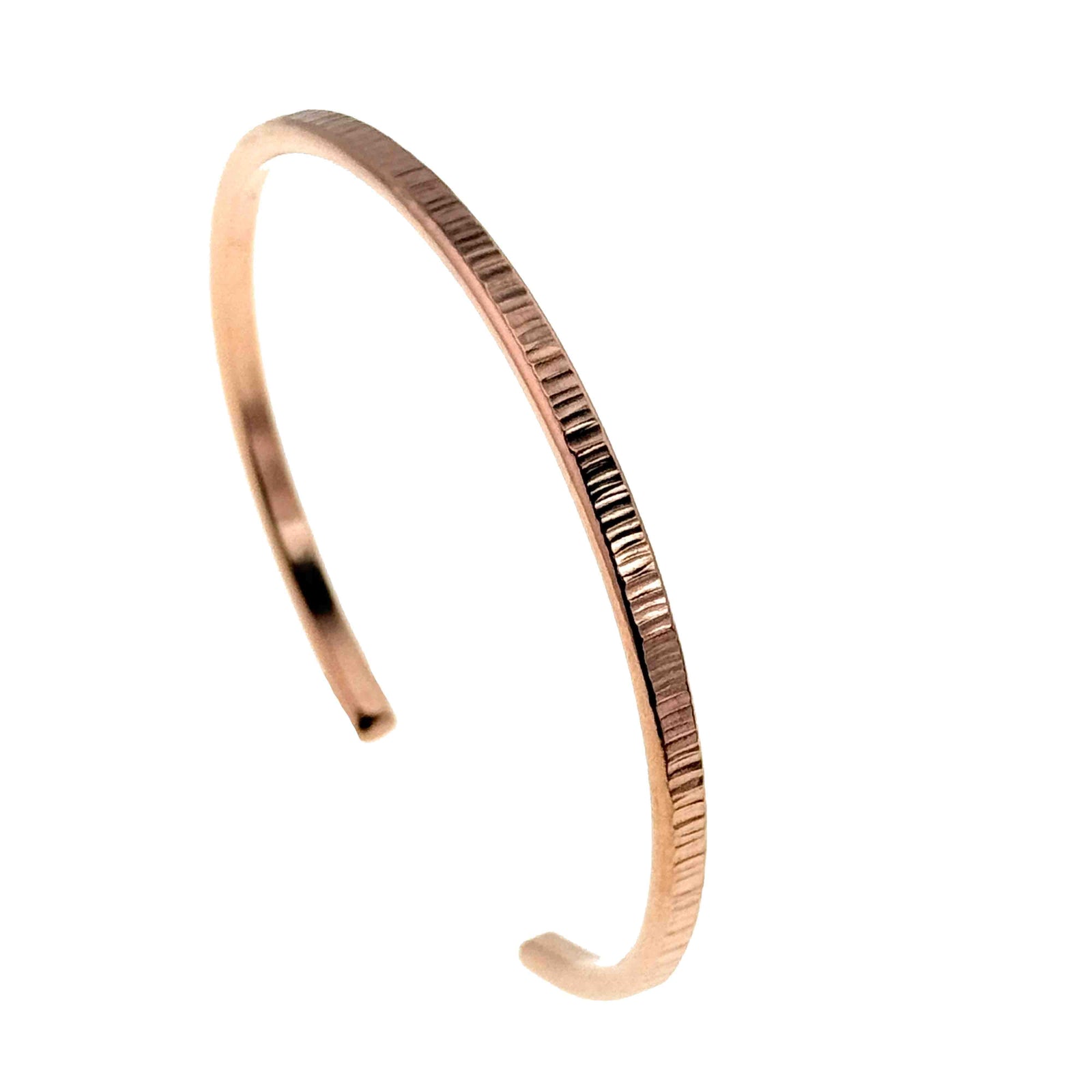
So what are we even calling “results” here, and can we measure them like a lab test? You might see a green mark, feel a bit more grounded, or notice that your wrist just aches a little less. You might also feel nothing at all on bad days, which can be a bit frustrating. This is why I try to talk very clearly about what a copper cuff can do and what it cannot do, even if that is not the flashy answer some people expect.
To keep this simple, I break early “results” into a few parts:
- What you feel in your joints and muscles
- What you notice in your mood and focus
- What shows up on your skin and on the metal
- How much more confident and put together you feel
If you keep that in mind, the whole topic starts to feel less weird and more honest.
What Results From A Copper Bracelet Really Mean Day To Day
What do people actually notice first from a copper bracelet, in real life, not in some perfect ad? Many tell me their wrist feels warm and more “held” by the cuff within hours, which sounds small but still matters to them. Some say they feel slightly less stiff in their fingers after a week or two, though they often admit other habits changed too. So is the bracelet doing the whole job, or just part of it, or maybe just their mind catching up, who knows exactly.
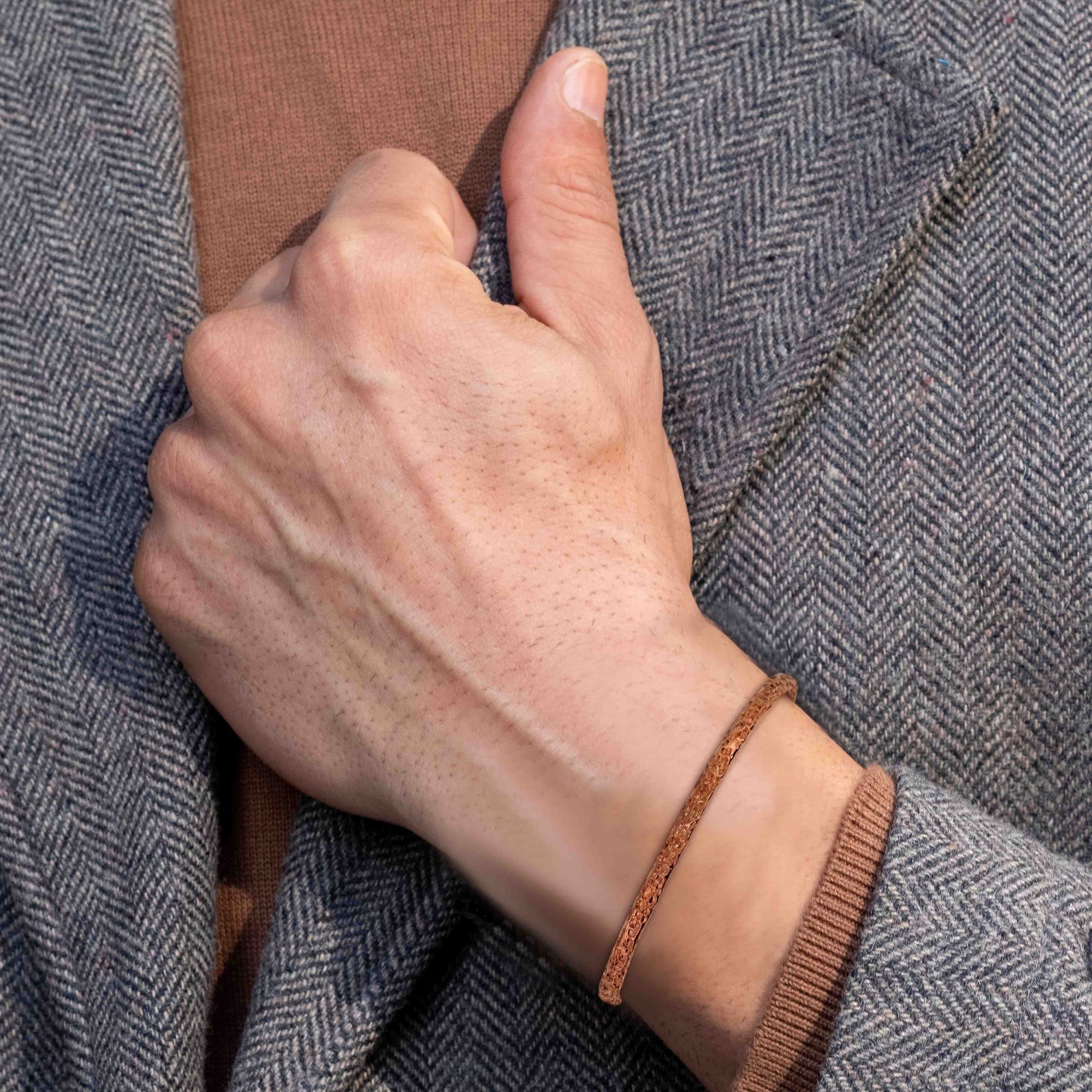
From a style point of view, results look clearer and faster. You put on a narrow hammered cuff, check the mirror, and the whole outfit shifts from plain to intentional. You may ask, does that part matter as much as comfort? I would say yes, because if you like how the bracelet looks, you will keep wearing it long enough to see any other shifts. Design is not just extra fluff, it is part of the way you relate to the piece every single day.
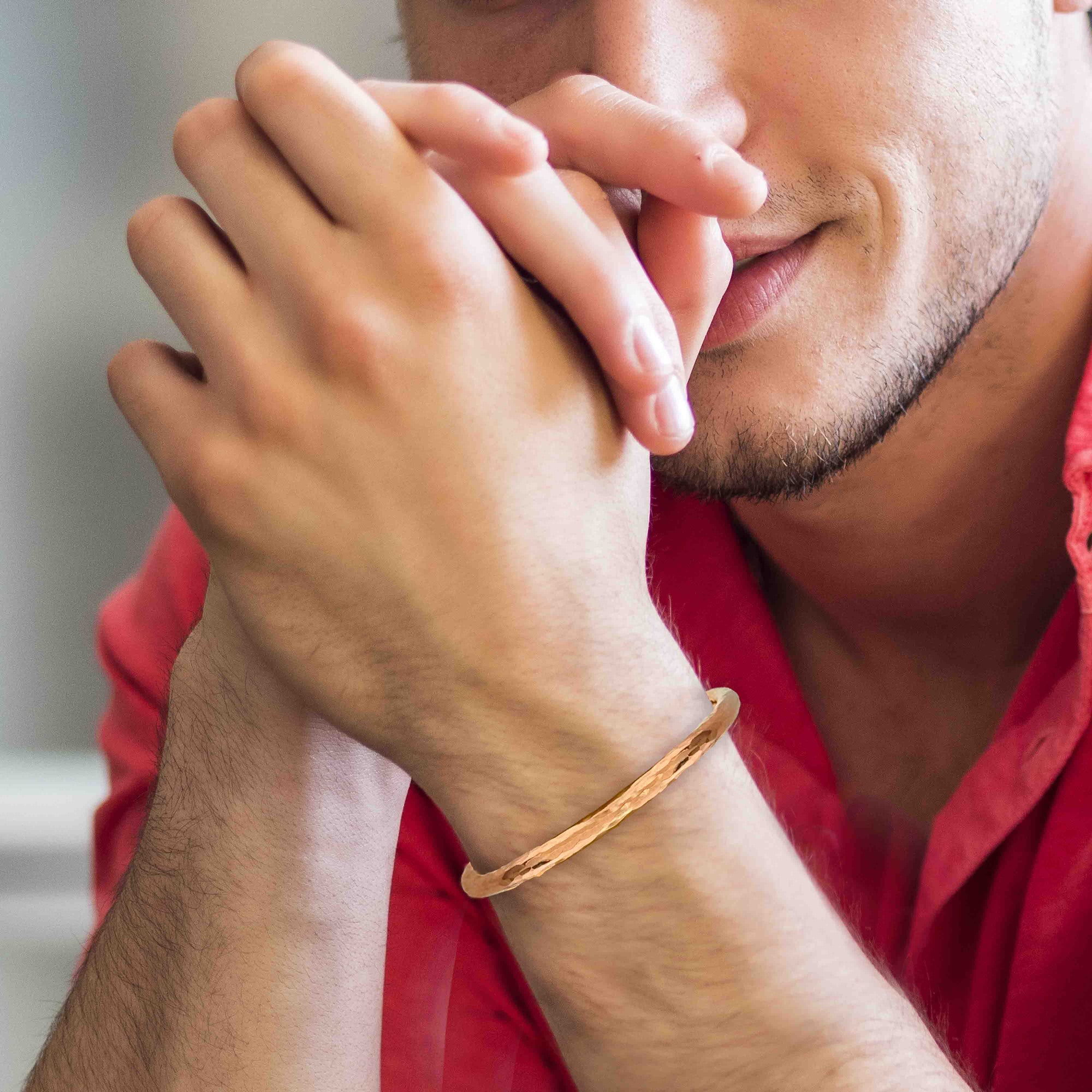
You might also wonder, how does this fit with the rest of your look, not just one bracelet? Many of my clients build a small stack from the broader women's copper cuff collection, mixing copper cuffs with earrings or rings that share the same kind of texture. That small set can make a rough work day feel slightly more grounded and personal. It is not magic, it is just metal and design, but it still changes how you move.
In simple terms, “results” can show up as:
- Less morning stiffness, if you feel that at all
- A calmer, more steady mood from the weight and feel of the cuff
- Green marks or patina that show active contact with real copper
- A clearer, more confident style that feels more like you and less like a costume
These things might sound small, but stacked together over time, they can feel quite strong.
Science, Stories, And Honest Talk About Copper Bracelets
Is there strong science that proves copper bracelets fix arthritis on their own? No, and I tell people that straight, even if it costs me a few sales here and there. Some studies do not find much difference at all, while others hint at small changes, so the picture is kinda mixed. Many of my customers still swear they feel better, and I respect that, but I do not promise them a cure because that would be wrong.
So what do we do with all the personal stories then, do we just ignore them? I do not think so. When a person writes to me and says her wrist feels freer after six weeks in her cuff, that story still matters to her. At the same time, we have to admit she may also be stretching more, moving more, or taking better care of herself because the bracelet reminds her to. These pieces live right between body, mind, and habit.

If you ask, “do copper and magnetic bracelets really help with arthritis,” I point you to my detailed write up on do copper and magnetic bracelets help with arthritis. In that article I walk through claims, limits, and how to think about them without getting lost in hype. I hold the same line here. Copper cuffs can be a supportive part of a bigger self care routine, but they do not take the place of doctors, meds, or smart movement.
To keep it very clear, you can see it as:
- Science: mixed, not very strong, does not clearly “prove” big pain relief
- Stories: many people feel better, some feel nothing, both are real reports
- My stance as a designer: build safe, solid copper cuffs for daily wear, avoid medical promises
This kind of honest talk may feel less fancy, but it keeps your expectations clean.
Timeline Of Copper Bracelet Results From Day One To Month Three
How fast does anything happen once you actually put the bracelet on your wrist? In the first 24 to 48 hours, most people only notice basic things like warmth, weight, and maybe a faint color mark. You might see a light green or dark line where the copper rests, which can look a bit strange at first. That mark usually means your skin and sweat are reacting with real copper, not some thin plating that rubs off too quick.
After a week or two, things can shift a bit more. Some people say their wrist feels slightly looser in the morning, or that typing all day feels a little easier. Is that just in their head? Maybe part of it, but even then, their mind and body are working together in a way that feels helpful to them. The bracelet also starts to curve more closely to their wrist, which makes it feel more “made for me,” even though I hammered it on a standard stake in my studio.
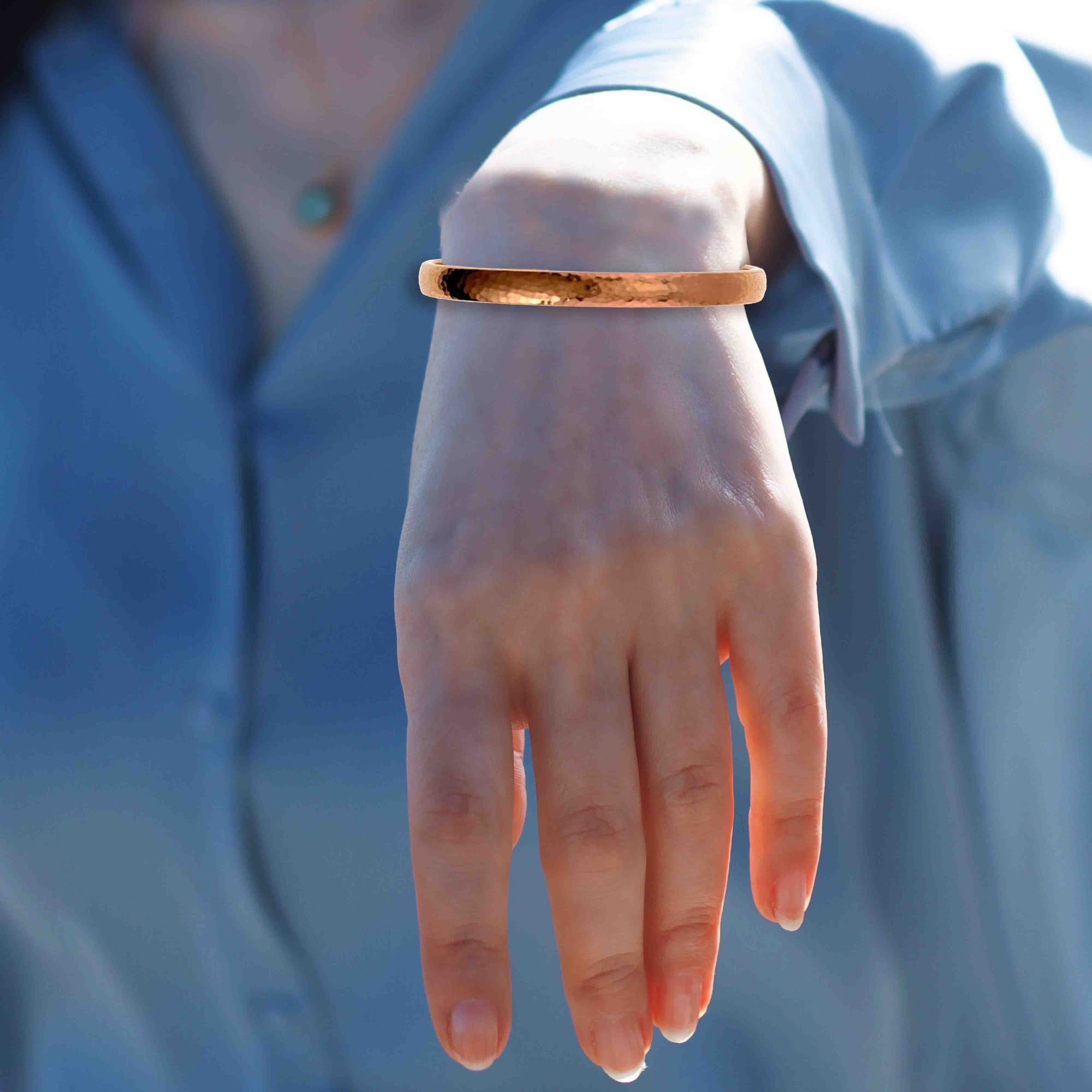
By weeks three to six, you either start to feel some ongoing change, or you likely do not feel much difference at all. That can be annoying if you had high hopes, and I do not blame anyone for feeling that way. At this point the surface shows more patina, more tiny scratches, and more of your daily story. That patina is a result too, even if it is just visual. It means the cuff is living the same long days you do.
Here is a simple timeline view:
| Time frame | What you may notice | What it really means |
|---|---|---|
| First 1 to 2 days | Warmth, weight, maybe faint mark | Copper is in full contact with your skin |
| 1 to 2 weeks | Slight comfort change, better fit | You are wearing it daily and it is molding to you |
| 3 to 6 weeks | Clear yes or no on comfort changes | This is the main window for “results” if they show up |
| 2 to 3 months | Deep patina, habit, emotional bond | The cuff feels like part of your daily life now |
If you can wear the cuff through this whole period, you give it a fair chance to show anything it can do for you.
Why John’s Copper Cuffs Are Built For All Day, Everyday Wear
Why do I keep the copper in my cuffs solid and in true contact with the skin, even though it can leave marks? The short answer is that people who want copper for wellness reasons usually want that real, direct contact more than a perfect, spotless finish. I start with thick sheet copper, cut, form, and hammer it, then leave it uncoated so it can respond to your skin. A thin plated bracelet would look shiny but would not act the same way over time.
The fit is another big part of why the bracelets work well for daily wear. I leave a required gap so you can slide the cuff on from the side, not over your hand, which helps if your knuckles are sensitive. Once it is on, you can gently squeeze the metal to shape it closer to your wrist, as long as you have enough strength in your hands to do that. You might ask, what happens if the fit is wrong? If it is too loose it will spin and bug you, and if it is too tight it will pinch, so that middle ground matters.

For people who want to see how these designs vary, the copper cuff bracelet styles page shows a full range of widths and textures. Some cuffs use a bark pattern, some a chased line, some a clean hammer texture. Textures matter more than people think, because a harsh pattern can scratch if it is not finished well. I spend time softening edges and corners so the bracelet looks raw and strong but still feels smooth and safe on the wrist.
Key things that make daily wear easier:
- Solid copper that is thick enough to hold its shape
- Open cuff with a gap that lets you slide it on sideways
- Rounded edges and smooth interior to avoid rubbing
- Texture that looks rugged but feels soft to the touch
All of this may sound simple, but in daily life, small design choices like that decide if you wear a cuff once a month or every single day.
Real Customer Experiences And What They Say About “Results”
What do real buyers say once they have lived with a cuff for a few months, not just a few hours? Many tell me the fit feels “just right” after a short break in period, which is what I want to hear. A cuff that hugs the wrist without sliding all the time is much more likely to become part of your daily routine. Some people write that they forget they even have it on until someone compliments it at work, which is kinda the best sign.
Other buyers focus on the copper itself. They talk about the way it darkens along the edges, how the green mark wipes off in the shower, and how the metal seems to pick up a map of their days. You might ask, is that messy patina a bad thing? In my view, no. It shows that the cuff is alive with you, not frozen like plastic. If you hate it, you can polish it back, but most people keep it just as it is.

Here is a short view of the kind of feedback I see, paraphrased so it reads clear here, but still honest:
| Experience type | What customers tend to say | What that hints at |
|---|---|---|
| Comfort and wear | Cuff fits close, does not slide, easy to wear all day | Design and sizing feel right for daily life |
| Authentic copper | Leaves a light green mark, patinas, stays solid | Metal is real copper, not thin coating |
| Arthritis gifts | Gave cuff to someone with sore hands, they like wearing it | Copper becomes part of a comfort routine |
| Long term use | Plan to buy a second cuff for stacking later | First cuff earned their trust over time |
When I link to the top copper cuff bracelets guide, I want people to see how these pieces show up in daily life, not just in studio photos. Those reviews and long term notes say more about “results” than any short claim on a product page ever could.
What Changes How Fast You Notice Copper Bracelet Results
Why does one person feel a bit better in three weeks, while another feels nothing after three months, even with the same design? Daily wear is one big reason. If you take the cuff off all the time, your skin does not build that steady contact with the copper. If you wear it every day, you get more of those small signals, like warmth, pressure, and habit, which can add up in your mind and body.
Skin chemistry also plays a big role. Some people sweat more, some less, and some have more acidic skin. You might ask, does strong color on the skin mean stronger “results”? Not really. It mainly means your sweat is reacting more with the metal. One person may see deep green marks within a few hours, while another sees nothing but a faint shadow after weeks. Both are normal, and neither is more “right” than the other.
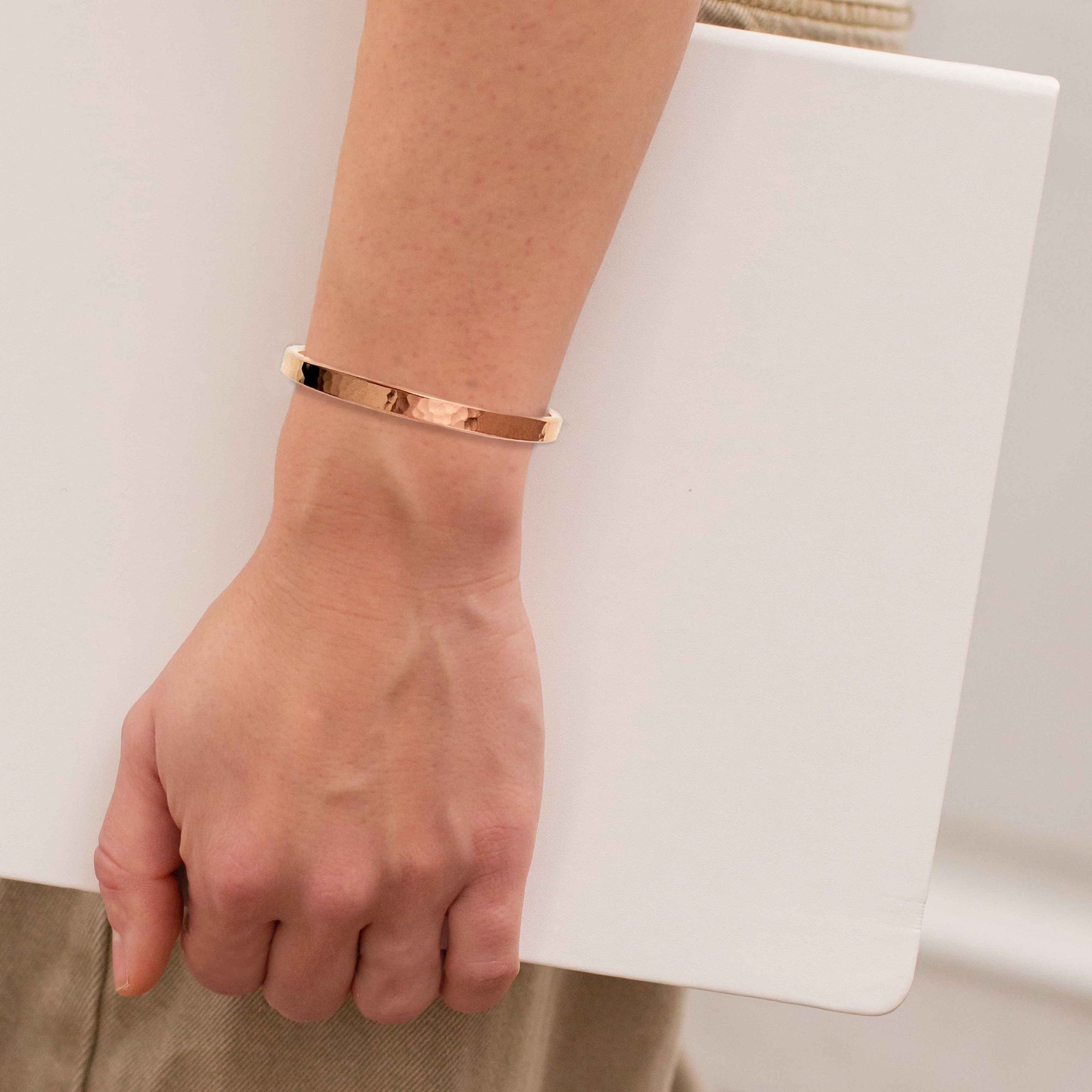
If you want more detail about how different copper pieces behave on real people, you can scan through the broader copper jewelry articles, where I talk through designs, care, and use cases. Width matters too. A wide cuff covers more skin, which some people feel more strongly. A narrow twisted cuff feels lighter but can be stacked for more coverage.
Quick factors that change the timeline:
- Wear time per day, and how many days in a row
- Your sweat level and basic skin chemistry
- Width and shape of the cuff and how much skin it touches
- Your mindset and how the cuff ties into stretching, walking, and breaks
If you line these things up, you give yourself a fair chance to notice any subtle shifts that might show up.
Choosing The Right John S. Brana Copper Bracelet For Your Goals
How do you pick one bracelet when they all share the same base metal? For me as the designer, each cuff has a different job, even if they sit side by side on a bench. A slim chased cuff feels like a gentle daily note, while a wide patterned cuff feels more like a bold statement on the wrist. So the first question is simple. Do you want subtle or strong, light or hefty, single cuff or stacking setup.
If you are shopping for a man who likes clean lines and a simple style, I often point to my notes in the guide to men's copper bracelets. That piece breaks down how width, pattern, and outfit work together. For women who lean boho and earthy, I usually go to hammered and bark textures, because they sit very well with denim, knits, and simple dresses. That mix makes their everyday clothes feel more personal without trying too hard, even if I say so a bit clumsy here.
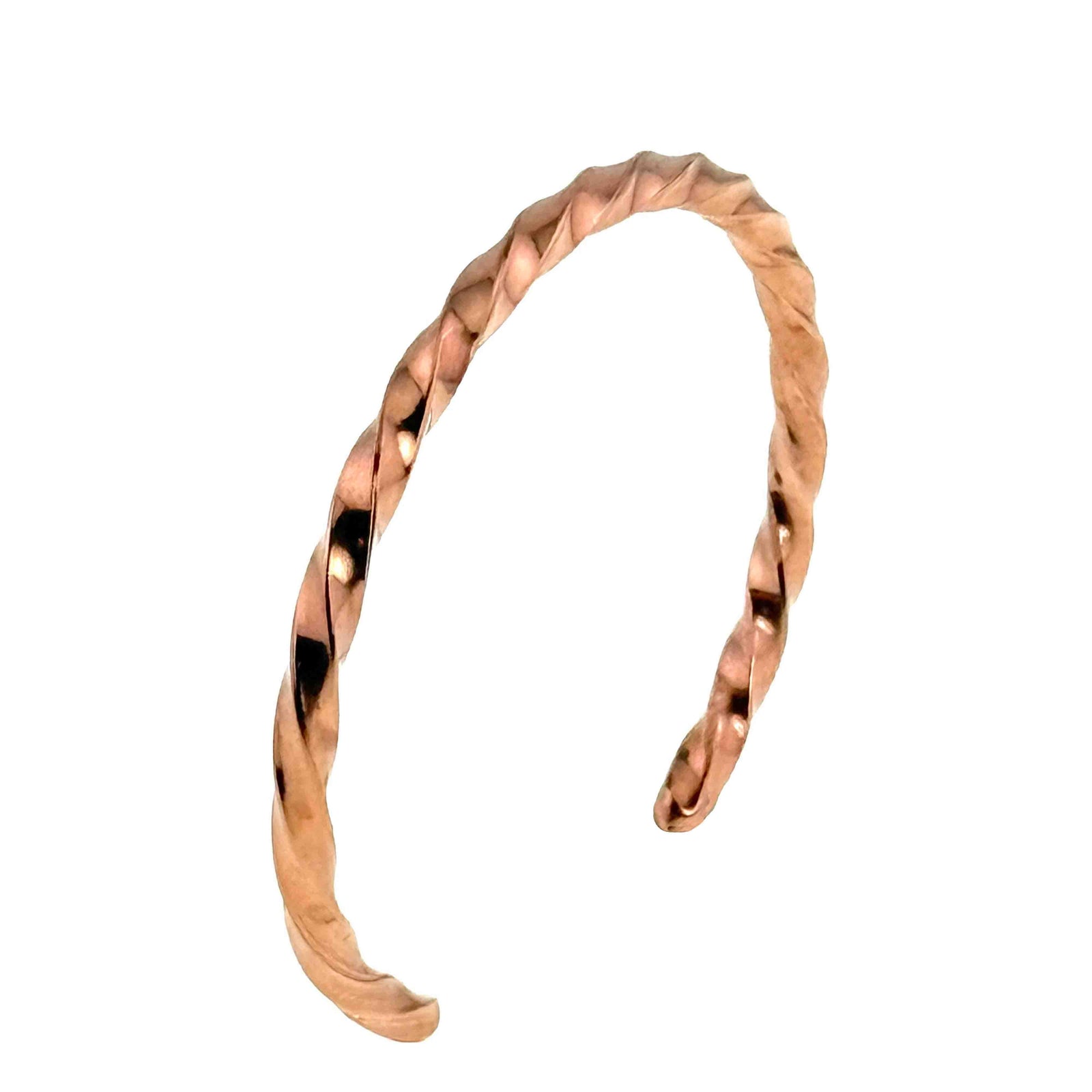
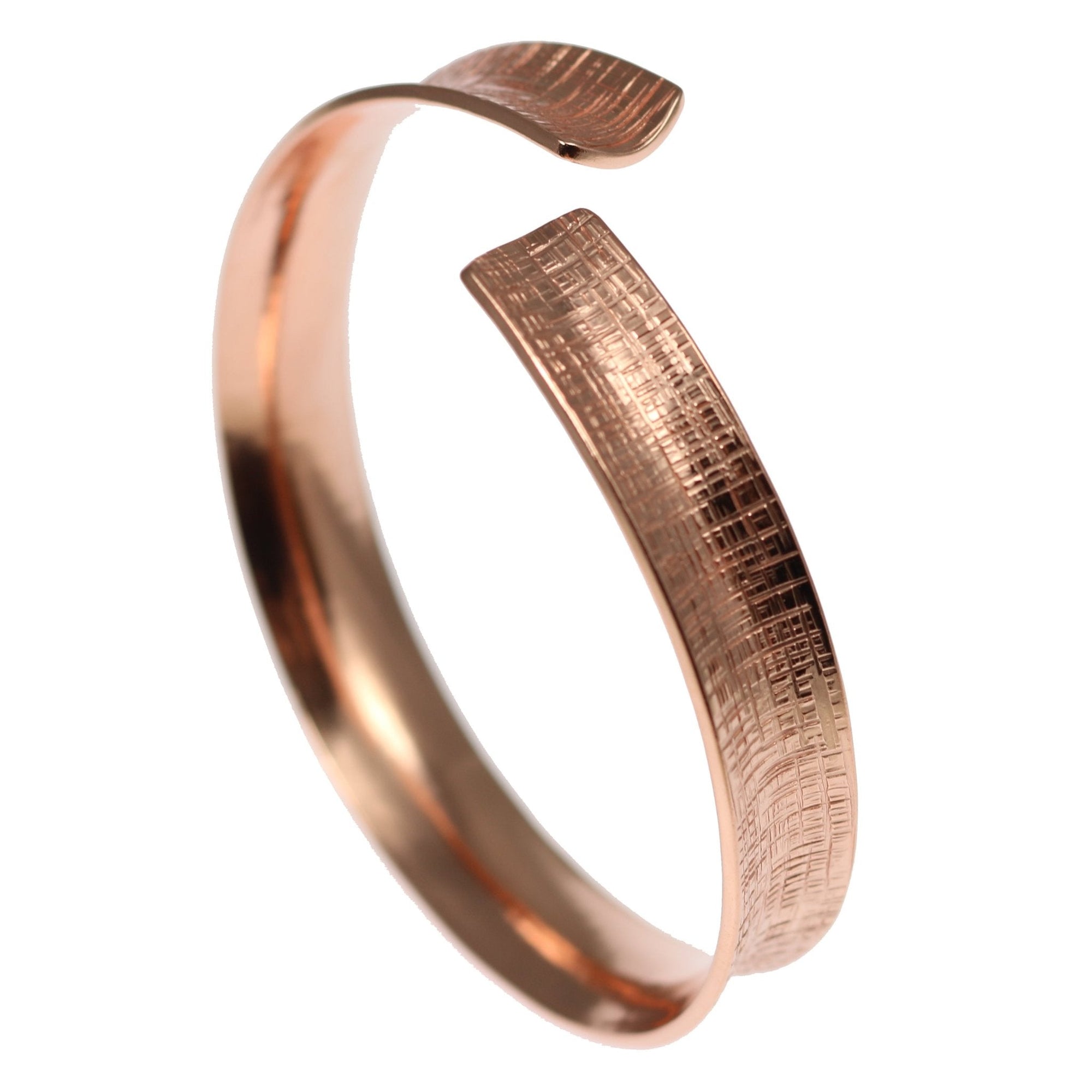
Here is a simple match up chart:
| Goal or preference | Good style choice | Why it fits well |
|---|---|---|
| Everyday grounding, light feel | Narrow hammered or twisted cuff | Slim, easy to forget on the wrist, still full contact |
| Bold, slow changing “story” on wrist | Wider patterned cuff, like mosaic or snakeskin | Lots of skin contact, strong patina, very visible |
| Boho, artisan look | Linen, bark, or chased textures | Organic lines that play well with casual outfits |
| Stacking and play | Several narrow cuffs in mixed textures | Lets you adjust coverage and visual weight each day |
Pick the one that you can see yourself wearing on a rough Tuesday morning, not just on nice days, and you will likely wear it enough to judge your own results.
How To Wear And Care For Copper While You Wait For Results
Do you have to baby your copper cuff to keep it nice while you test it over weeks and months? Not really, but simple care makes life a lot easier. Patina is normal. The surface will darken, and tiny marks will appear from your desk, door handles, and life. You might ask, should you polish it often? If you love a bright shine, you can polish it once it starts to dull, but if you like an earthy look, you can leave it alone for quite a long time.
When I shape a textured cuff, I already think about how that pattern will age. Fine lines collect patina faster, while broad hammered marks stay bright a little longer. That is why I like showing pieces such as these two in care talks, because they age in interesting but slightly different ways.
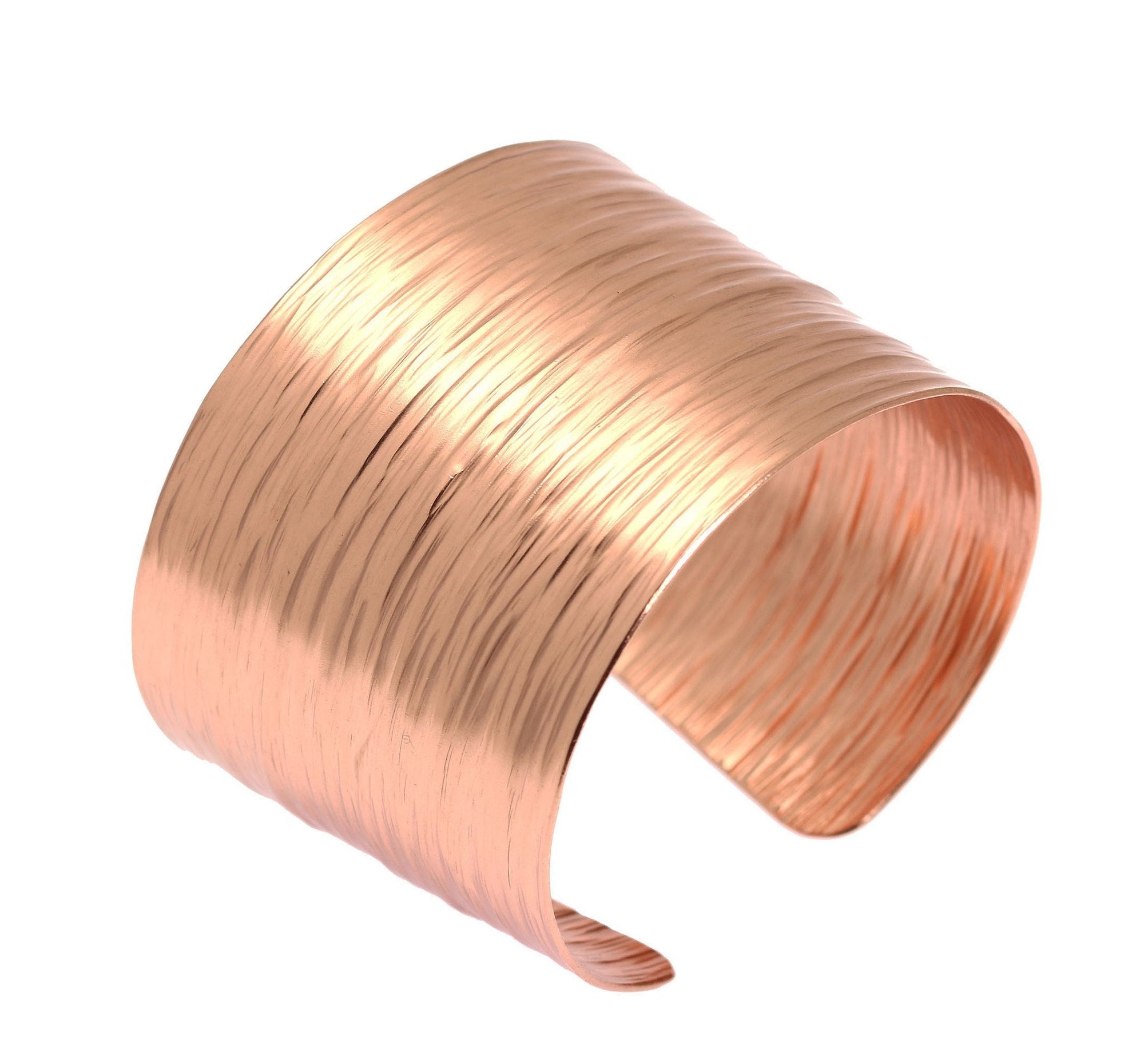
That broader view ties into the rising trend of copper cuffs, where I talk more about how people wear them in regular life, not just for special events. While you wait to see how your body responds, you can follow this kind of simple care routine:
- Take the cuff off before pools or hot tubs with harsh chemicals
- Rinse lightly and dry if it gets very sweaty or dirty
- Use a soft cloth and copper cleaner if you want it bright again
- Store it away from rough hard objects that can gouge the metal
Care should feel easy enough that you actually do it, not like another chore piled on your plate.
So How Long Does It Really Take For A Copper Bracelet To Show Results?
So after all this, what is the honest, simple answer to the big question? In most cases, the first “results” show up in days, but they are small. You notice the weight, the warmth, maybe a greenish tint on the skin or a slight darkening at the edges. Over three to six weeks of daily wear, you will usually know whether your body feels a bit different or not. You might also feel calmer just from the ritual of slipping on the cuff in the morning, which still counts a bit, even if it sounds soft.
Past the three month mark, any effect that sticks around feels like part of your lifestyle rather than a quick fix. The bracelet will tell its own story in patina, small nicks, and softened edges. For some people that story includes less stiffness, for others it is “I tried it and did not feel much,” and for many it is simply “this copper cuff is now part of me in a quiet way.” All three outcomes are valid, even if one feels more satisfying than the others.
You can see more examples of how these cuffs sit on real wrists in my copper bracelet video playlist, and across the John Brana YouTube channel. My John S Brana Google profile also shows more of the wider work and studio life behind these pieces, even if some photos look a bit rough around the edges.
In the end, I tell people this. Pick a copper cuff you honestly like wearing from my copper jewelry designs, wear it daily for at least a month or two, and then listen closely to your own body. Your timeline and your results are yours, not anyone else’s.
Frequently Asked Questions
How long should I wear a copper bracelet before I decide if it “works”?
You may ask, is one week enough time to judge a copper cuff. For most people it is too short. I suggest wearing it daily for at least three to six weeks. That gives your body, mind, and habits enough time to show any clear change, even if that change is small or a bit hard to describe at first.
Do I need a wide copper cuff to feel any results?
People often think only wide cuffs do anything at all. That is not really true. A wide cuff gives more skin contact, which some people like alot, but a narrow cuff still sits on one focused area all day. If you want more contact with narrow cuffs, you can simply stack two or three together and build up coverage over time.
Does the green mark on my skin mean the bracelet is helping my joints?
This is a very common question, and I do not blame anyone for asking it. The green mark mainly means that your sweat and skin are reacting with real copper. It shows that the metal is not fake or fully sealed. It does not prove joint relief by itself. You have to listen to your own comfort and movement over weeks to judge that.
Can I wear a copper bracelet if I have sensitive skin?
If your skin is very sensitive, you should go slow. Try short periods first, like a few hours at a time, and see how your skin reacts. If you notice strong redness, itching, or rash, it is better to stop. If you only see a light color mark that wipes off, most people are fine with that, though everyone has their own comfort level.
Should I stop my normal arthritis treatment if I use a copper bracelet?
This one is simple. No, you should not stop treatment on your own. A copper cuff does not replace your doctor’s care, meds, or any therapy you use. If you want to add a bracelet to your routine, talk with your doctor so they know what you are trying. It should be part of a full care plan, not a single magic fix.
Can I sleep in my copper bracelet to get faster results?
Some people do sleep in their cuff, and some do not like how it feels at night. Sleeping in it will add more hours of contact, which might help you judge its effect a bit faster. Just make sure it is not too tight, or it might bother you or leave deeper marks that feel annoying when you wake up tired.
How do I clean copper without ruining the patina I like?
You might worry that any cleaning will strip all the nice dark tones away. Light care does not have to do that. You can wipe the cuff with a soft dry cloth to remove sweat and oils and leave the deeper patina in place. If you use a polish, use it gently and stop as soon as you like the balance between shine and depth again.
Are magnetic copper bracelets better than plain copper cuffs?
Some shoppers ask if a magnet makes the bracelet “stronger.” The research on magnets is also mixed, just like the research on copper. Many people do fine with plain solid copper cuffs and feel happy with them. If you are curious about magnets, read more reviews and talk to your doctor, then decide which kind of bracelet fits your comfort level best.

Also in Copper Jewelry Blog


Copper Jewelry Myths That Won’t Die (And Why They Persist)
Copper jewelry myths have been repeated for years, but most of them miss the real story. This guide explains why copper turns skin green, how patina actually protects the metal, and what separates solid handcrafted copper from plated pieces. Clear answers. No hype. Just facts that help you choose with confidence.


What People Mean When They Say Copper Jewelry “Stops Working”
Copper cuff seem to “stop working”? This short guide explains what people really mean when copper jewelry stops working, why green marks fade, how patina and fit change over time, and simple steps to check your bracelet before you give up on it.


Copper Jewelry: What People Want to Know, Feel, and Experience
Copper jewelry raises a lot of questions. People want to know if it really helps with pain, why it turns skin green, and how it changes over time. In this guide, designer John S. Brana explains what copper jewelry can honestly offer, how it feels to wear day after day, and how to pick pieces that fit your body and your life.