
What People Mean When They Say Copper Jewelry “Stops Working”


Key Takeaways
| Question | Short answer | Extra note |
|---|---|---|
| Does copper jewelry really “stop working”? | No, the copper itself does not stop; feelings and marks just change. | Patina, skin chemistry, and habits shift over time. |
| Why did my copper bracelet stop leaving green marks? | Your patina, skin pH, and products likely changed. | Less green does not mean less real copper. |
| Can a loose or bent cuff feel like it stopped helping? | Yes, poor fit can change how your wrist feels alot. | A small re-shape or new size can help. |
| Will cleaning my cuff “reset” the benefits? | Cleaning changes how it looks, not what the metal is. | Over-scrubbing can even annoy your skin. |
| Are John’s cuffs medical devices? | No, they are jewelry with a wellness tradition, not treatments. | Some people still feel better while wearing them. |
| What should I do if my bracelet seems to stop working? | Clean it gently, check fit, wear it daily, and watch how you feel. | Contact John if there is a real workmanship issue. |
| Does patina mean my cuff wore out? | Patina is surface oxidation, not a sign the copper is used up. | Many clients grow to like that lived-in look. |
| Should I try a different cuff style or width? | It can help, especially if your wrist shape or routine changed. | Slim, wide, and twisted styles sit on the wrist in very different ways. |

People write to me with a strange line sometimes: “My copper bracelet stopped working, did it just give up?” That sounds funny on the surface, but the worry under it is very real, right? The short answer is no, the copper did not go on vacation or lose its power, but your body and your eyes might be telling a new story now.
So what do most people mean by “working”? They usually mean two simple things: first, “I felt less stiff or sore,” and second, “I saw green marks or color, so I thought something was happening.” When those feelings or marks fade, the brain can shout, “It stopped, what went wrong now?” In truth, the metal is still the same solid copper I shaped on my bench.
I also hear this when a cuff bracelet feels great the first months, then life gets busy and pain or tension creeps back in. Did the bracelet fail, or did work hours change, or colder weather move in, or did a new keyboard show up on the desk? Many people never pause to ask that question, even tho it is the key one.
If you want a deeper view into what people hope for from copper, I wrote about that in more detail in this guide on copper jewelry questions customers ask. That article grew from real emails and studio chats. I hear the same themes again and again, like a quiet drum beat under the sparkle.
Solid, Uncoated Copper Cuffs – What They Actually Are
First, we need to pin down the object on your wrist. What is one of my copper cuffs in simple terms? It is a band of solid, uncoated, recycled copper that I cut, form, hammer, finish, and bend into an open cuff shape for a wrist. There is no plating to wear off, no clear coat on top, and no mix of metals hiding inside the body of the piece.
A good example is my Chased Copper Cuff Bracelet, which I texture with a chasing hammer until the surface starts to catch light in un-even lines. That pattern does not change what the copper is, but it does change how sweat and air touch the metal in tiny ways. Does that texture make it “work more”? No, but it can make the patina grow in more interesting streaks, which some customers oddly read as extra action.

You might ask, “How do I even know this is real copper and not some mix hiding inside?” I asked the same thing early in my career, so now I keep mill reports on file. If you are curious about that part, you can read more in my article on how the copper in my jewelry is verified. That testing gives me peace of mind, and it should give you some, too, even if your cuff feels different after a few months.
Many cuffs in my line share the same base metal but look very different at first glance. Thin stackers, wide statement bands, domed profiles, twisted rods - they all are still uncoated copper. So if one cuff feels like it “stopped working,” it is usually not because the metal changed its mind.
What “Working” Means To Real Copper Wearers
What do people actually feel when they say a copper bracelet is “working”? I hear a short list over and over: less stiffness in the wrist, easier typing days, less ache after a long shift, and sometimes a calmer sense in the hands. Are these results measured on lab machines in my studio? No, they are personal stories, and they matter because they affect how someone moves through their day.
Here are some of the phrases people use in emails, often with typos and all:
- “My wrist feels looser, like it can breath again.”
- “I sleep better when I leave the cuff on.”
- “When I take it off for a week, I swear my hand gets cranky.”
Do I claim copper cured something here? I do not, and I will not. That would be unfair and wrong. I see my cuffs as jewelry with a long folk history, not medical gear with codes on the box. Still, I listen when someone shares that they feel more comfortable, because comfort shapes daily life alot.
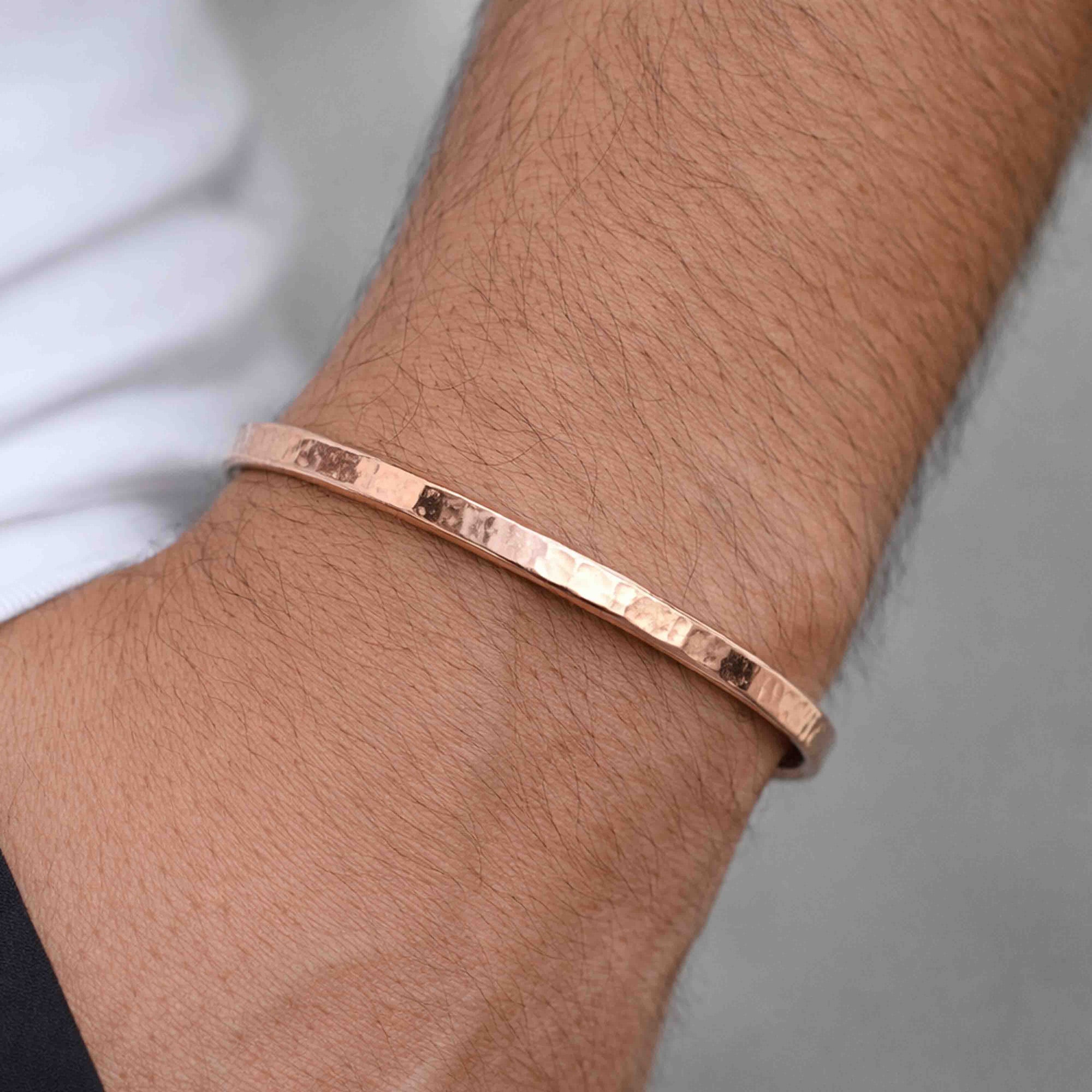
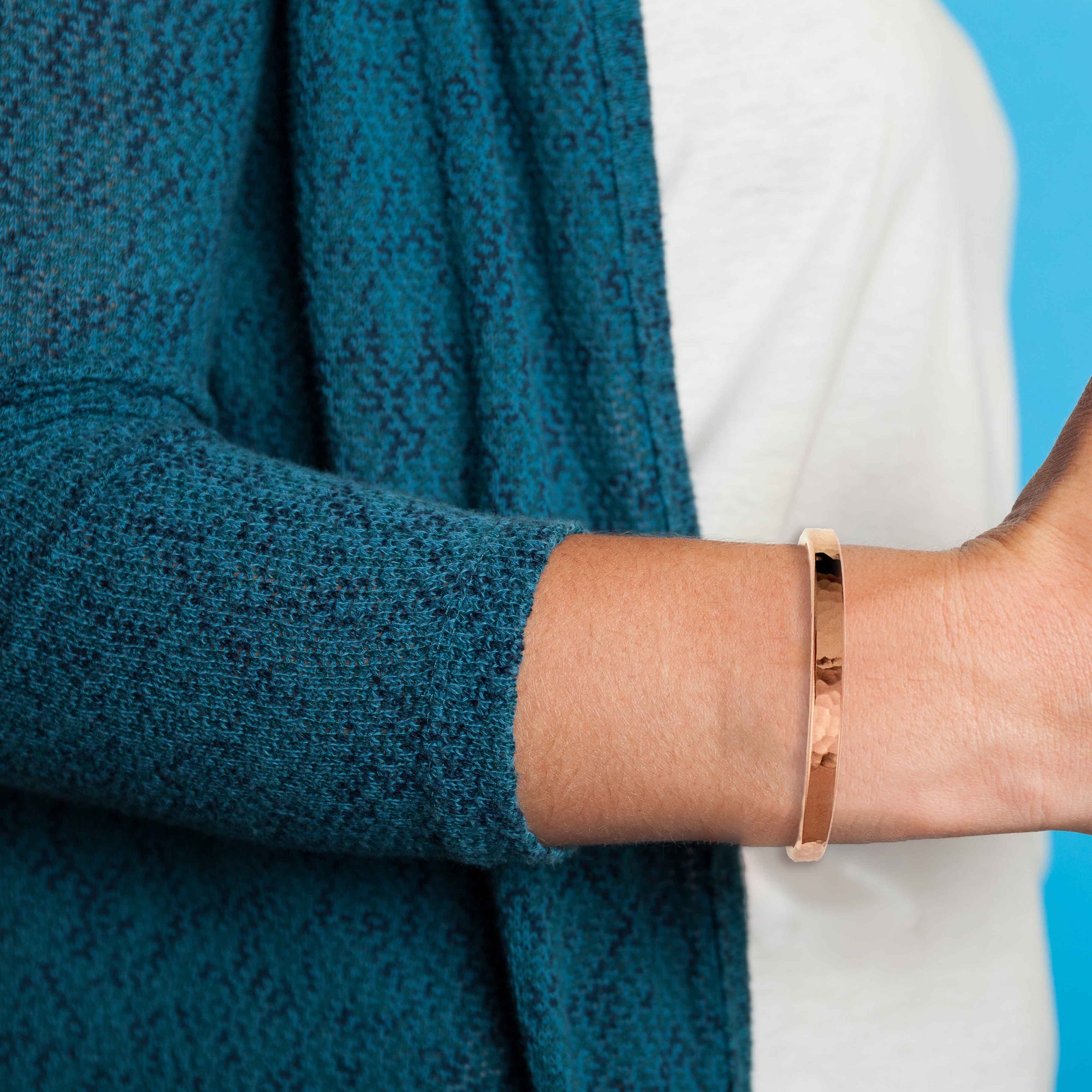
People also point to visible signs as “proof.” A bright, polished cuff like my Hammered Copper Cuff Bracelet often starts as a pinkish orange ribbon on the wrist. That shine can dull, and a warm brown patina can spread in patches. Some clients write, “It got darker, so I guess it did its job and used itself up, right?” The science answer is no, the copper is still present, just wearing a new coat of oxide.
Think about copper flashing or gutters on a house. When they are first installed, they glow with that same bright, shiny warmth. Over time, they shift in color, first turning deeper red, then rich brown. After several years, they develop that familiar blue green surface we all recognize. The Statue of Liberty is the best known example. The metal underneath never disappeared. It simply reacted with air and moisture, forming a protective layer that changed its appearance without reducing the copper itself.

If you want to see how this mix of feeling and expectation shows up in more detail, my article on how long a copper bracelet can take to show results walks through time frames customers talk about. It might surprise you how patient some people are, and how quick others are to say something “stopped” after a small change in daily life.
How Long Copper Bracelets Can Take To “Work” And Why That Feeling Can Shift
A big question many people whisper to themselves is, “How long should this take to do anything, if it is going to do anything at all?” Some folks write after three days and sound upset. Others write after six months and sound calm but puzzled. The same cuff sat on those different wrists, yet the time story is very different.
In my own notes, I see three common time stories:
| Time frame | What people often say |
|---|---|
| First 1–2 weeks | “I think I feel a little better, or maybe I just want to.” |
| Around 1–3 months | “The green marks were strong at first, then faded.” |
| After 6+ months | “I forget the cuff is there until I leave it off and feel stiff.” |
Is any of this a hard rule? No, and that is where frustration creeps in. If someone felt good for months and then has a hard winter, the brain can blame the bracelet for “stopping” while the real change came from weather, long drives, less sleep, or a new phone in their hand every night. I have watched that pattern again and again, almost like seasons on a calander.
One client once told me, “The bracelet worked all last year, then tax season hit and it gave up on me.” Did the copper react to their paperwork? Of course not, but their posture, keyboard time, and stress level all jumped at the same time. So the better question becomes: did life change more than the metal did? For most people, the honest answer is yes.
If you like reading more personal stories like that, I talk more about these mixed expectations and feelings in my post on copper jewelry questions customers ask. It came straight out of a messy studio notebook full of quotes, not from a lab bench.
Skin Chemistry, Patina, And Green Marks
Why did your cuff leave green marks at first, but now the skin stays clean? That single shift creates more “stopped working” emails than almost anything else. People took the marks as proof that copper was “doing something,” so when the marks fade, it feels like the process ended.
In simple terms, three things dance together here:
- Your sweat and its pH
- Any lotions, perfume, or sunscreen on your skin
- The patina that slowly builds on the cuff surface
A slim piece like my 3.5 mm Hammered Copper Cuff Bracelet sits in a tight line across the wrist, so the contact area is narrow but steady. At first, fresh bright copper rubs against damp skin, and green or dark marks can show up fast. After some weeks, patina builds like a thin shield. Fresh copper touches skin less, and marks fade, even tho the bracelet is still there doing its tiny metal and sweat dance.
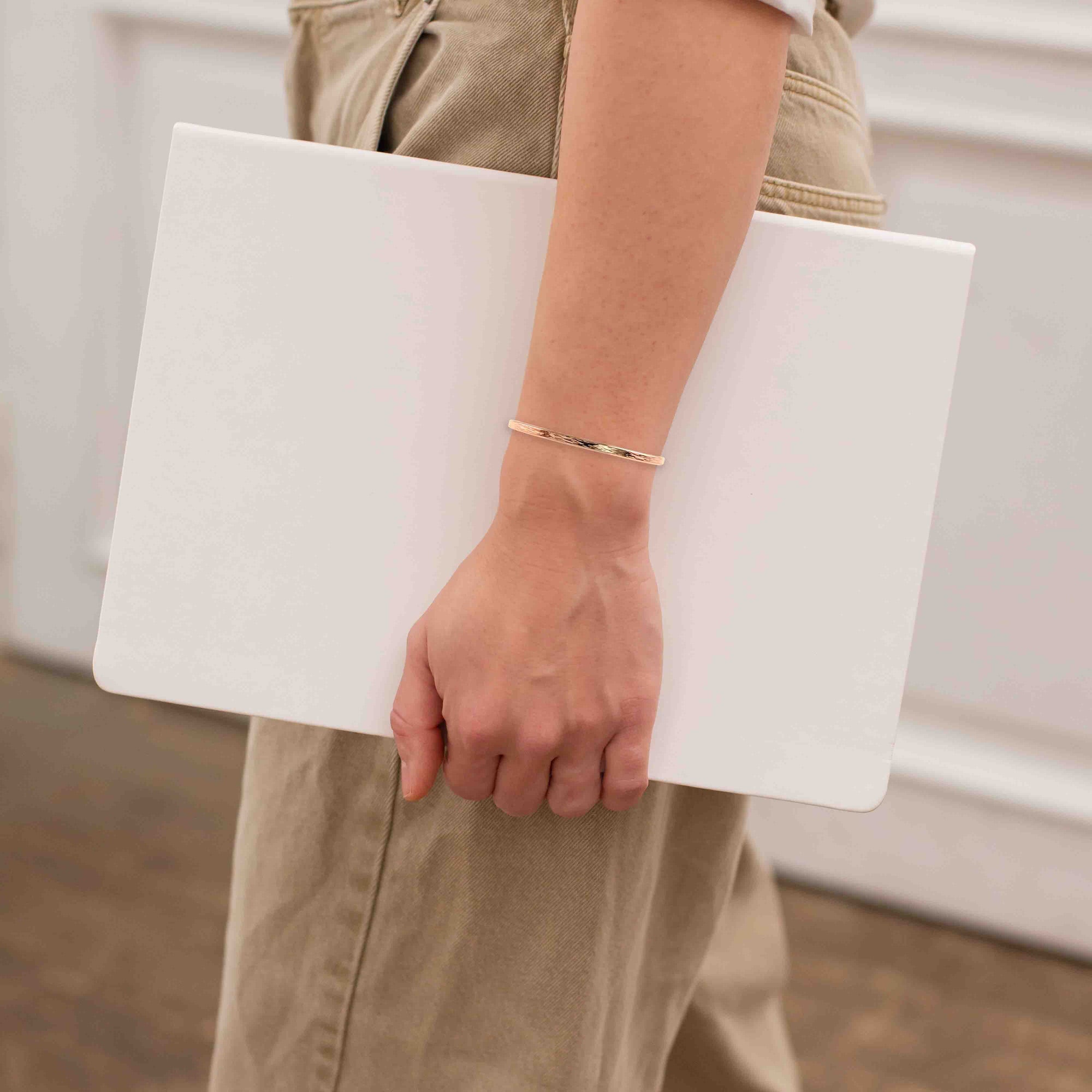
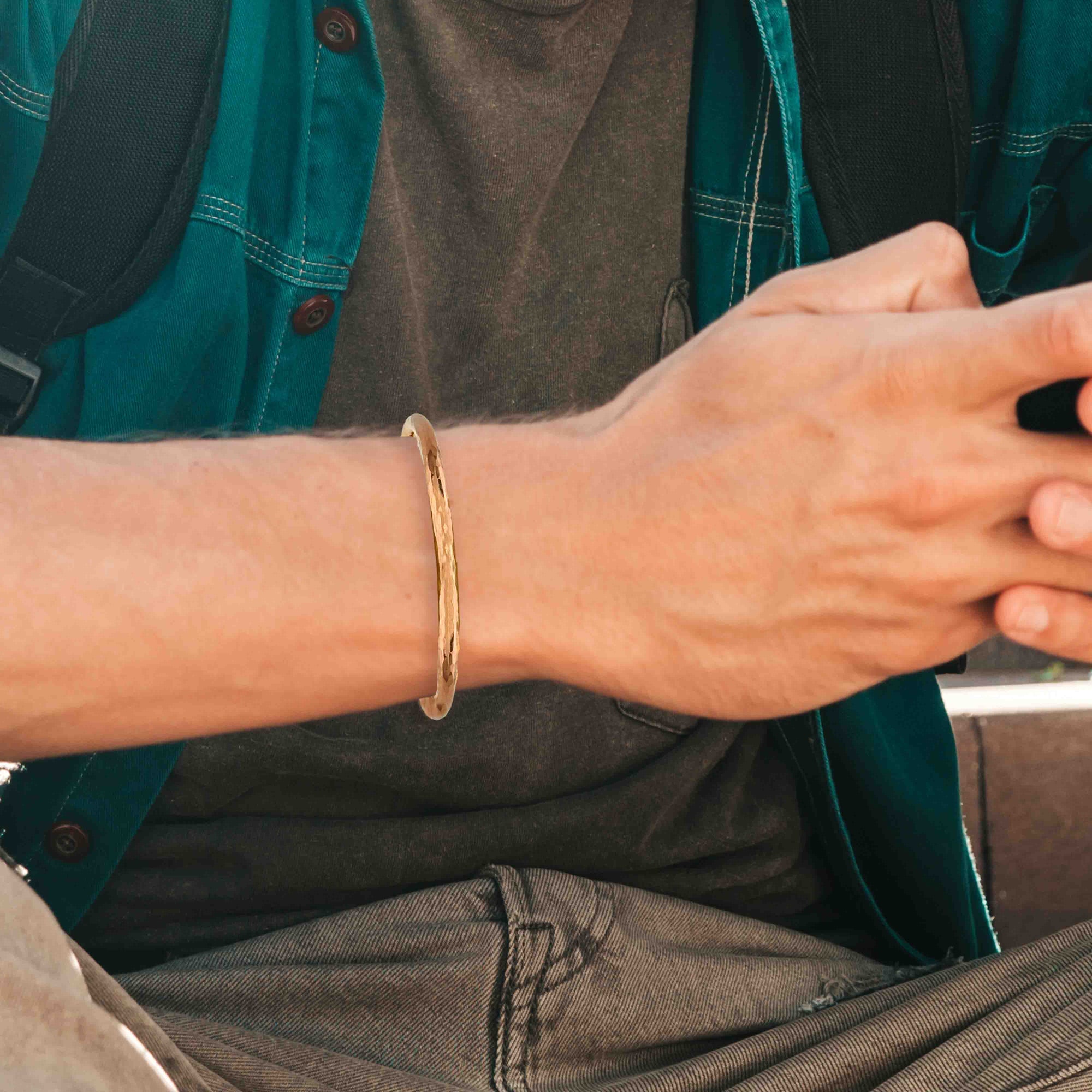
Now take a small textured piece like the 3.5 mm Bark Copper Cuff Bracelet. The little grooves catch sweat and air in a different way. On some wrists, that means more patina in the valleys and less on the peaks, so marks come and go in odd shapes. On other wrists, skin pH is gentle and almost no green ever shows. Is one person “getting more copper”? Not quite; they are just living in different small chemistry worlds.
If you enjoy more earthy, visual looks, my piece on earthy copper cuff style guide shows how patina can become part of your style, not a sign that anything used up or failed. Green marks can fade while your connection to the piece still grows, even if your inner skeptic mutters that it “stopped.”
How Much Fresh Copper Touches Your Wrist?
Green marks depend on how much bare copper meets damp skin. So I tested how much contact each cuff in this article gives. I used a 6-inch length of 18-gauge (1.02 mm) solid copper for each width. Then I worked out the skin contact area and weight.
| Cuff | Width | Skin Contact | Approx. Weight |
|---|---|---|---|
| 3.5mm Hammered Copper Cuff | 3.5 mm | About 5 cm² | About 5 g |
| 4.75mm Hammered Copper Cuff | 4.75 mm | About 7 cm² | About 7 g |
| 5mm Hammered Copper Cuff | 5 mm | About 8 cm² | About 7 g |
| 7mm Domed Hammered Copper Cuff | 7 mm | About 11 cm² | About 10 g |
| 3/4 Inch Mosaic Copper Cuff | 19 mm | About 29 cm² | About 27 g |
| 1 Inch Wave Copper Cuff | 25.4 mm | About 39 cm² | About 35 g |
The result: Skin contact rose from about 5 cm² on the 3.5mm cuff to about 39 cm² on the 1 inch cuff. That is more than 7 times as much copper against the skin. A wide cuff therefore shows green marks sooner and over a larger area.
What this means for you: If your green marks faded, it is usually patina building on the inner surface, not lost copper. As the Royal Society of Chemistry explains, the green comes from copper salts formed by sweat and air (source). According to the National Park Service, the Statue of Liberty has kept its copper skin, only about 2.4 mm thick, since 1886 (source). Patina changes the color, not the metal.
Fit, Sizing, And Wear Patterns That Feel Like “Stopped Working”
Could a simple bend in the cuff change how you feel it in your body? Yes, and it happens more often than people think. A cuff that started snug but comfy can get pulled wider over time by taking it off the wrong way. That small change moves the contact area on your wrist, and the “working” feeling can drift off with it.
Look at a medium width piece like my 4.75 mm Hammered Copper Cuff Bracelet. It likes to sit just above the wrist bone, not smack on top of it. If it loosens, it may slide down and bump that bone all day, which makes the brain focus on annoyance instead of any comfort. Suddenly the person says, “It stopped helping,” when really the cuff just needs a gentle re-shape to sit where it once sat.
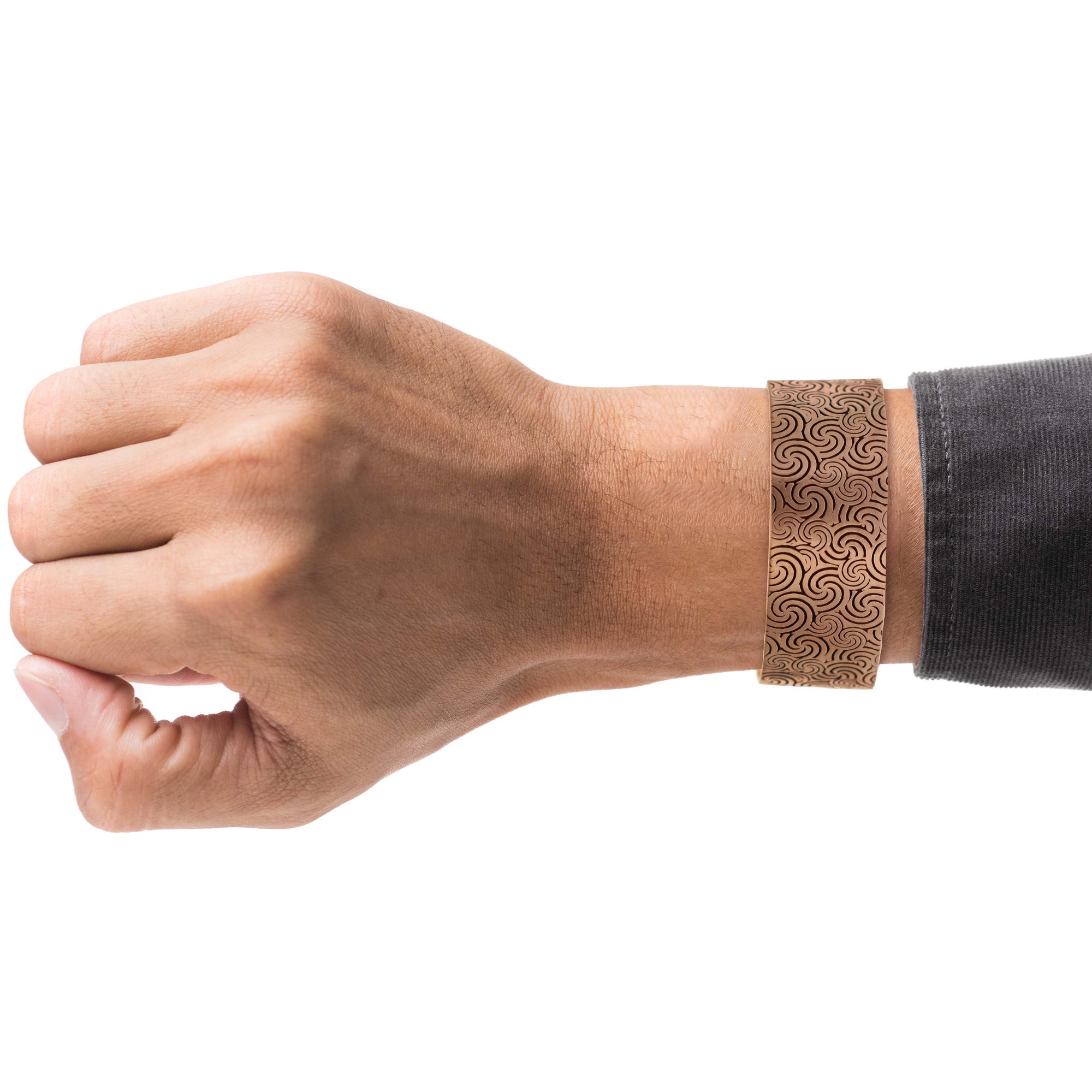
Now think about a wide men’s piece like the Men’s Solid Copper Wave Embossed Cuff 1 Inch Wide. A wide band covers more nerves and more skin, so if it twists or gets out of round, it can pinch in one area and float in another. Some clients bend wide cuffs alot when they take them on and off, and the shape slowly drifts. The copper is still honest and solid, but the fit no longer matches the wrist that first loved it.
For style ideas that balance fit and look, you can see more examples in my piece on top copper cuff bracelet picks. You might spot a width or profile there that lines up better with how you use your hands each day, which can quietly bring back some of the comfort you felt when things were new.
Caring For Uncoated Copper Cuffs Without Chasing A “Reset Button”
Many people ask, “If I polish the cuff back to bright, will it start working again?” That question hides a small myth: the idea that patina is a spent layer that needs scraping off to “reload” the bracelet. In truth, cleaning mostly changes how the cuff looks, not what the copper can do as a metal.
A simple care routine is usually enough:
- Wipe the cuff with a soft cloth after wearing.
- Now and then use a copper cleaner or lemon-and-salt paste, but rinse well.
- Dry it fully before putting it back on the wrist.
A sturdy everyday example is my 5 mm Hammered Copper Cuff Bracelet. Many clients wear this size day in and day out. Some keep it bright with regular polishing, while others let it darken into a warm brown. In both cases, the copper bar inside that patina stays the same. The feeling on the wrist comes more from habit and fit than from the shine level.
Too much cleaning can backfire. Harsh chemicals or heavy scrubbing can leave micro scratches that grab onto sweat and make tarnish jump back faster. Strong cleaners can also annoy skin if they are not fully rinsed away, which might make the bracelet feel “bad” even tho the copper still sits there as it always did.
For a wider care view across all your pieces, my guide on essential tips for caring for handmade jewelry lays out what I suggest to clients when they pick up new work in person. None of it acts like a magic reset button, but it does protect the piece so you can judge your own comfort more clearly.
Styling, Routine, And Mindset
You might wonder, “What does my outfit or routine have to do with how the bracelet feels?” The short reply is: quite a bit more than most people guess. A cuff that sits under a snug dress shirt at the office has a very different life than one that lives solo on a bare wrist at home.
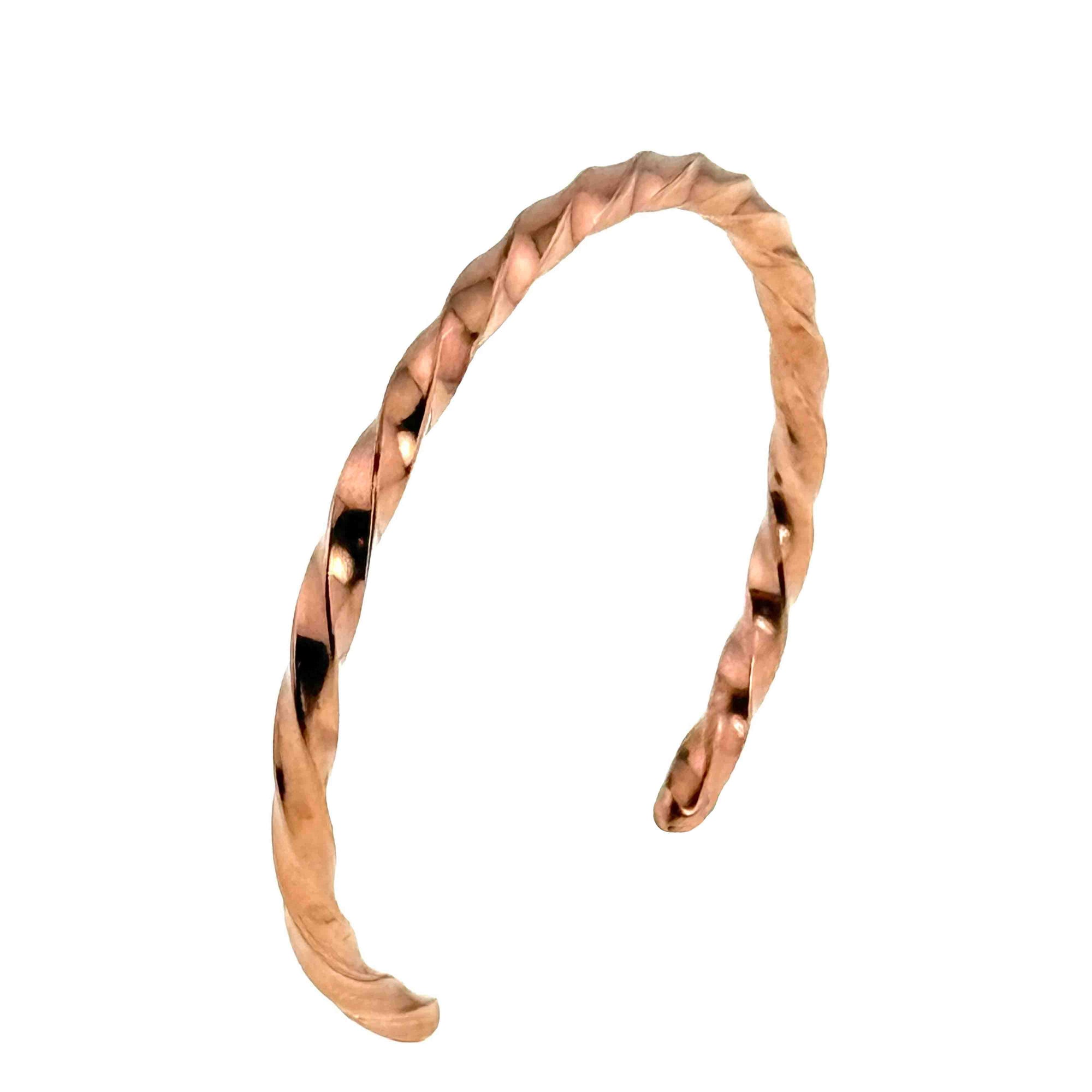
A slim piece like the 3 mm Twisted Copper Cuff Bracelet can slide neatly under cuffs and jackets without catching. That low profile makes some people forget they even have it on, which is good for comfort but also easy to take for granted. Once they stop noticing it, they sometimes say it “does nothing” now, even tho nothing in the metal changed, only the story in their head did.
For an office look, I often suggest pairing a medium cuff with a watch or slim bangle. If you need ideas like that, my piece on accessorizing business casual outfits with copper jewelry shows how a cuff can sit in that setting without shouting. The calmer and more normal the cuff feels to you each day, the less likely you are to think in sharp terms like “working” or “not working,” and the more you see it as part of your body rhythm.
Seasonal style can also color how you judge the bracelet. My article on hammered copper jewelry fall trend and the guide on wearing copper jewelry with style both show how the same cuff feels different with summer linen, fall sweaters, or a simple dress. Even anniversary pieces, like those highlighted in why copper jewelry works for a 7th anniversary gift, gain meaning from the day and the story, not just the metal. That story can soften a person’s view when the bracelet has a tired week.
Wide, Textured Copper Cuffs And Everyday Wear
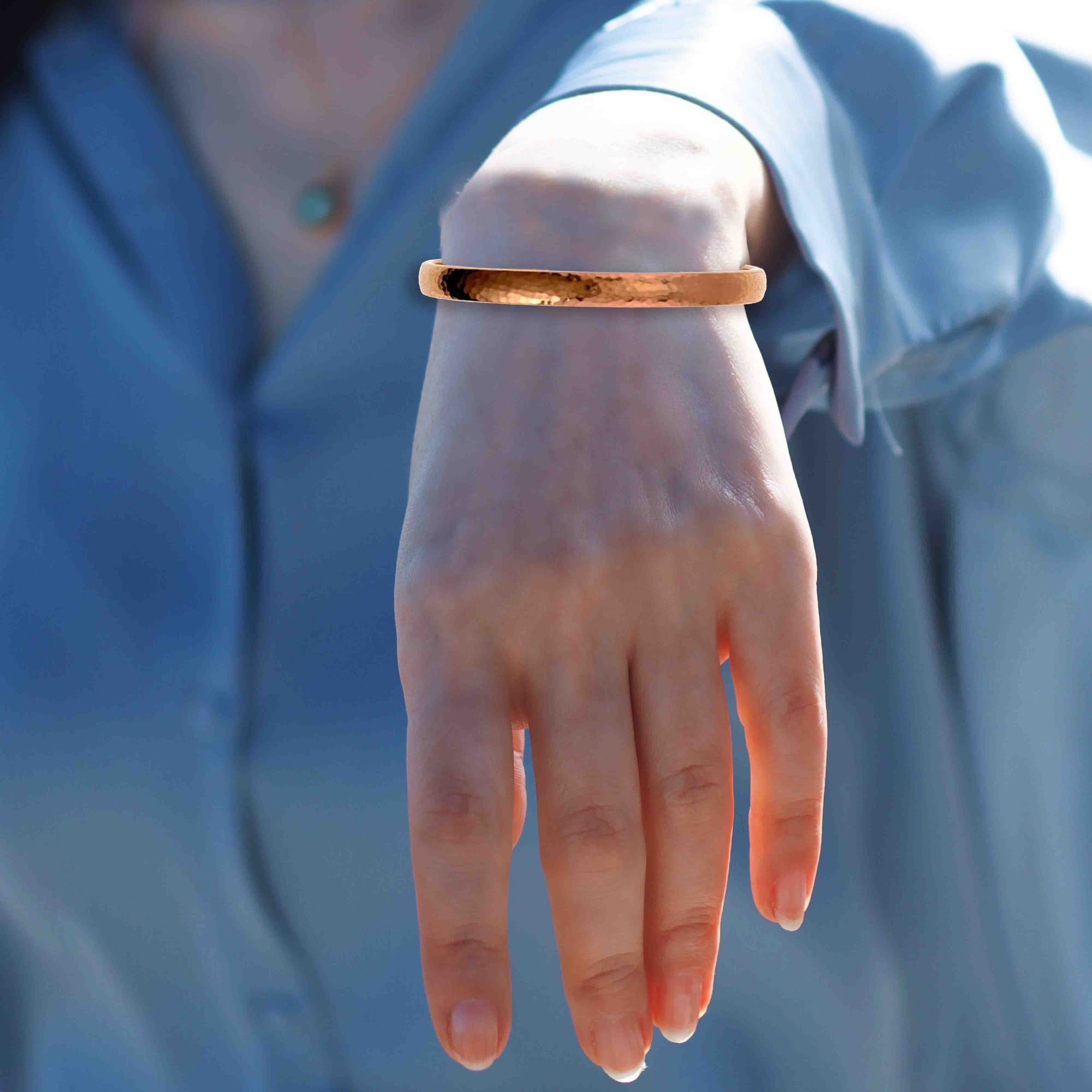
Some cuffs feel like small tools for the wrist, while others feel like bold art pieces. Thick pieces can press on a larger area, which some people like for a “hug” feeling on the forearm. Take the 7 mm Domed Hammered Copper Cuff Bracelet. The domed profile spreads pressure in a gentle arc, which can feel different from a flat strip, even if the copper weight is similar.
Men often reach for textured cuffs like the Men’s Mosaic Embossed Solid Copper Cuff 3/4 Inch Wide. The mosaic pattern breaks up scratches and patina so they blend into the design over time. One client once told me, “It looks better beat up,” which made me smile. But when his office job later shifted to long video calls and less movement, his wrists started to complain again and he blamed the cuff, not the chair or keyboard.

If you like deep, warm styling with these bigger pieces, my article on earthy copper cuff style guide gives real outfit examples. And for business settings that still want a hint of metal, the post on wearing copper jewelry with style helps place these wider cuffs so they feel natural, not like props from a costume box. All that comfort and style can soften harsh thoughts like “it stopped working,” because the cuff feels woven into your day rather than judged by each ache.
Learning From Video, Reviews, And Customer Stories
Sometimes reading is not enough. You might wonder, “Do other people have the same weird experience I do with green marks or fading results?” That is where video can help, because you get to see cuffs on moving wrists in real light, with real people talking about them.
I keep a growing copper cuff bracelet video playlist where you can watch different widths and textures in action. You might spot a shape that matches your own wrist better, or you might notice how patina looks after some wear. Small visual details like how a cuff clears the wrist bone or how it stacks with a watch can change comfort more than people expect.
For a broader set of pieces, my John Brana YouTube channel shows many designs, not just copper. Watching how people move with jewelry on can give you clues about your own posture and hand habits. If you tilt your wrist sharply for a phone or mouse, a cuff might sit in a strained way there, and later you might say it “stopped helping” when really the strain came from that long tilt.
If you are curious how others describe their experience in short form, you can also see public feedback on John S Brana on Google. Reviews are always a mix, and that is honest. Some people gush about comfort and style, some focus on how the metal aged, and some had issues we worked to fix. Reading those can help you ground your own story so it feels less lonely or strange.
What Have We Learned From “Stopped Working” Emails?
In our experience at the John S. Brana studio, most “stopped working” emails are not about the copper at all. When we ask a few simple questions, the cause is usually fit, patina or a change in daily life. Here are three cases we see often.
Case study: the tax-season cuff. One client told me the bracelet worked all year, then “gave up” during tax season. Looking closer, their keyboard hours, posture and stress had all jumped at once. The cuff had not changed. Their routine had.
Case study: the Mosaic cuff and the video-call job. A customer loved his Men's Mosaic Embossed Solid Copper Cuff and said it “looks better beat up.” Later, his job moved to long video calls with less movement. His wrists started to complain, and he blamed the cuff. The real change was the chair, the keyboard and the hours.
Case study: the stretched 4.75mm cuff. Cuffs like the 4.75mm Hammered Copper Cuff can slowly open up if they are pulled off the wrong way. Then the cuff slides down and taps the wrist bone. A gentle, even squeeze usually puts it back where it sat when it was new.
Our simple rule: Before you decide a cuff stopped working, check three things. Check the fit, check your routine, and check whether the green marks simply faded as patina built up.
How To Troubleshoot A Copper Bracelet That “Stopped Working”
What should you actually do, step by step, if you feel your bracelet ran out of steam? A simple checklist can bring things back into focus and keep you from tossing a good cuff in a drawer forever.
Start with this short set of actions:
- Clean it gently. Use a soft cloth and mild cleaner, then rinse and dry.
- Check the fit. Does it still sit where it used to, or did it creep closer to the hand or forearm?
- Wear it daily for 2–3 weeks. Keep notes in your head, even scrappy ones, about how your wrist feels.
While you do that, ask some questions that have nothing to do with metal: Did your job change? Did your sleep fall apart? Did stress jump or diet shift? Many times the honest answer is yes, but the bracelet is the easiest thing to blame, so it gets the complaint. That habit is very human, and I have caught myself doing the same thing with my own tools in the studio more than once.
If you discover a real workmanship issue, like sharp edges, cracks in the metal, or a cuff so bent it will not sit flat on the wrist anymore, reach out through my site with photos and your order info. My general guide on copper cuff bracelet results over time sits near the same topic, and you can think of this section as a more hands-on partner to that. Together we can ask, “Is this a metal problem, or a life and habit problem?” before you decide the bracelet “stopped working” for good.
Reframing What “Stops Working” Really Means
So does copper jewelry ever truly stop working, in the sense of metal losing its nature? The short, simple answer is no. The copper in my cuffs stays copper from the day I saw it as a flat strip to the day you pass the bracelet down to someone else. What changes is the surface, your skin chemistry, your routine, and your expectations.
Think of patina as a story layer on top, not a failure sign. A bright new cuff, a mid stage warm glow, and a deep aged tone are all honest faces of the same piece. At each stage, you might feel different about it, just like you might feel different about a favorite chair as it gains small dents and creaks. The object did not stop being itself, but your story around it shifted, sometimes with a small grumble.
If you like clear, grounded views on this, my article on copper jewelry questions customers ask and the post on how long a copper bracelet can take to show results form a pair. One looks at feelings, one looks at time, and this current piece adds patina, fit, and life changes into the mix.
In the end, my goal as a designer is simple: shape honest copper into cuffs that feel good to wear and that age in a satisfying way on real wrists. Your body will still have good days and bad days. If we can stop putting all the blame or praise on the bracelet alone, the phrase “stops working” starts to fade, and what stays is a long, steady relationship with a piece of metal that keeps telling its quiet, earthy story on your skin.
Frequently Asked Questions
Q1. Does copper jewelry really “stop working” after a while?
No, the copper itself does not stop. What usually changes is patina on the surface, your skin chemistry, your daily habits, and how you pay attention to small aches.
Q2. Why did my copper bracelet stop leaving green marks?
As patina builds and your skin products or pH change, fresh copper touches your skin less. Less green does not mean less real copper, it just means the reaction slowed.
Q3. Can I wear my copper cuff all day and night?
Most people can, and many of my clients do. If your skin is very sensitive, you may want to take short breaks and see how your wrist feels over a few weeks.
Q4. Will cleaning my copper bracelet make it start working again?
Cleaning will change the look, not the nature of the metal. A gentle polish can feel nice and fresh, but it is not a reset switch for any wellness affect you may feel.
Q5. How tight should a copper cuff fit to feel helpful?
It should be snug enough not to spin freely, but loose enough so you can slide a finger between metal and skin. Too tight or too loose can both cause discomfort.
Q6. Why does my friend’s copper bracelet seem to work better than mine?
Every body, job, stress level, and skin chemistry is different. Two people can wear the same cuff and have very different experiences. That does not mean your piece failed.
Q7. Is it safe if my skin turns green under the cuff?
For most people, yes. The green color is copper salts forming with sweat and is more of a cosmetic issue. If your skin gets itchy or sore, take a break and see if it settles.
Q8. When should I contact John about my copper bracelet?
Reach out if you see cracks, sharp edges, serious warping, or if sizing feels very wrong. Share photos and your order info so I can see what is going on and suggest next steps.

Also in Copper Jewelry Blog


Copper Jewelry Myths That Won’t Die (And Why They Persist)
Copper jewelry myths have been repeated for years, but most of them miss the real story. This guide explains why copper turns skin green, how patina actually protects the metal, and what separates solid handcrafted copper from plated pieces. Clear answers. No hype. Just facts that help you choose with confidence.


How Long Does It Really Take for a Copper Bracelet to Show Results?
Slip on a copper bracelet and the first changes often show up faster than people expect, but not always in the ways they imagine. This guide explains what many wearers notice in the first days, weeks, and months, from surface patina and skin contact to longer-term comfort and everyday wear habits.


Copper Jewelry: What People Want to Know, Feel, and Experience
Copper jewelry raises a lot of questions. People want to know if it really helps with pain, why it turns skin green, and how it changes over time. In this guide, designer John S. Brana explains what copper jewelry can honestly offer, how it feels to wear day after day, and how to pick pieces that fit your body and your life.