Emerald - May's Birthstone

Key takeaway: Emerald is the birthstone for May. It is a green variety of the mineral beryl, colored by chromium and vanadium. It rates 7.5 to 8 on the Mohs scale, but inclusions make it more fragile than that number suggests. Most emeralds are treated with oil, so they need gentle care. This guide covers emerald's history, sources, care and lower-cost green alternatives.

Who Is This Guide For?
This guide is for anyone born in May, or anyone buying them a birthday gift. It also helps people who love green gems but want to know how emerald compares with cheaper options. Use it before you buy emerald jewelry or order a custom piece.
What Is Emerald?
Intense. Brilliant. Dazzling. How else could you describe the deep green of May's traditional birthstone, the emerald?
Emerald is a variety of beryl. Pure beryl is colorless. Traces of chromium and vanadium turn it green. Only green beryl is called emerald. Other colors of beryl have their own names, such as aquamarine and morganite.
What Is the History of Emerald?
Emeralds are among the world's oldest known gemstones. People were mining them in Egypt as early as 1500 BC. The Mughal emperors of India prized large carved emeralds. Famous emeralds are part of the Iranian Crown Jewels. They also appeared in the jewelry of Queen Elizabeth II and actress Elizabeth Taylor. Emeralds still feature in museum exhibits around the world.
Why Do Emeralds Have Inclusions?
Inclusions, or tiny internal flaws, are very common in emerald. Gem dealers often call them "jardin", French for garden. They do not ruin the stone. Many buyers see them as part of its character. But they do make emerald more fragile than its hardness suggests.
What Is an Emerald Cut?
Cutters created a special shape for this stone, called the emerald cut. It is a rectangle with cut corners and step-like facets. The cut shows off the green color. Its trimmed corners also lower the risk of chipping.
Where Are Emeralds Mined?
Fine emeralds are rare. They are mined in only a few places:
- Colombia – the most famous source of fine emeralds.
- Zambia – a major source of bluish-green stones.
- Brazil – produces a wide range of qualities.
- Other sources – Zimbabwe, Russia, Afghanistan and India.
What Do the Facts Say About Emerald?
Each figure below comes from a recognized gemological source.
- Emerald rates 7.5 to 8 on the Mohs scale, according to the Gemological Institute of America (GIA).
- Chromium and vanadium cause its green, according to GIA.
- Most emeralds are clarity-enhanced. GIA notes that oils and resins are commonly used to fill fractures.
- Colombia, Zambia and Brazil are the main sources, according to GIA.
- Emerald is the birthstone for May, according to the American Gem Society.
| Gem | Mohs hardness | Typical treatment | Relative cost |
|---|---|---|---|
| Emerald | 7.5 to 8 | Oil or resin filling | High |
| Tsavorite garnet | 7 to 7.5 | Usually untreated | Medium to high |
| Green tourmaline | 7 to 7.5 | Sometimes heated | Medium |
| Peridot | 6.5 to 7 | Usually untreated | Low to medium |
| Green amethyst | 7 | Heat-treated | Low |

What Are the Alternative Birthstones for May?
Many gem dealers and jewelry designers suggest other green stones as May alternatives. Popular choices include green tourmaline, tsavorite garnet and other bright green gemstones such as peridot. They give a similar look at a lower price.
What Did We Find When We Checked Our Collection for Green Stones?
I checked all 46 pairs in our gemstone earrings collection on 9 October 2026. Here is what we measured:
- Emerald: none of the 46 pairs use emerald.
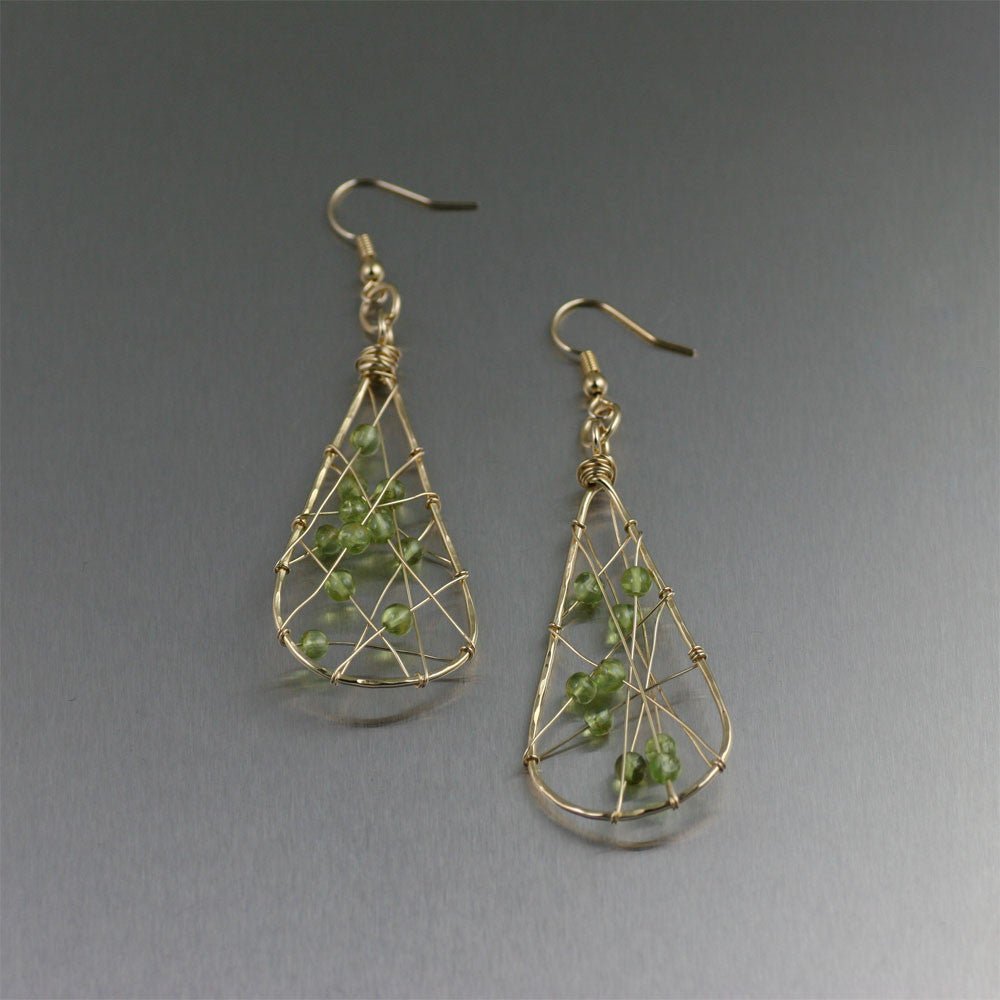
- Green alternatives: 9 in-stock pairs use other green stones. These are peridot, green amethyst, green gold quartz, mountain jade, green onyx and amazonite.
- Price: those 9 pairs range from $95 to $465. The median is $185.
- Most common green stone: peridot, used in 3 of the 9 in-stock green pairs.
Case Study: Why I Offer Emerald as a Custom Order
In my experience, emerald works best as a custom piece. Each stone has its own inclusions and oil treatment. I need to choose the stone and setting together, so the emerald stays protected. For ready-to-wear pieces, I use tougher green stones instead. Peridot and green amethyst give a fresh green from $95. If you want a custom emerald or tourmaline piece, please contact me for an estimate.
How to Choose Emerald Jewelry
- Color – a pure, vivid green is the most valued.
- Clarity – some inclusions are normal, but avoid cracks that reach the surface.
- Cut – the emerald cut protects the corners and shows off the color.
- Setting – bezel or protective prong settings suit rings best.
- Treatment – ask the seller how the stone was treated.
How Should You Care for Emerald?
- Avoid solvents and detergents – they can remove the oil and dull the stone.
- Never use ultrasonic or steam cleaners – they can crack an included emerald.
- Clean it gently – use lukewarm water and a soft brush.
- Remove it for hard work – a sharp knock can chip the stone.
Frequently Asked Questions
Q1. What is the birthstone for May?
Emerald is the birthstone for May, according to the American Gem Society.
Q2. What gives emerald its green color?
Traces of chromium and vanadium inside the mineral beryl create its green color.
Q3. Are inclusions in emerald a bad sign?
No. Inclusions are normal in emerald. Avoid only cracks that reach the surface.
Q4. How should I clean emerald jewelry?
Use lukewarm water and a soft brush. Avoid detergents, solvents and ultrasonic cleaners.