
What is Anticlastic Jewelry?
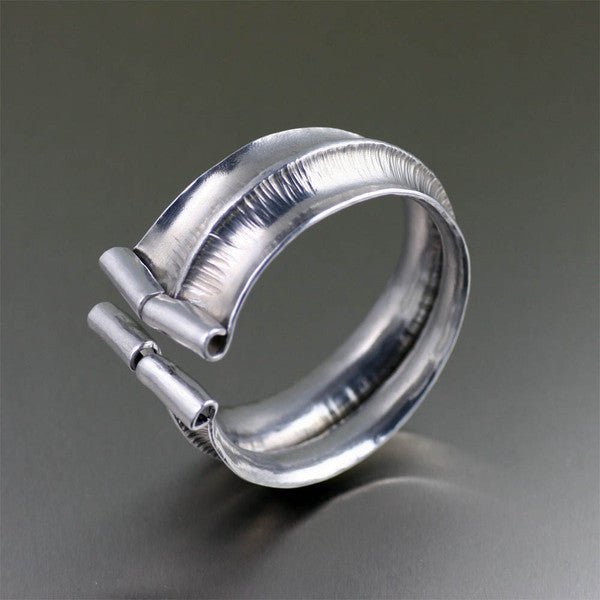
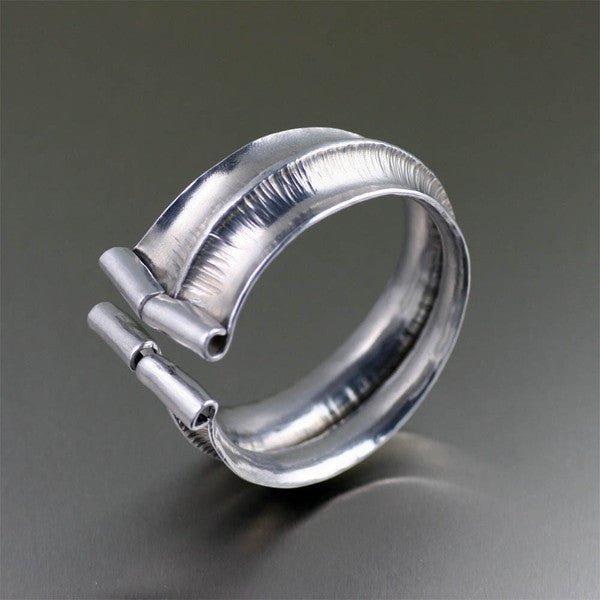
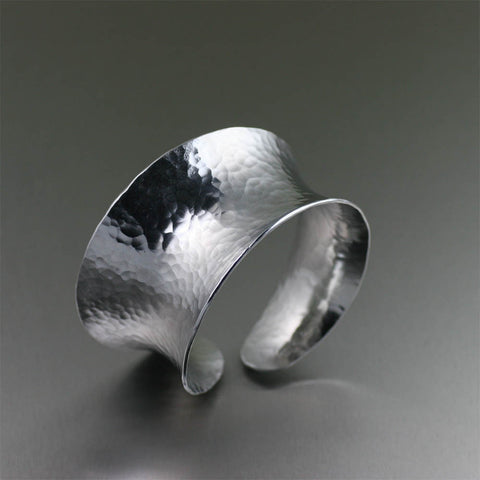
Anticlastic jewelry is a series of techniques used in metal forming to create handcrafted jewelry. The artist stretches sheet metal to create a concave curve on the outer surface while compressing the metal to create a convex curve in the middle. Both major curves, which are at 90 degrees to one another, go in the same direction. The bowl or dome shape is the ultimate form. Anticlastic jewelry is very unique and requires great patience and skills from the jewelry designer.
The Process of Anticlastic Raising
During the process of anticlastic rising, a flat sheet of metal is formed by stretching the center and compressing the sides so that the metal creates two curves that are of right angles to one another. While the pattern of the sheet is important to create the desired form, various forms can often be made from the same pattern. The final result is that of a “Pringle” potato chip or saddle shape.
Anticlastic raising is generally performed with a combination of plastic, steel, and wooden tools. A steel stake and plastic mallet are usually the quickest technique, but offers less control which ultimately requires more planishing. The preferred method is typically a plastic stake and steel hammer. This combination requires minimal planishing, and offers good speed and control. Available in various shapes and sizes, the stakes used in anticlastic raising primarily depend on the width of the metal and desired curves. The width of the pattern cannot exceed the distance between the crests.
Metals Used in Anticlastic Jewelry
Anticlastic raising is best suited for ductile metals, including silver, gold, copper, and bronzes. When this technique is used for jewelry, the metal can be quite thin. Shoppers can find a large selection of anticlastic jewelry as the technique offers a unique variety of design choices. Some popular choices include anticlastic earrings, cuffs, and bracelets. These pieces of art are highly sleek, sensual, and contemporary with a handcrafted touch.
Due to today’s high metal prices, a major advantage to anticlastic raising is the ability to create relatively thin and structural strength forms. The result is often a form that is springy and flexible, such as a necklace that requires flexibility to be worn comfortably. Anticlastic raising is both modern and ancient, with little history in between. During the Bronze Age Ireland, a ribbon torc necklace was crafted from a sheet of metal and twisted into a double helix. This creative technique of metalworking did not appear again until the end of the 20th century.
Click Here to Read More About the Most Popular Trends in Handmade Jewelry

Also in Jewelry News Blog


Where to Buy a Real Copper Bracelet: What to Look For Before You Order
Shopping for a real copper bracelet can be confusing when listings use vague terms like “copper tone” or “copper finish.” Learn how to spot solid copper, choose the right cuff size, understand natural patina, and find a well-made bracelet that will hold up to everyday wear.


Copper Jewelry Myths Explained: What’s True, What’s Not, and Why People Still Believe Them
Copper jewelry has long been linked to comfort, wellness, and old family stories, but what does the evidence really say? This article clears up common myths about copper bracelets, green skin, patina, arthritis claims, and daily wear, while explaining why copper jewelry still holds meaning through style, ritual, and personal connection.


Copper Bracelets: Placebo Effect Or Measurable Experience?
Do copper bracelets really work, or is it all in the mind? In this article, I take a closer look at the science behind copper cuffs, what wearers actually experience, and how belief and physical sensation can exist side by side. If you’ve ever wondered whether a solid copper bracelet offers real benefits or simply a meaningful ritual, this guide walks you through both perspectives in a clear, practical way.