
Copper Bracelets: Placebo Effect Or Measurable Experience?


Key Takeaways
- Copper bracelets can give a real day to day experience, even if lab proof stays mixed.
- Uncoated copper cuffs from John S. Brana react with skin, gain patina, and feel warm and solid on the wrist.
- People report less stiffness, better mood, and a sense of grounding, but these stories do not replace medical care.
- Placebo is still a real effect, and belief plus a well made cuff can change how pain feels.
- You can test copper bracelets yourself with a simple two week plan and basic notes.
- Patina and green skin marks show contact with real copper and are normal, not a defect.
- Styling and confidence are measurable benefits, since they show up in how you walk, talk, and get compliments.
- Simple care keeps an uncoated copper cuff aging in a way that fits your taste, bright or dark.
A Morning With Copper Bracelets And Stiff Wrists
Why do some people reach for copper bracelets before coffee, like it's their first routine of the day instead of the mug? You slip on a solid cuff, feel that first cool touch, then a slow warmth as the copper sits on your skin. Is that warmth just simple physics, or is your mind already asking, “Will this help my wrist today?” If you ask me as the maker, I answer like this, quite plain. The warmth is real, and the hope is real, and both live on the same wrist at the same time.
I make copper bracelets as a San Francisco based jewelry designer, and I keep them uncoated on purpose. The metal that touches your skin is the same metal I hammer on the stake. No lacquer wall sits in between. That choice matters if you are curious about any possible effect, even if you are not sure which effect you are chasing.
So what is this article trying to do, if it is not a medical sheet? I want to walk through how copper bracelets feel, what people say they notice, and how that lines up with what we can see in real life. I wrote a longer piece about copper jewelry what people want to know, feel, and experience, because these questions come up more than small talk. This is the deeper slice on bracelets alone, even if the language stays simple and a little crooked in spots on purpose.

What Makes John S. Brana Copper Cuffs Different From Regular Bangles
So what makes my copper bracelets different from the plated bangles you see in random gift shops, and why should you even care about that difference? That is the first thing I ask myself each time I cut a new strip of metal.
I start with solid copper, not a mystery base under a thin flash of color. The cuffs range from skinny to medium width, because wrists are fussy and human and do not all like the same feel. A slim cuff can almost vanish under a shirt cuff, while a wider one taps the desk softly when you type and keeps saying, “hey, I am still here.” That gentle tap can be annoying or comforting, and both reactions are part of the experience that you can measure by mood, weird as that sounds.
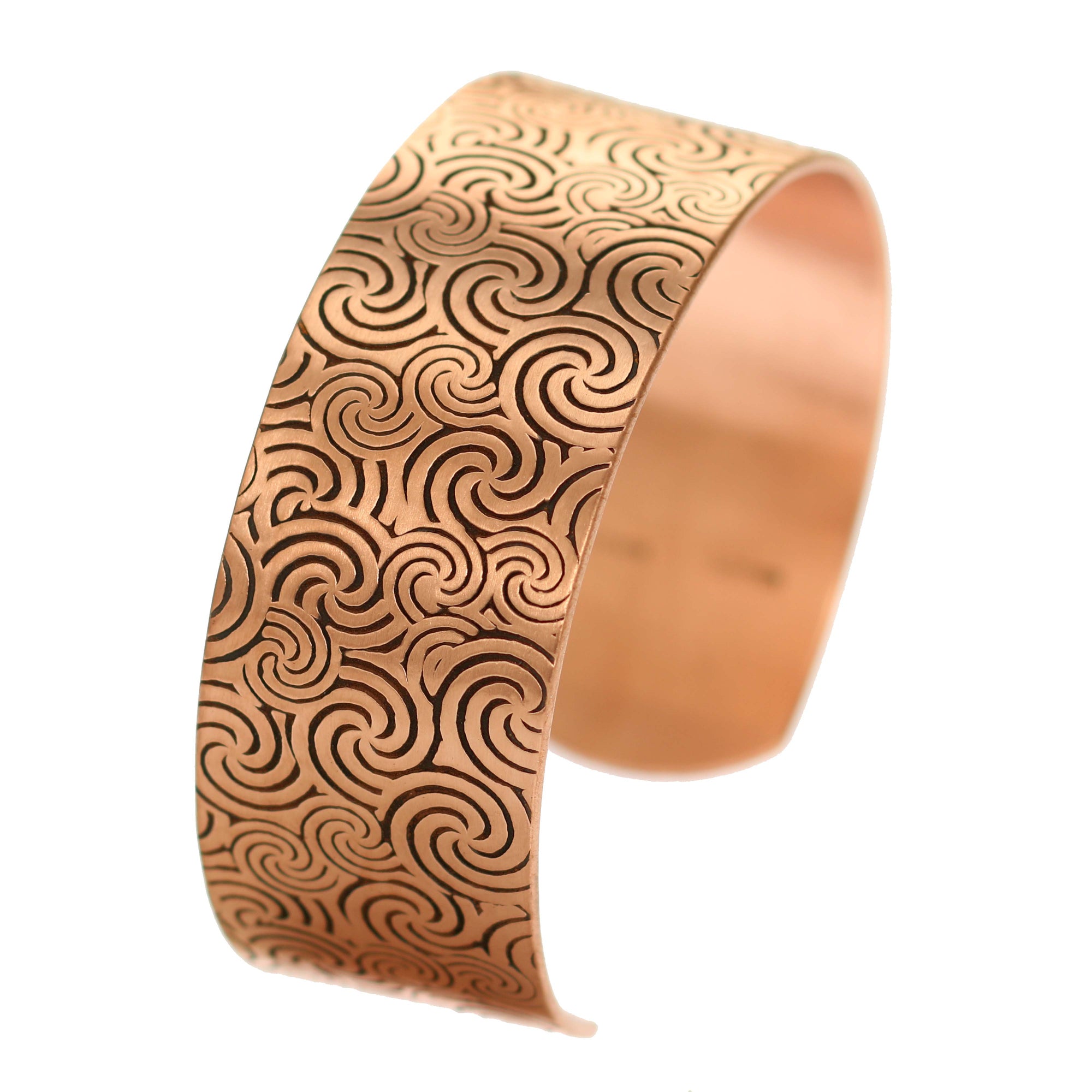
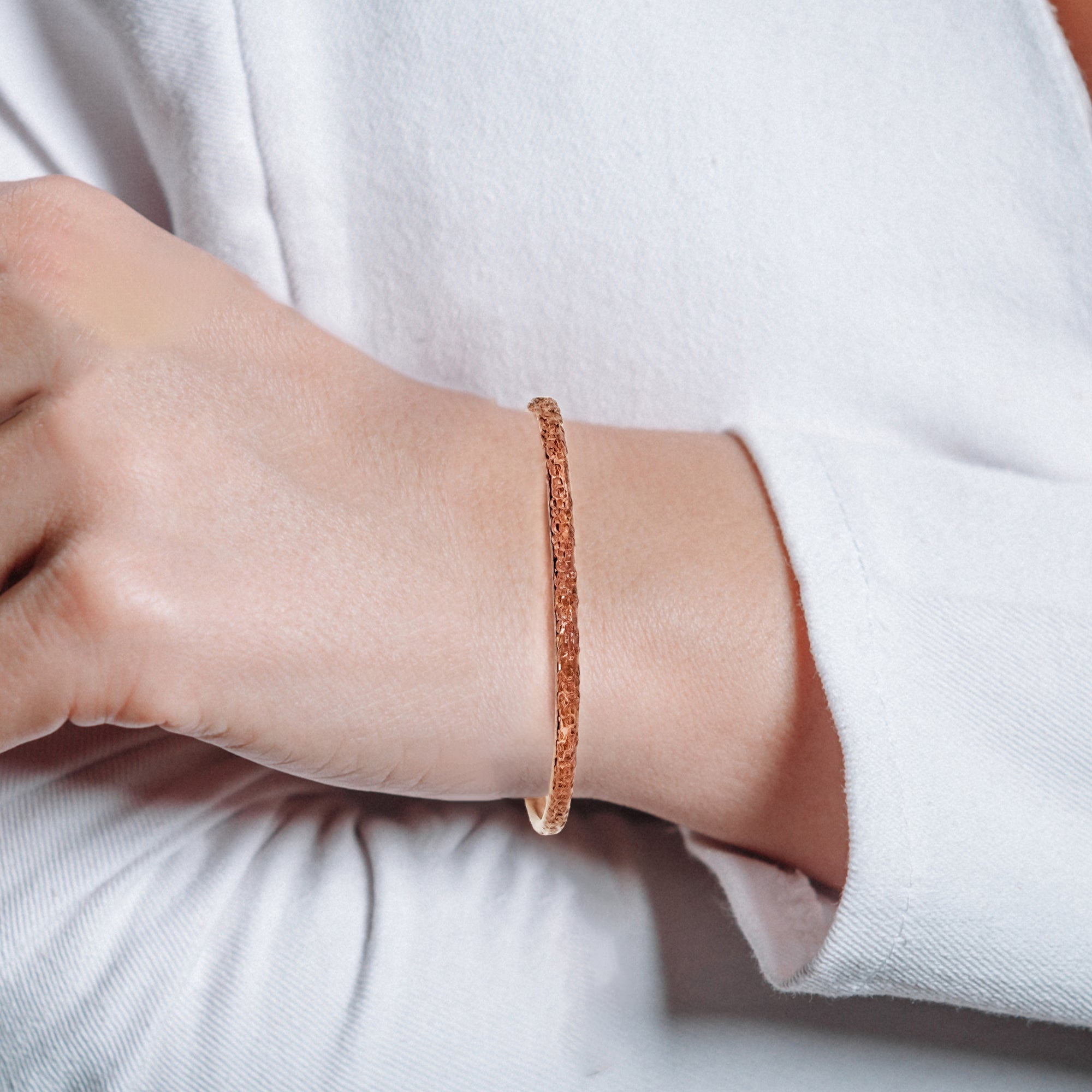
I leave the surface uncoated, so the copper stays in direct contact with skin. That means patina, and sometimes green skin marks, and no fake shine that never changes. The textures change as well. Hammered cuffs catch light in small flashes. Bark and chased textures break the surface into lines that feel like tree trunks or dried river beds. Those lines give your fingers something to touch when you fiddle with the bracelet on a long meeting call you did not fully want.
Because I use recycled and refined copper, I also think about the source. I talk about how the metal is checked in detail in my post on how the copper in my jewelry is verified. Does that change the feel on your wrist? Maybe not in a lab way, but in a “I know what I am wearing” way that matters to many people much more than they admit out loud.
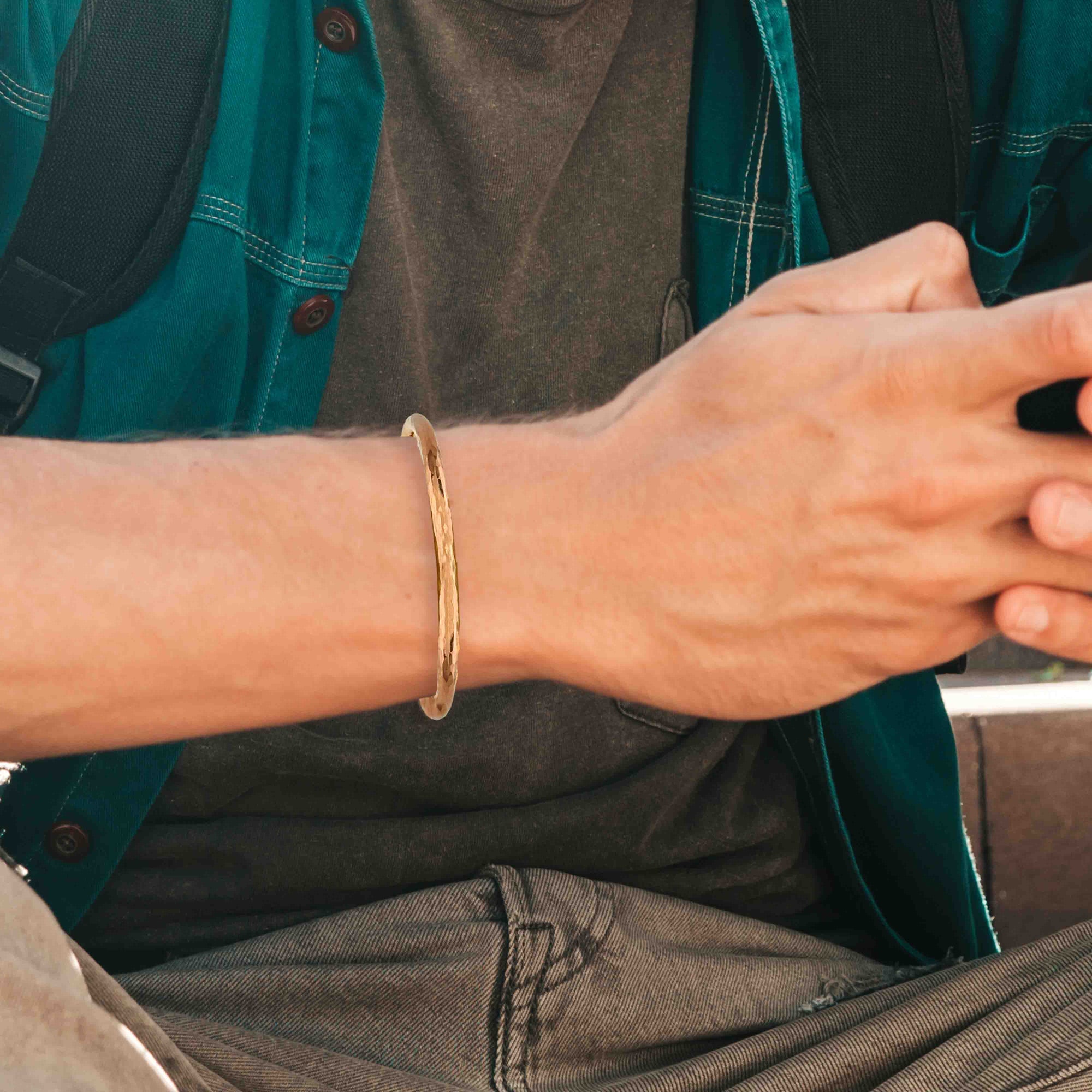
Sample Copper Cuff Styles From My Bench
Do all copper bracelets feel the same on the wrist, like clones marching in a row, or can small changes in width and curve turn them into very different daily objects? On the bench, even a one millimeter jump in width changes how my hammer hits, and that tiny change shows up on your arm.
A slim hammered bracelet like the 3.5mm hammered copper cuff bracelet wears like a thin line of metal warmth. Many people forget it is there until they rest their chin on their hand and feel the edge. A medium domed cuff such as my 7mm domed hammered copper cuff bracelet has more weight and curve, so it hugs the wrist in a softer arc. That hug can feel supportive, almost like a tiny brace, even if it is still just metal and shape.
Every cuff is open in back, which means you can adjust fit a bit with gentle pressure. I size my cuffs so they can be snug without pinching, because long wear is not possible if the first five minutes hurt. I ask customers “Do you feel it sliding or biting?” and we tweak from there. Over a full day, that small fit choice is a huge part of what you might call measurable comfort.
I talk more about timing and patience in my article on how long does it really take for a copper bracelet to show results. Even the word “results” feels heavy here, but people use that word, so I take it serious while still keeping my feet on the ground and my hammer on the stake.
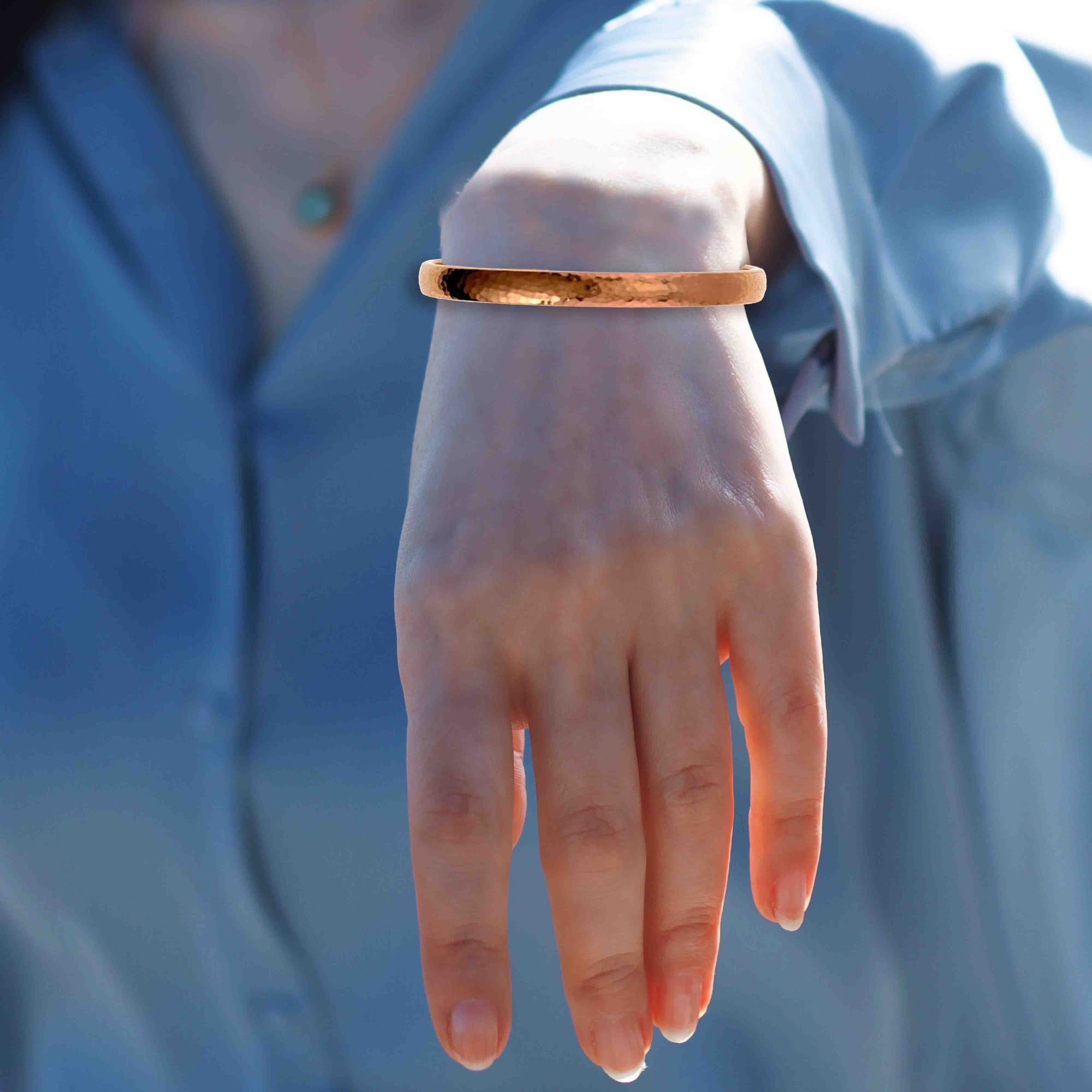
How Copper Cuffs Look, Feel, And Tug On Emotions
Why does a bright new copper bracelet feel “fresh” to some people, while a dark patina cuff feels calm and steady to others? This split shows up alot in my studio, and I have learned not to guess which camp a new client sits in.
New copper shines with a soft rose tone that almost leans toward gold in warm light. It can feel dressy even with jeans. With time, skin oils, air, and simple life shift that bright color into deep brown or near black. Every cuff ages a bit different, because every wrist carries its own mix of salt, lotion, and daily motion. When you look at the surface a year later, you see a map of how you lived in that time, and that is not me being poetic, it is just how the chemistry lands.
The feel is simple. Copper warms to skin temperature and holds it, so the bracelet can feel more “alive” than a super light metal. The weight is not heavy, but it is present, so you stay aware of your wrist in a way that can be grounding. You put it on in the morning, maybe with a small thought like “let my joints feel okay today,” and that one second ritual quietly repeats each day. Does that tiny repeated act shift your mood or sense of control, even a bit? Many people tell me yes, even if they can not explain the why in clear words.
For people who want copper as part of fall outfits, I wrote about hammered copper jewelry as a fall must have trend. Even the trend talk circles back to comfort, color, and how you feel in your own skin, which is where all of this lives in the end.
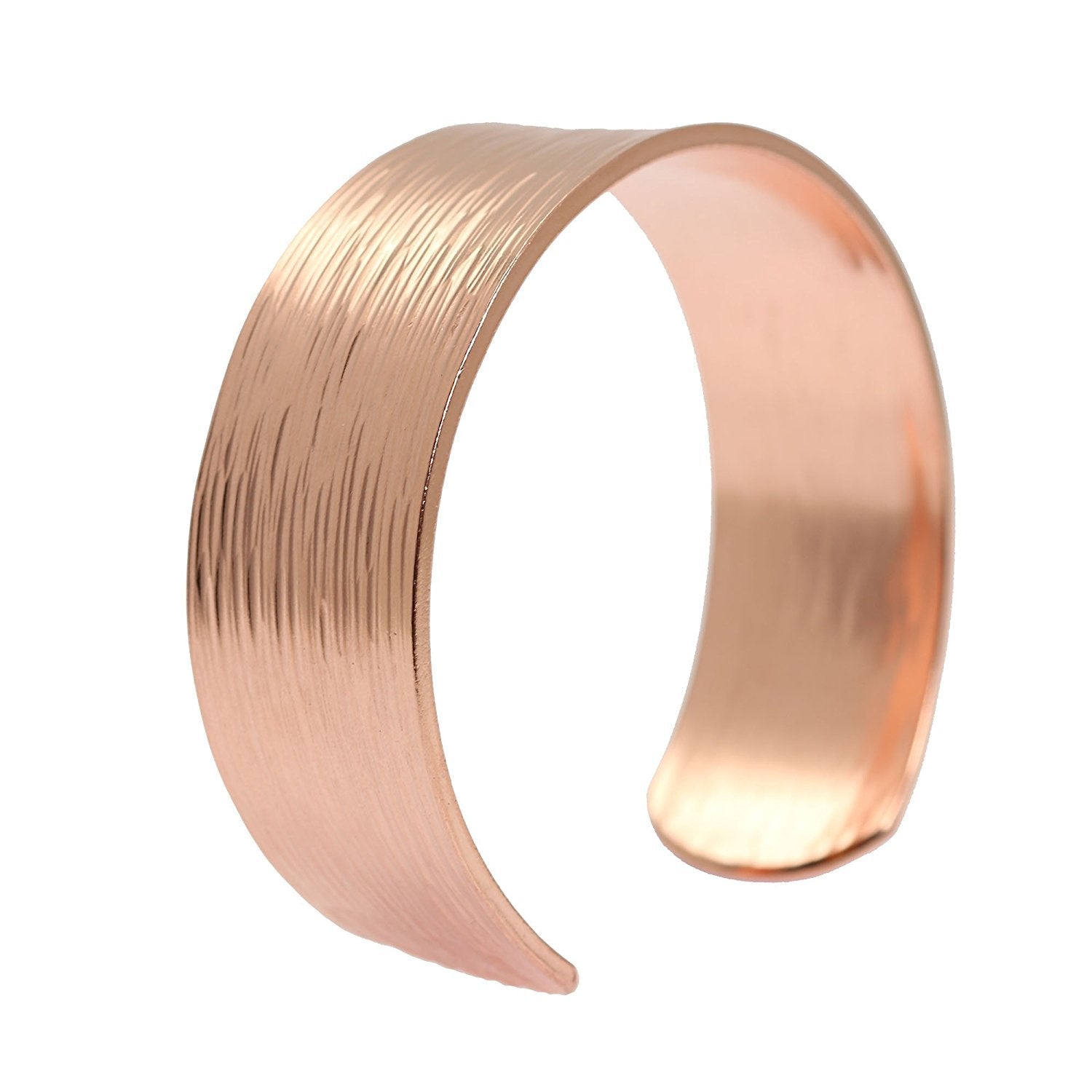
Design Features That Shape What You Feel
Can you break down a fuzzy idea like “this bracelet feels good” into clear parts, or does it all just blur together in the brain like soup? I like lists, so I chop it into pieces you can see.
Here is a simple table that maps design details to feelings, using a few of my copper bracelets as anchors you can check in real life if you wish.
| Design Aspect | How It Feels On The Wrist | Example Copper Bracelet |
|---|---|---|
| Width and weight | Slim feels light, wide feels steady and more present | Slim hammered cuffs similar to the 3.5mm line, wide bark cuffs for more solid feel |
| Texture | Smooth feels calm, hammered or bark feels more “alive” under fingers | Bark textures like my chased bark pieces feel like holding part of a tree |
| Finish | Bright polish feels sharper and dressier, patina feels calmer and earthy | Bright cuffs when new, darker patina over time as you wear them day after day |
| Open cuff design | Easy to slip on, small flex for fit, no clasp to fight in the morning | All open copper cuff designs in my collection use this simple gap style |
Do these details look small on paper? They do, but on your body they stack up fast. When someone writes me that their cuff feels “like a tiny shield” or “like a warm band that reminds me to slow down,” they are talking about these boring little design choices, even if they never use those precise words.
Health Claims Around Copper Bracelets And What People Actually Say
Do copper bracelets cure arthritis or fix joints in some magic way, like a secret pill you wear instead of swallow? I do not say that, and I do not think that, and I want to be very clear about it.
People who buy my copper cuffs share a wide mix of stories. Some say their wrist or hand feels less stiff after a few weeks of daily wear. Some say they sleep better, or feel more calm, or notice fewer sharp twinges when they type or knit. Others feel no change at all in pain, but still like the bracelet as a steady comfort item, kind of like a favorite stone they keep in a pocket. These stories matter, but they are not lab trials, and I never present them as such.
I make jewelry. I do not make medicine. That said, I listen to what customers tell me, because that lived experience is the “measurable” part they care about most. A change in pain score from eight to six on their own little notepad is still a real change, even if we can not prove the source of it. I wrote more about these claims and the patience they often need in my article on what people mean when they say copper jewelry stops working, since that phrase comes up a surprising amount.
Copper bracelets should sit next to good sleep, movement, and proper care from a doctor when you need one, not instead of them. If you want a cuff as an extra tool in your comfort kit, that is where my work fits best, at least in my view.
Copper As A Trace Mineral, In Plain Language
If copper is already in our bodies as a trace mineral, does wearing it on the skin feed the body, like a snack you never chew? That is a fair question, even if the answer is not very romantic.
Your body needs copper in tiny amounts for things like enzymes and energy work. You usually get it from food, not jewelry. Some people believe that skin contact with copper might add a tiny bit more into the picture. Science on that route is mixed and still argued over, and I do not sell my cuffs as a mineral supplement, that would be quite silly.
Still, the idea itself makes some people feel better about wearing copper daily. They like that the metal against their wrist is the same element they read about in health articles. For them, the bracelet is part symbol, part possible tiny helper. If they also track diet, stretching, and sleep, it becomes one piece in a small puzzle. I talk more about how people frame these health ideas and feelings in copper jewelry, what people want to know, feel, and experience, where the questions run wide and sometimes a bit wild.
So is skin contact “doing” anything chemical that really matters, or is the main effect coming from belief and routine? Right now, I place more weight on belief and routine, while still leaving a small open door in my mind, because bodies are complex, and I try not to pretend I know every corner of that maze.
Placebo Effect, Belief, And A Copper Cuff On Your Wrist
If a person feels less pain while wearing copper bracelets, and that change comes from their belief, does the relief count as real, or is it fake comfort that should be ignored? This is where the word “placebo” often scares people more than it should.
Placebo, in simple talk, means your brain helps shift your body’s response because you expect some help. The pain signals do not vanish into thin air, but your mind filters them in a softer way. A copper bracelet can carry that expectation. You pick it out, pay for it, wait for the box, open it, and slide the cuff on with a small hope already formed. All those steps give the bracelet meaning before the metal even warms up.
As a maker, I know that design feeds belief too. A well formed cuff with clear hand hammered marks feels intentional and serious. It does not feel like a random trinket. That sense of care can strengthen the idea that “this might help me stay more comfortable.” Does that mean I sell belief in a box? In a way, yes, but I try to pair it with honest talk about limits, so the story stays grounded rather than floaty.
If you want a deeper story look at what people mean when they say copper jewelry stops working. People often describe a strong first wave of belief, then a plateau, then a point where they notice the bracelet less, and the brain goes looking for the next new thing. I see that pattern in many areas of life, not just in jewelry.

One Everyday Story: Is It The Copper Or The Mind
Let me tell you a simple, slightly odd story that plays out in small changes, since big drama is rare with copper bracelets.
A customer writes and says, “My wrist feels stiff by noon most days, should I try a cuff?” I suggest a slim piece first, so we choose something like a light hammered band. They wear it every workday for three weeks. During that time, they also stretch more, because the cuff reminds them of the problem they want to ease. They notice the bracelet when they reach for the mouse, and that small notice acts like a bell, “relax your hand a bit.”
After some time, they report less sharp ache at the end of the day. Is that from copper touching the skin, the extra stretching, the extra drinking of water they started at the same time, or just the belief that “I am doing something for my wrist”? Truthfully, it is probably a blend of all of it. Does that make the comfort less real? Their body does not think so. The pain signals that fired like loud alarms now sound more like low hums.
I encourage people to track this kind of story with short notes rather than foggy memory. A small notebook with dates, pain levels, and any sleep or stress changes can make the pattern more clear. This is the same type of simple tracking I talk about in how long does it really take for a copper bracelet to show results. Without notes, the brain forgets quickly and fills in the gaps with guesses, and those guesses are bad scientists.
What You Can Actually Notice From Wearing Uncoated Copper
What things can a person see and feel with copper bracelets that do not need a lab to measure, the kind of details you can spot with plain eyes and common sense? This is where the idea of “measurable experience” starts to make more sense.
First, there is the skin. Some people see faint green marks under their cuff, others never see any color shift at all. The green comes from copper reacting with sweat and skin acids. It washes off with soap and water and does not mean harm, but it does show that the metal is real and active at the surface. Second, there is temperature. Copper tends to warm up and hold your skin heat. If you touch the cuff after wearing it a while, it often feels warmer than the air. Third, there is pure comfort. On days with more hand work, you might notice whether your wrist feels more or less tight when the cuff is on or off.
These are all small things you can notice without charts. To keep them in line with daily life, I often suggest that people wear a cuff for a stretch of days, then rest from it, then go back on. This simple on and off rhythm can highlight differences in comfort or mood that might slip by if you either wear it all the time or never at all. I fold this kind of advice into more styling focused pieces too, like wearing copper jewelry with style, because how you feel in the bracelet is as important as how it looks in a photo.

Two Week Self Check For Curious Copper Bracelet Fans
If someone wants a simple way to test copper bracelets on their own body, without making it a science project that eats their free time, what can they do? I suggest a short, clear plan.
Try this:
- Wear a copper cuff every day for two weeks.
- At the end of each day, rate your wrist comfort from 1 to 10 in a small notebook.
- Jot down sleep quality, big stress events, and extra activity like heavy typing or lifting.
- After two weeks, rest from the cuff for one full week.
- Keep writing the same notes without the bracelet.
- At the end, compare the two blocks and see if any clear pattern jumps out.
This is not a lab study. It is a personal check, something like a home recipe test. You will not get a p value, but you will get a better feel for whether the bracelet connects with your comfort in any way that you care about. If the scores look the same, you still might enjoy the bracelet for style alone. If they shift, you gain one more data point in the big copper conversation, small but honest.
I often see people talk about this kind of slow change in longer pieces such as copper jewelry, what people want to know, feel, and experience. The core idea is simple. Let your own body speak for itself over time, in plain notes rather than wishful thinking.
Why Uncoated Copper Matters, Including That Green Spot On Your Skin
If a copper bracelet is sealed under clear varnish so it never tarnishes, is it still the same experience as raw metal on skin, or have we turned it into a simple fashion prop? From where I stand at the anvil, these are two very different objects.
Uncoated copper stays in direct contact with your skin. This lets patina form more freely, and it lets your skin chemistry leave marks on the metal, or sometimes under it. For people who believe that copper might support joint comfort, that contact feels important, even if the science is not settled. For people who care mainly about aesthetics and ritual, the changing surface makes the bracelet feel like it is aging with them, not stuck in a frozen showroom state that never shifts.
Sealed copper, on the other hand, behaves more like any coated fashion piece. It stays shiny, it does not mark skin, and it looks the same in year five as day one until the coating chips. That has its place, but it is not where I focus. I talk more about this choice and how it ties into daily wear in earthy elegance, unleash your style with copper cuff jewelry, where the whole topic is how cuffs sit in real wardrobes rather than display cases.
So is green skin a problem or a badge? It depends on your taste. If you hate it, you can wear the cuff a bit looser or for shorter stretches. If you like it as proof of contact, you may even peek under the bracelet now and then to check the “copper fingerprint” you are making without even trying.

Patina And Skin Marks: Trouble Or Proof Of Contact
Why do some people panic when their copper bracelet darkens or their skin shows a faint tint, as if the piece is failing, while others smile and say “it is finally getting good”? Expectations drive a lot of that split reaction.
Patina is simply oxidation, a normal surface change when copper meets air and skin. It darkens, spots, and in some conditions picks up rich brown or even soft green tones. You can treat this as a flaw or as character. From my bench point of view, it is character. It proves that the bracelet has been worn in real life, not stored in a box. Skin marks come from similar reactions. They wash off.
If you want to keep copper bright, you can:
- Store it dry when not in use.
- Wipe it with a soft cloth after wear.
- Use a gentle copper cleaner once in a while.
If you prefer a deep patina, you simply skip the cleaner and let time do the work. I go over general care for many pieces in essential tips for caring for your handmade jewelry. The nice thing here is that you get to pick your own comfort level, bright or dark, marked or clean, rather than follow one strict rule.

Styling Copper Cuffs So Confidence Becomes Part Of The Experience
Can a copper bracelet change how you walk into a room, even if it does nothing at all to your joints? Style might sound shallow here, but it often links straight to confidence and mood, which are very real parts of daily life.
A slim hammered cuff can sit next to a watch in a quiet way. It does not shout, but you feel it when you reach for your coffee or type an email. A wide bark cuff, by contrast, grabs attention. It can anchor a simple outfit, giving you one strong detail instead of many small ones. For some people, that single strong piece makes dressing feel easier, and less mental clutter can ease stress more than we like to admit.
Copper also plays well with other metals. I often see customers stack it with brass or stainless steel, mixing warm and cool tones. This mix keeps the look from feeling too matchy, which can actually make the brain relax a bit. “Close enough, good enough,” it says, instead of chasing perfect matches that do not exist. If you want more ideas on outfits, my piece on wearing copper jewelry with style and another on accessorizing business casual with copper jewelry both dig into that side with simple examples.
People also buy copper cuffs for specific moments like anniversaries. I touch on that in why copper jewelry is the perfect 7th anniversary gift, where the emotional meaning of the metal matters as much as its physical feel.

Style Goals And Suggested Copper Cuffs
To keep things clear, here is a small table that pairs style goals with cuff choices. This is less about fashion rules and more about what actually feels right on the wrist over many hours.
| Style Goal | Suggested Cuff Type | Why It Works |
|---|---|---|
| Everyday subtle support | Slim hammered or chased cuff | Light weight, easy to pair with a watch or simple bracelet stack |
| Organic nature inspired feel | Bark or chased bark cuff | Texture recalls wood and stone, gives fingers something to explore |
| Bold center piece | Wide bark cuff or heavy hammered band | Extra width and weight add presence and visual focus |
| Artistic textured edge | Patinated hammered or bark cuff | Marks and patina catch light and show hand work, not machine sameness |
If you want more visual ideas, I shared a selection of my strongest pieces in top 10 copper cuff bracelets that make a statement. Seeing these on real wrists helps people choose the right “feel” as much as the right look, because those two are tied tight even if we pretend they are separate.
Caring For Your Uncoated Copper Cuff So It Ages With You
How much work does a copper bracelet need, and will it turn into a fussy pet you have to polish every weekend? Most people do not want that, and I do not blame them one bit.
Basic care is simple:
- Take the cuff off before swimming or using harsh cleaners.
- Try to avoid heavy lotion right under the bracelet.
- Wipe it with a soft cloth now and then to remove skin oils.
- If you want it bright, use a copper cleaner here and there.
These small moves keep your cuff in the zone you like, without turning maintenance into a chore. If you miss a week, the bracelet will not collapse. It will just darken a bit more, which you may even enjoy. For a wider view that includes other metals, I wrote essential tips for caring for your handmade jewelry, built from my own bench habits and customer questions.
In my experience, people who accept patina as part of the story feel calmer about care. The cuff can age right along with them, gaining small marks, and that shared aging feels oddly kind. People who fight every speck of tarnish sometimes feel more stress than comfort from their bracelets, which defeats the whole point. So when you pick a cuff, you are also quietly picking a care attitude, even if you do not notice that part at first.

So Are Copper Bracelets Placebo, Physics, Or Somewhere In Between
After all this talk, are copper bracelets a simple placebo, a small physical helper, or some messy mix of belief and metal that does not fit neat labels? The honest answer sits in that last option, even if it sounds a bit untidy.
The physics part is clear. Copper warms to the body, carries weight, and reacts with skin to form patina. These things you can see, touch, and photograph. The placebo part is in the story you tell yourself when you wear it. “This bracelet supports my joints,” or “this cuff reminds me to care for my body,” or “this band is my calm anchor on loud days.” Those stories can change pain and mood in ways that feel very real, yet do not show up in a lab the same way a pill might.
I do not promise medical outcomes, and I never will. I do promise a well made piece of jewelry, honest materials, and design that respects both style and wearability. From there, the measurable experience belongs to you. You can test it with your own two week notes, you can track compliments, you can notice if your hand feels less tense at the end of the day. That is your personal copper data set, small but true.
If you want more views, you can watch my copper bracelet playlist on YouTube copper jewelry videos or visit my main John Brana YouTube channel where I show how these cuffs are shaped by hand. You can also see my business profile at John S. Brana Handmade Jewelry on Google if you like to check makers in a more formal way. In the end, the question is simple and personal. Does a copper bracelet, on your wrist, make your day feel even a little bit better. If yes, that is a measurable experience that matters, even if it grew from small, quiet roots.
Frequently Asked Questions
Do copper bracelets help with arthritis or joint pain?
People often say their joints feel less stiff when they wear copper bracelets, but clear medical proof is still mixed. I do not sell my cuffs as treatment. If you try one, it should sit beside proper care from your doctor, not replace it. The comfort you feel can come from warmth, belief, design, or a mix of all three.
Will a copper bracelet turn my skin green, and is that bad?
Some people see a faint green mark where the cuff sits, others see none. This comes from copper reacting with sweat and acids on the skin. It is not harmful, and it washes off with soap and water. Many people treat it as proof that the bracelet is real copper, not a plated fake.
How long should I wear a copper bracelet before I know if it helps me?
A simple test is two weeks of daily wear, then one week without, while you keep short notes on comfort, sleep, and stress. If you see a pattern that matters to you, keep the cuff in your routine. If nothing changes, you can still enjoy the bracelet for style alone.
Do I need the bracelet to be uncoated for any possible benefit?
If you care about direct contact between skin and copper, uncoated cuffs make more sense. Coated or lacquered bracelets block some of that contact but stay brighter and do not mark skin. It comes down to what experience you want, more contact and change, or more shine and less mess.
How should I clean my copper bracelet without ruining the texture?
Use a soft cloth to wipe it after wear. For deeper cleaning, use a copper cleaner and a gentle touch so the texture stays sharp. Rinse and dry it well. If you like patina, clean less. If you like bright copper, clean more often.
Can I wear copper bracelets with other metals like silver or stainless steel?
Yes, copper stacks well with many metals. The warm tone of copper next to cool silver or stainless steel creates a simple contrast many people enjoy. Just make sure the stack still feels comfortable and does not pinch your wrist when you move.
Are copper bracelets safe for everyone to wear?
Most people can wear copper bracelets without any problem. If you have a known metal allergy or a skin condition, talk with your doctor first. If you see redness, itching, or discomfort, stop wearing the bracelet and check with a professional.

Also in Jewelry News Blog


Copper Bracelet Side Effects: Green Skin, Patina, and What Is Normal
Learn what is normal when wearing a raw copper bracelet, including green skin, patina, and natural color change over time. This article explains why these effects happen, how to reduce them, and how to care for uncoated copper cuffs so you know exactly what to expect from real copper jewelry.


Where to Buy a Real Copper Bracelet: What to Look For Before You Order
Shopping for a real copper bracelet can be confusing when listings use vague terms like “copper tone” or “copper finish.” Learn how to spot solid copper, choose the right cuff size, understand natural patina, and find a well-made bracelet that will hold up to everyday wear.


Copper Jewelry Myths Explained: What’s True, What’s Not, and Why People Still Believe Them
Copper jewelry has long been linked to comfort, wellness, and old family stories, but what does the evidence really say? This article clears up common myths about copper bracelets, green skin, patina, arthritis claims, and daily wear, while explaining why copper jewelry still holds meaning through style, ritual, and personal connection.