
Where to Buy a Real Copper Bracelet: What to Look For Before You Order


Key Takeaways
| Question you’re probably asking | Quick answer you can use today |
|---|---|
| How do I know it’s a real copper bracelet? | Look for “solid copper” or “pure copper,” real weight, and honest talk about patina. |
| What’s the easiest scam to spot? | “Copper tone” and “copper finish” wording. That usually means plated or painted. |
| Should I pick uncoated copper? | If you want real patina and real copper feel, yes. If you need it to stay bright, no. |
| Will copper help arthritis? | People love the ritual, but medical proof is not there. Buy it for design, not cures. |
| What matters more than photos? | Material disclosure, sizing guidance, and a clear return policy. |
What Do the Numbers Say About Real Copper?
According to the Copper Development Association, standard pure copper sheet (alloy C11000) is at least 99.9% copper. That is the kind of sheet solid copper jewelry is cut from.[1]
Data from the Copper Development Association puts copper's density at about 8.96 g/cm³. Aluminum, a common base for "copper-tone" pieces, is only about 2.7 g/cm³, according to The Aluminum Association. So real copper weighs about 3.3 times more.[1][2]
Copper is not magnetic. A magnet that sticks to a "copper" bracelet points to a steel or iron core under a copper finish.
The FTC Jewelry Guides (16 CFR Part 23) say sellers must not misrepresent the metal content of jewelry. That is why clear wording like "solid copper" matters.[3]
A 2013 randomized, placebo-controlled trial in PLOS ONE tested copper bracelets on 70 people with rheumatoid arthritis. It found no meaningful effect beyond placebo.[4]
The Statue of Liberty was dedicated in 1886. Its copper skin is only about 2.4 mm thick, according to the U.S. National Park Service. Its green patina is the same natural process you see on uncoated copper jewelry.[5]
Why “Real” Copper Matters (and why people get burned)
What’s a “real copper bracelet,” anyway? It sounds simple, but the internet makes it weird. Someone orders a bracelet that looks copper in the photos, then it shows up light as a potato chip, and it feels… fake-ish. You ever held something and thought, “Wait, this is painted, isn’t it?” Yeah, that.
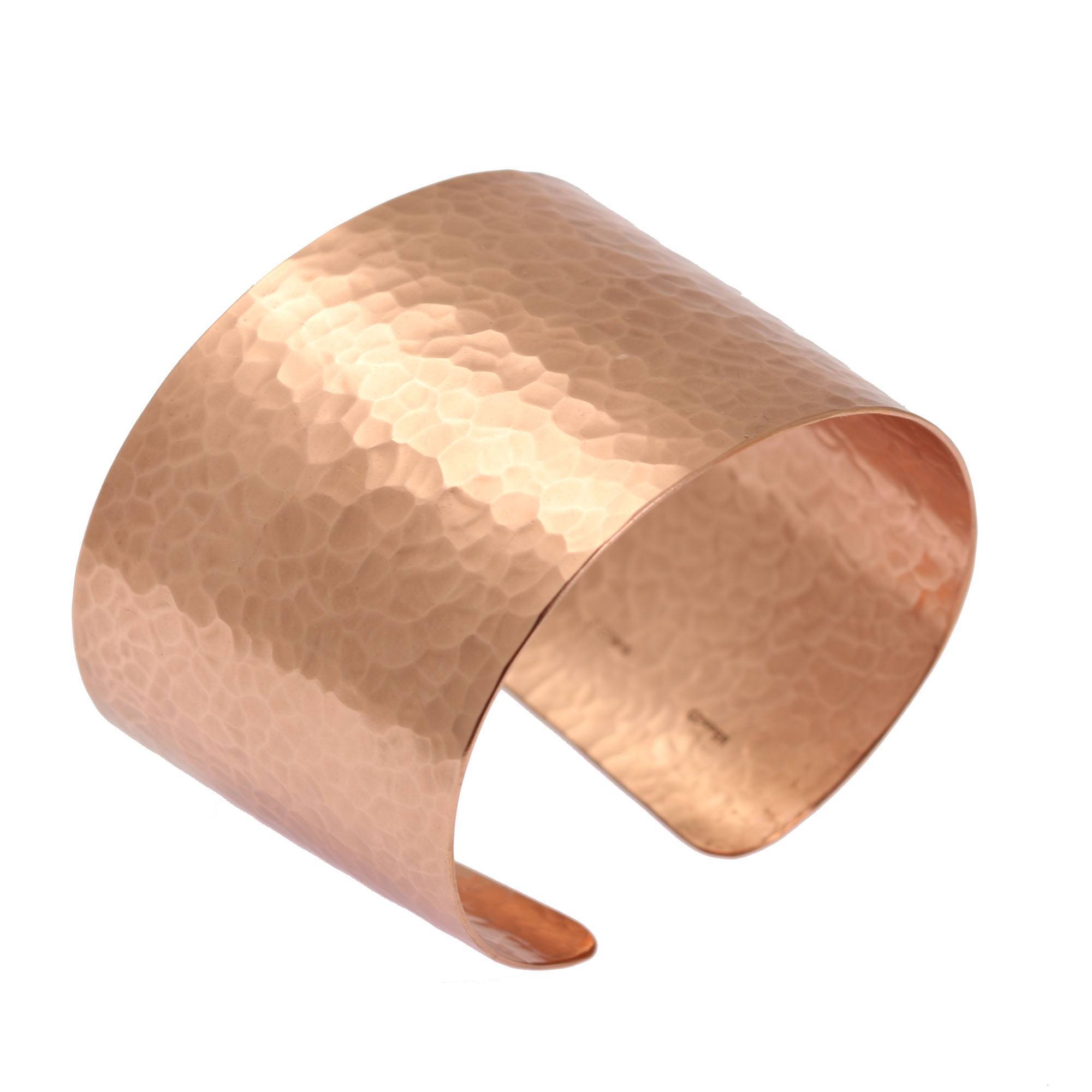
Here’s the plain definition I use in my studio: a real copper bracelet is copper all the way through. Not copper-colored. Not a mystery base metal with a copper mist on top. Not “copper tone.” Real copper has a warm, reddish glow, and it changes over time. That change is the point, even if it surprises people at first.
Do you need a bracelet that stays shiny forever? If you do, you might not want raw copper. That’s not me being dramatic, it’s just chemistry. Copper reacts with air, moisture, skin oils, soap, lotion, and whatever else your day throws at it. The surface darkens. Sometimes it goes deeper brown. Sometimes it leans green in spots. That’s patina doing its job.
I design copper cuffs with that reality in mind. I’m not trying to “freeze” copper in a bright penny color. I’d rather you get the honest metal and decide how you want it to age. Want a quick place to browse styles first? Start with copper jewelry designs and then narrow down to cuffs if that’s your thing.
Small gut-check question: are you buying copper for the color today, or for how it’ll look after a year of real wear? That answer changes what you should buy, and who you should buy from.
Fast reality list (no fluff):
- “Copper tone” usually means not copper.
- “Anti-tarnish coating” usually means not raw copper.
- “Solid copper” should mean copper through and through.
What “Real Copper” Actually Means (solid vs plated vs “copper-tone”)
Let’s make this simple: copper can be solid, plated, or just colored. The words matter, because sellers use them to slide around the truth. Annoying, but real.
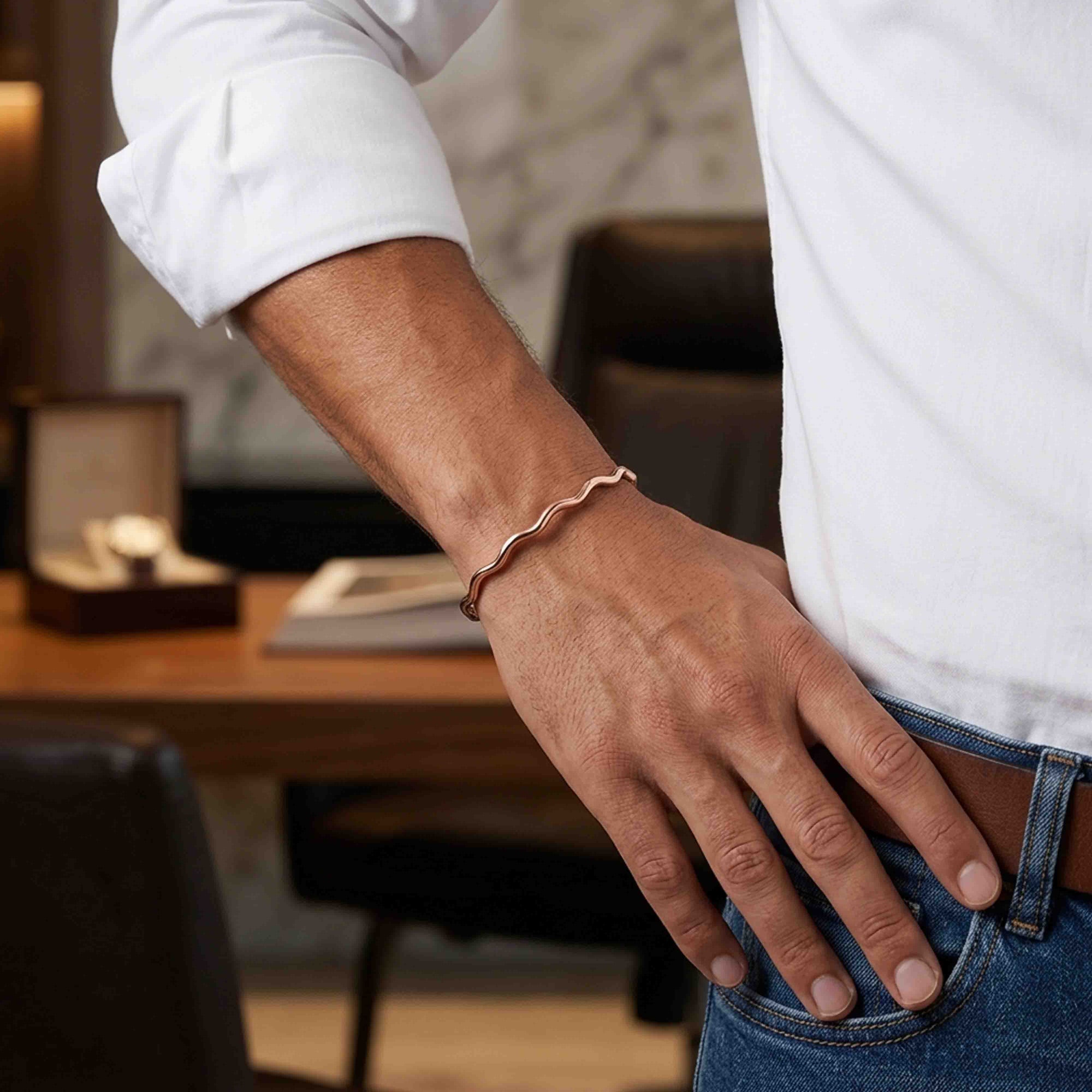
Solid copper means the bracelet is copper throughout. If you could cut it (please don’t), it would still be copper inside. Solid copper has a certain heft to it. It also has a warmth that looks less orange than cheap “copper color” alloys. And yes, it will darken and shift as it’s worn. That’s a feature, not a defect.
Copper plated means a base metal underneath with a thin copper layer on top. Plating can look great at first. Then it wears off where your wrist rubs a desk, a keyboard, a steering wheel, or a bracelet stack. What happens next? You see the base metal peeking through, and it looks patchy. That’s when people email sellers like, “Uh, what is this?” Fair question.
“Copper tone” is the biggest red flag phrase. What does it even mean? Usually it means: “This is not copper, but it kinda looks like copper.” If a listing won’t say the base metal clearly, I treat it like a no.
Now, a quick note on purity. People love the phrase “pure copper bracelet.” Most solid copper jewelry sits around high purity sheet copper. If you want to see how one maker approaches verification, here’s my take on it: how the copper in my jewelry is verified.
Mini Q and A (because shoppers ask it constantly):
- Does real copper change color? Yes, it does.
- Does that mean it’s low quality? No, it means it’s copper.
- Can plated copper change color too? Yep, and it often changes in uglier ways.
| Type | What it really is | What goes wrong later |
|---|---|---|
| Solid copper | Copper all the way through | Darkening and patina (normal) |
| Plated | Base metal with copper skin | Chips, rub-through, uneven wear |
| “Copper tone” | Vague, usually not copper | Surprise metal, weird fading |
Uncoated Copper Cuffs: why people choose them even when they tarnish
“Uncoated” sounds scary to some buyers. Should it? Not really. It just means the copper isn’t sealed under lacquer, varnish, or a clear topcoat. So the metal can actually be metal. That’s the whole idea.
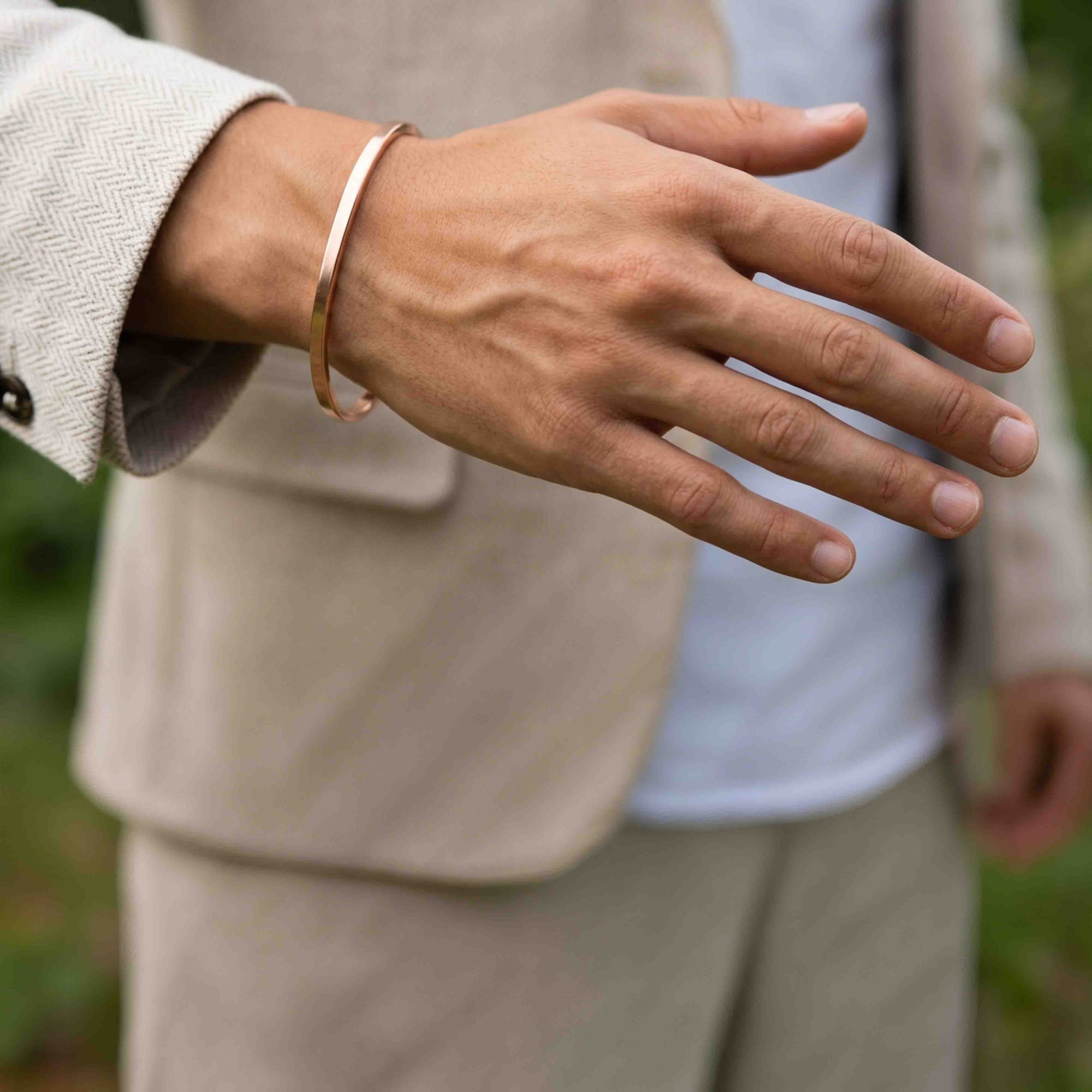
Do you want a copper cuff that feels like copper on the skin? Uncoated is how you get that. Do you want a copper cuff that never changes color? Then you’re asking copper to act like plastic. It can’t, and it won’t.
I’ll be blunt: lots of mass-made copper bracelets are coated because returns are expensive. A coating keeps the bracelet looking “new” longer, so fewer people complain. But it also blocks the natural patina, and it can make the whole “I want real copper” goal kind of pointless.
Pros of an uncoated copper cuff:
- It develops patina, so it gains character over time.
- You can “reset” the surface with cleaning if you want it bright again.
- The texture gets richer, especially on hammered and embossed surfaces.
Cons (these are normal, not defects):
- It can darken quickly if you wear lotion or sweat a lot.
- Some people get green or dark marks on skin.
- If you hate change, you’ll hate copper. Simple.
People sometimes ask, “So… does it stop working?” Like copper is a battery. That question comes up enough that I wrote about it: what people mean when they say copper jewelry stops working. Spoiler: they’re usually talking about color changes, not function.
Who uncoated cuffs fit best (real talk list):
- You like materials that age: leather, denim, wood, copper.
- You don’t panic when something looks different next month.
- You’d rather own one solid piece than five flimsy ones.
Before You Order Online: the real copper bracelet checklist
Want the quickest way to avoid a bad buy? Read the listing like a detective, not like a daydreamer. Ask annoying questions in your head. Then answer them using the page, not your hopes.
1) Material disclosure: does it say solid copper clearly?
If the words “solid copper” or “pure copper” are missing, that’s not a small thing. That’s the main thing. If it only says “copper finish” or “copper tone,” walk away. Why should you gamble on what’s under the surface?
2) Is it uncoated or lacquered?
If you want an uncoated copper cuff, the listing should say so. If it brags “won’t tarnish,” that usually means it’s sealed. Sealed copper can be fine, but it’s not the same experience.
3) Craftsmanship and origin: who made it, and where?
This part gets dodgy online. “Handmade” can mean a factory worker touched it once. Look for specifics: formed from sheet copper, edges smoothed, hand-finished texture, made in a real studio location.
4) Sizing and fit details: do they give real measurements?
Cuffs need sizing help. If the seller doesn’t explain how to measure, they’re basically saying, “Good luck.” That’s not great.
5) Design and texture: what will look good after wear?
Smooth copper shows scratches faster. Textured copper hides daily scuffs better. Hammered, linen, bark, and embossed patterns are your friend if you wear bracelets a lot.
6) Policies and honesty: what happens if you hate it?
Check returns, exchanges, and shipping. Also check if they warn you about patina and skin marks. Honest sellers mention it upfront.
Here’s a good styling reference if you want to think beyond “does it match black?”: wearing copper jewelry with style.
Skimmable order checklist:
- “Solid copper” stated clearly
- Uncoated vs coated explained
- Origin and process described
- Wrist sizing instructions included
- Texture choice fits your lifestyle
- Policies are visible and normal
7) Weight check: does it feel like real copper?
I tested how much a real copper cuff should weigh compared with a "copper-tone" aluminum lookalike. I ran a side-by-side calculation on 6-inch cuff blanks cut from 18-gauge (1.02 mm) sheet, using the widths of cuffs on this page.
| Cuff Width | Solid Copper | Copper-Tone Aluminum |
|---|---|---|
| 3.5 mm (Matte, Linen, Bark, Hammered) | About 5 g | About 1.5 g |
| 7 mm (Domed Hammered) | About 10 g | About 3 g |
| 3/4 inch (Chased Bark) | About 27 g | About 8 g |
| 1 inch (Men's Sea Fan) | About 35 g | About 11 g |
For a 1-inch cuff, the weight dropped from 35 g in solid copper to about 11 g in copper-tone aluminum. That is about 70% lighter. So if a wide "copper" cuff feels light as a potato chip, it probably is not solid copper. A magnet is a second quick test, because real copper won't stick.
Red Flags When Shopping for Copper Bracelets (the stuff listings hope you ignore)
Let’s do the uncomfortable part. What should make you close the tab? A few things show up again and again, and yeah, it’s a little maddening.
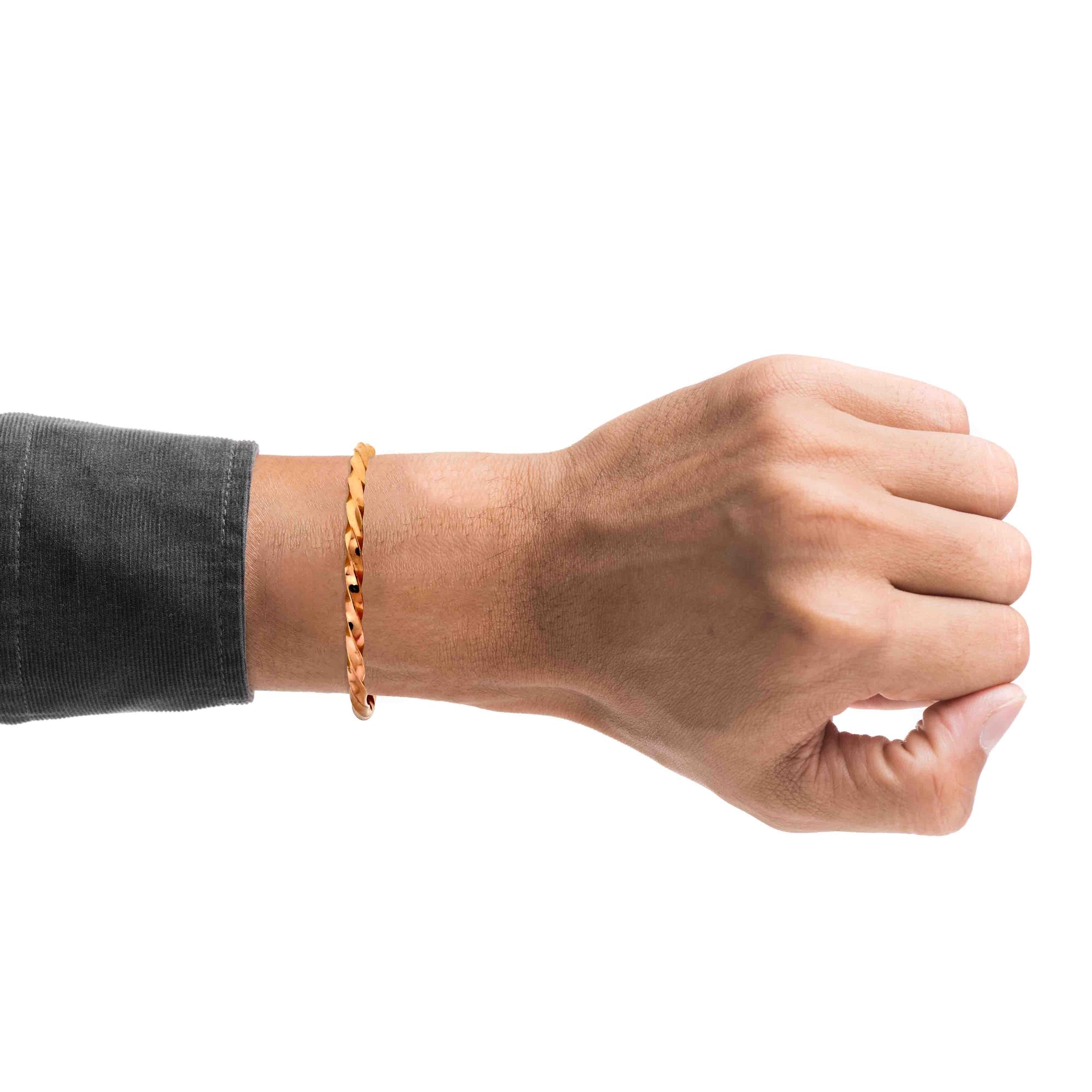
Red flag 1: Vague labeling that dodges the metal
If a listing never states the base metal, it’s usually because the base metal is not something they want you thinking about. “Copper tone” is the classic move. “Copper colored alloy” is another. If it’s real copper, they’ll say copper. If they don’t say it, assume it isn’t.
Red flag 2: Too-cheap pricing that makes no sense
Could you get a real copper bracelet for cheap? Sometimes, sure. But extremely low pricing often means thin plating, machine stamping, rough edges, and inconsistent sizing. You’ll feel it on the wrist. And you’ll see it on the surface after a week.
Red flag 3: Wild health promises
People ask about copper and pain relief all the time. I get it. But if a seller says the bracelet “cures arthritis” or “treats serious conditions,” that’s a big credibility problem. There’s a difference between “people enjoy wearing this” and “this is a medical device.”
If you want a grounded view that stays honest but still respects why people love copper, read: copper bracelets placebo effect or measurable experience.
Quick “should I trust this listing?” table:
| Listing says… | What it often means | What you should do |
|---|---|---|
| “Copper tone” | Not copper | Skip it |
| “Won’t tarnish” | Likely coated | Decide if you want coated |
| “Miracle relief” | Hype | Leave |
| No sizing info | Returns coming | Leave |
| Clear metal, clear policies | Real seller behavior | Keep reading |
Why Buy Your Real Copper Bracelet from John S. Brana (and what you can expect)
I design copper cuffs the way I’d want a customer to receive them: honest metal, comfortable edges, and sizing that’s spelled out. Is that glamorous? Not really. Is it what prevents headaches? Yep.
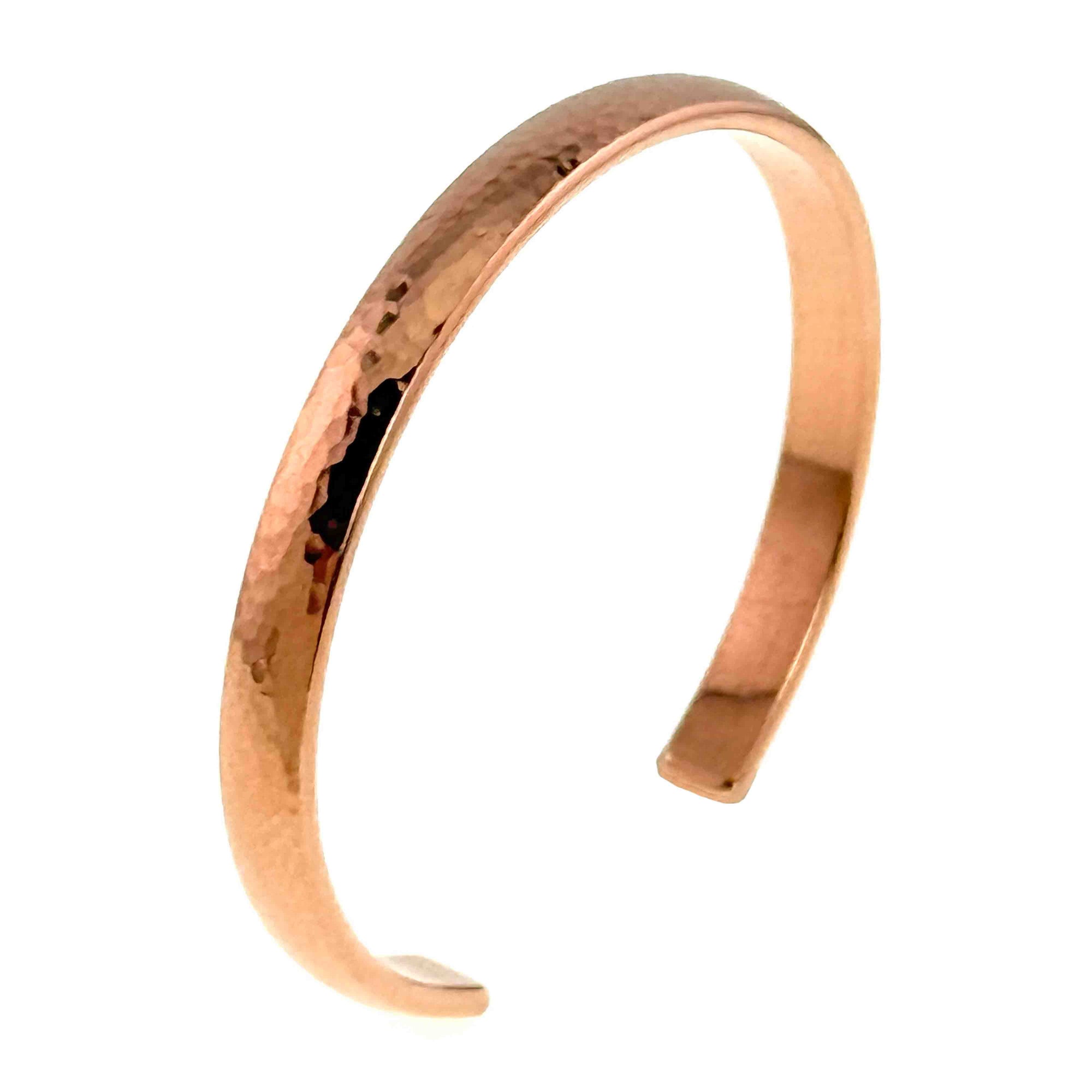
If you want to shop the full cuff lineup, go straight here: John S. Brana copper bracelet collection. If you’re the type who likes a broader view first, there are also copper band rings and copper earrings, but this page is about bracelets, so I’ll stay on cuffs.
Below are real examples, and I’m using one photo per piece, one time only, so you can compare texture and width without bouncing around.
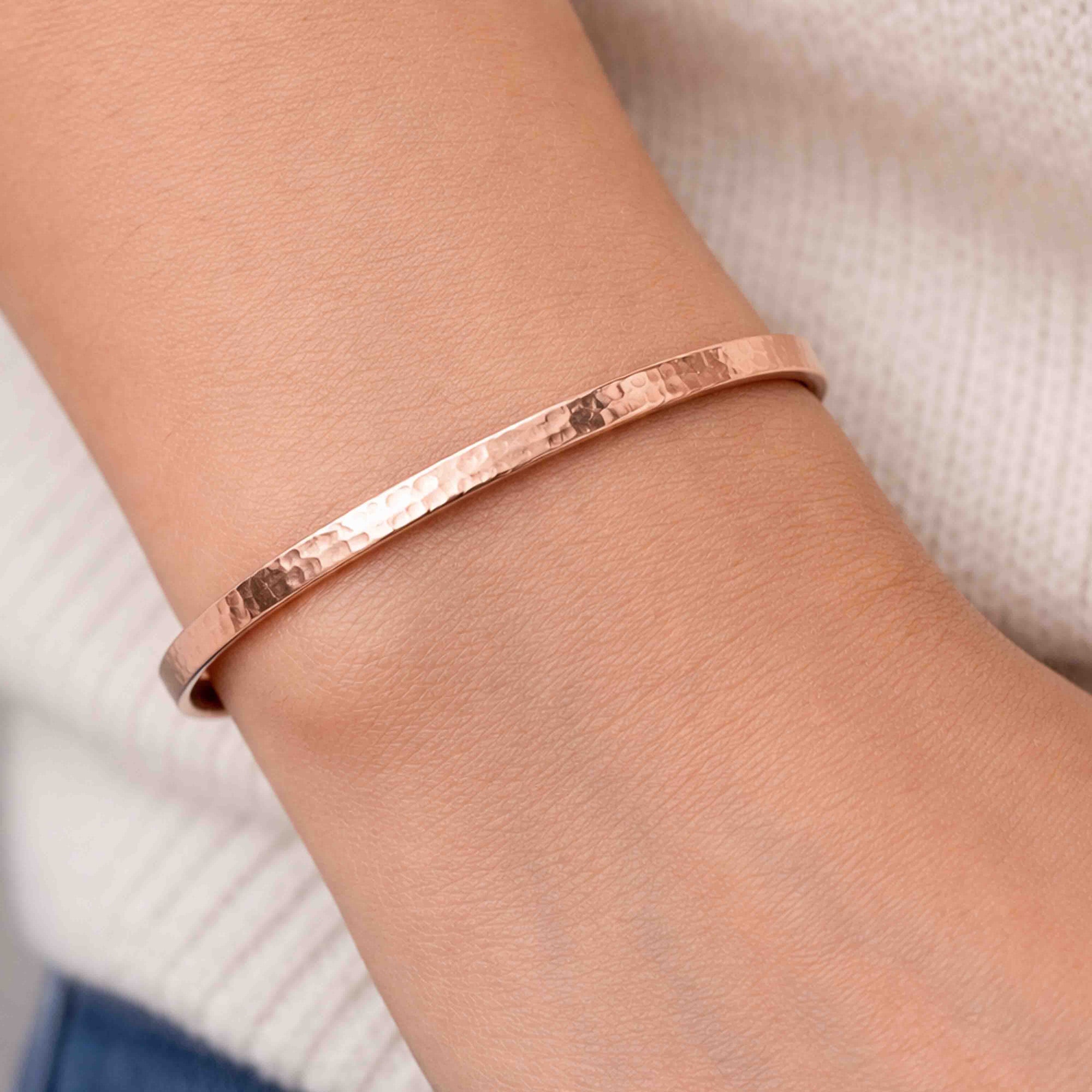
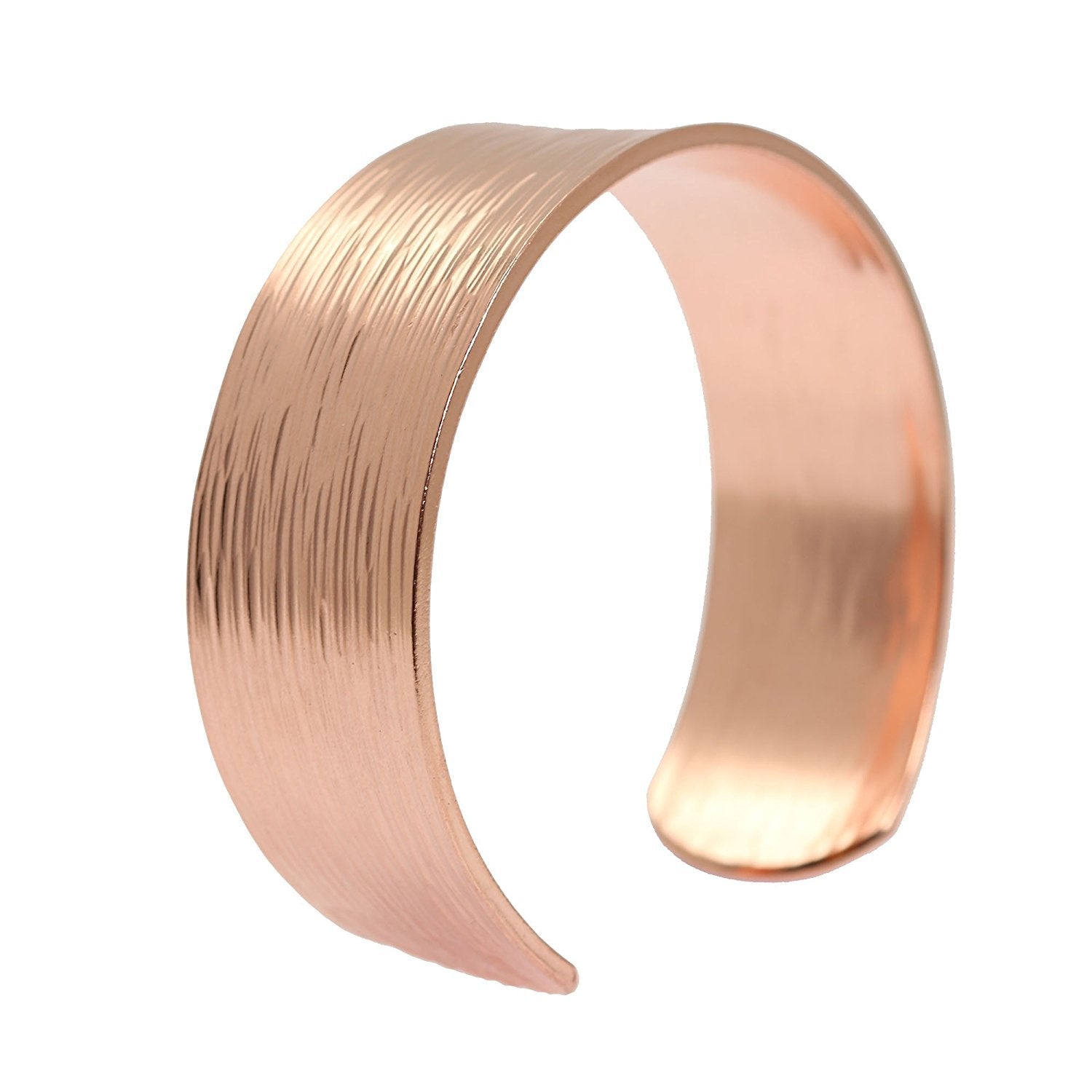
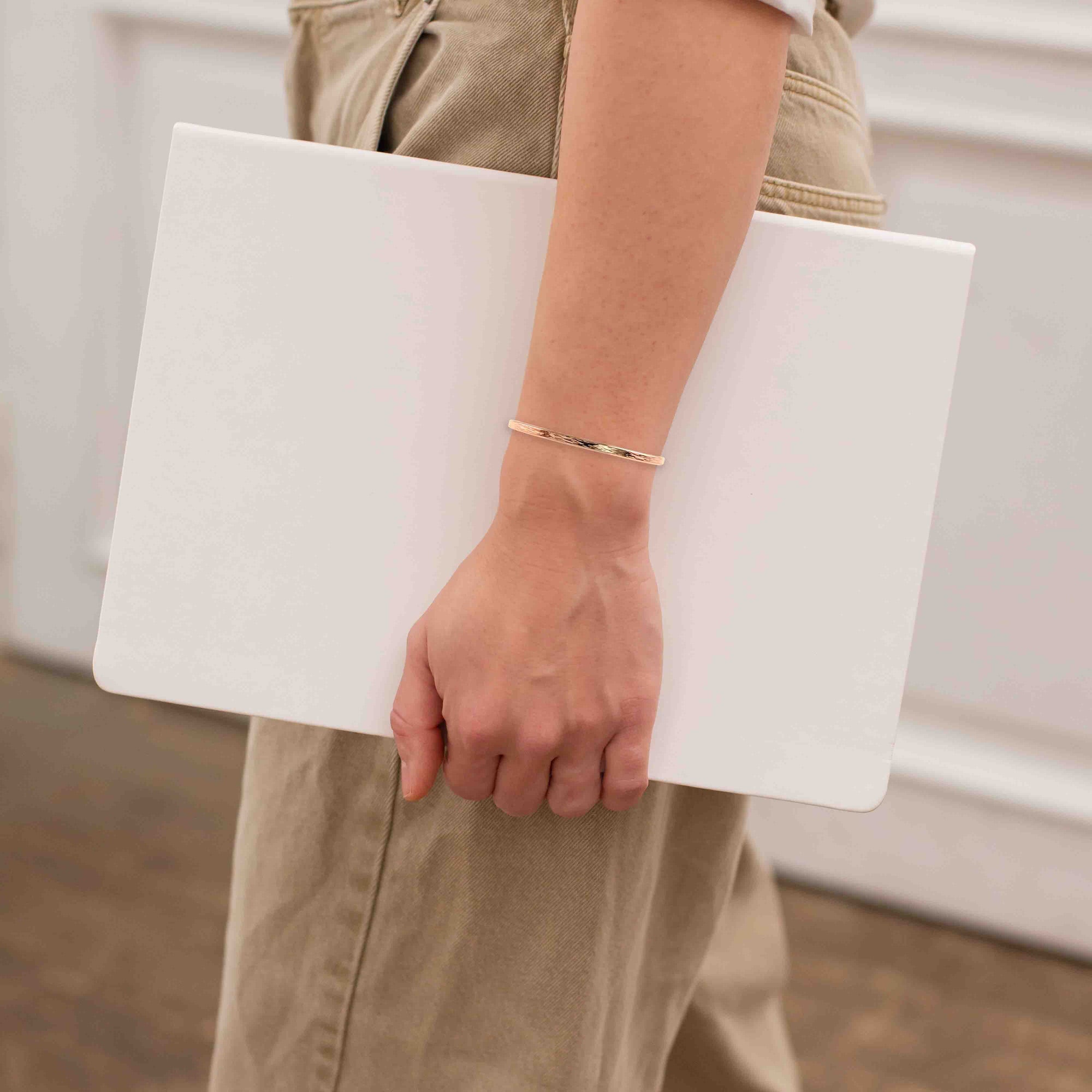
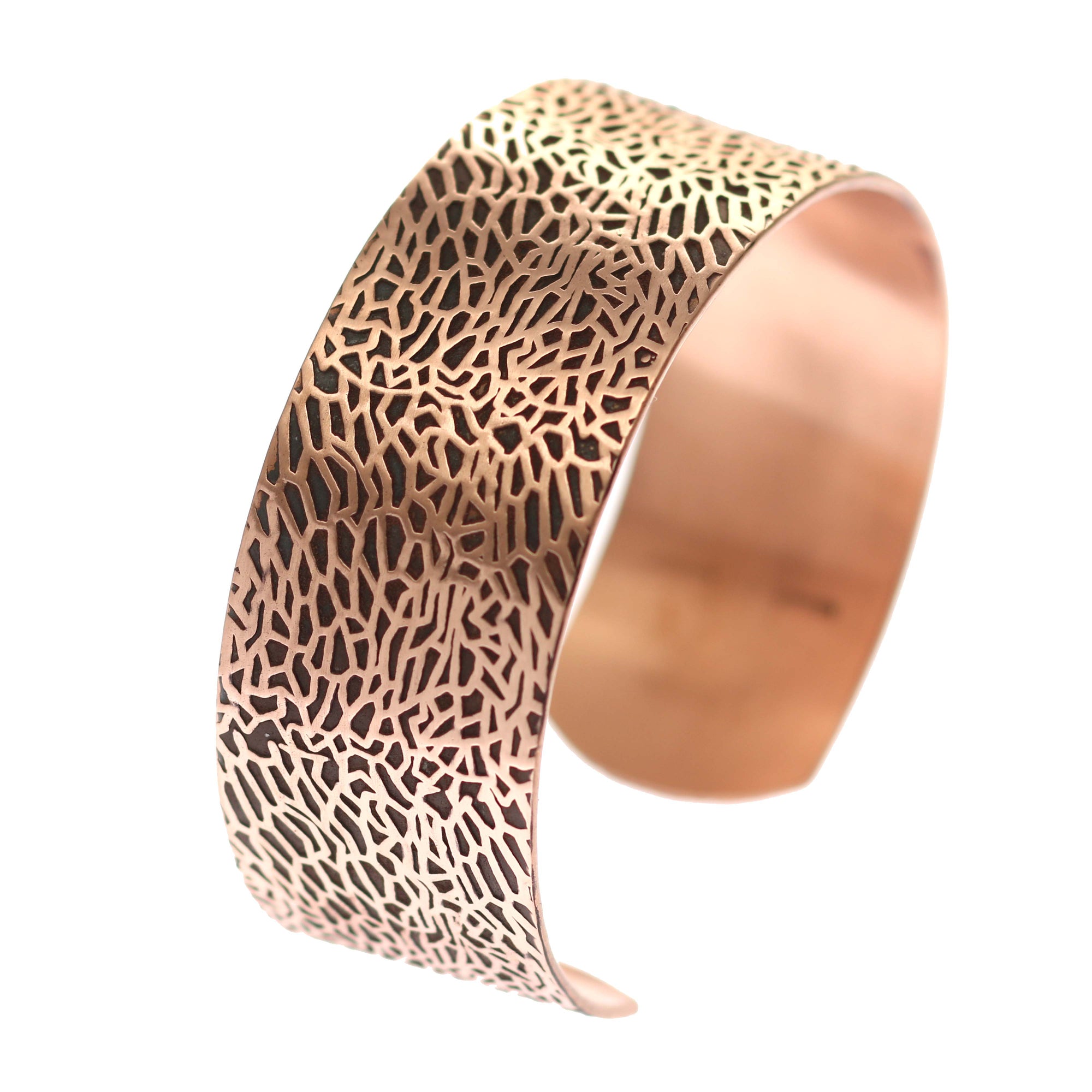
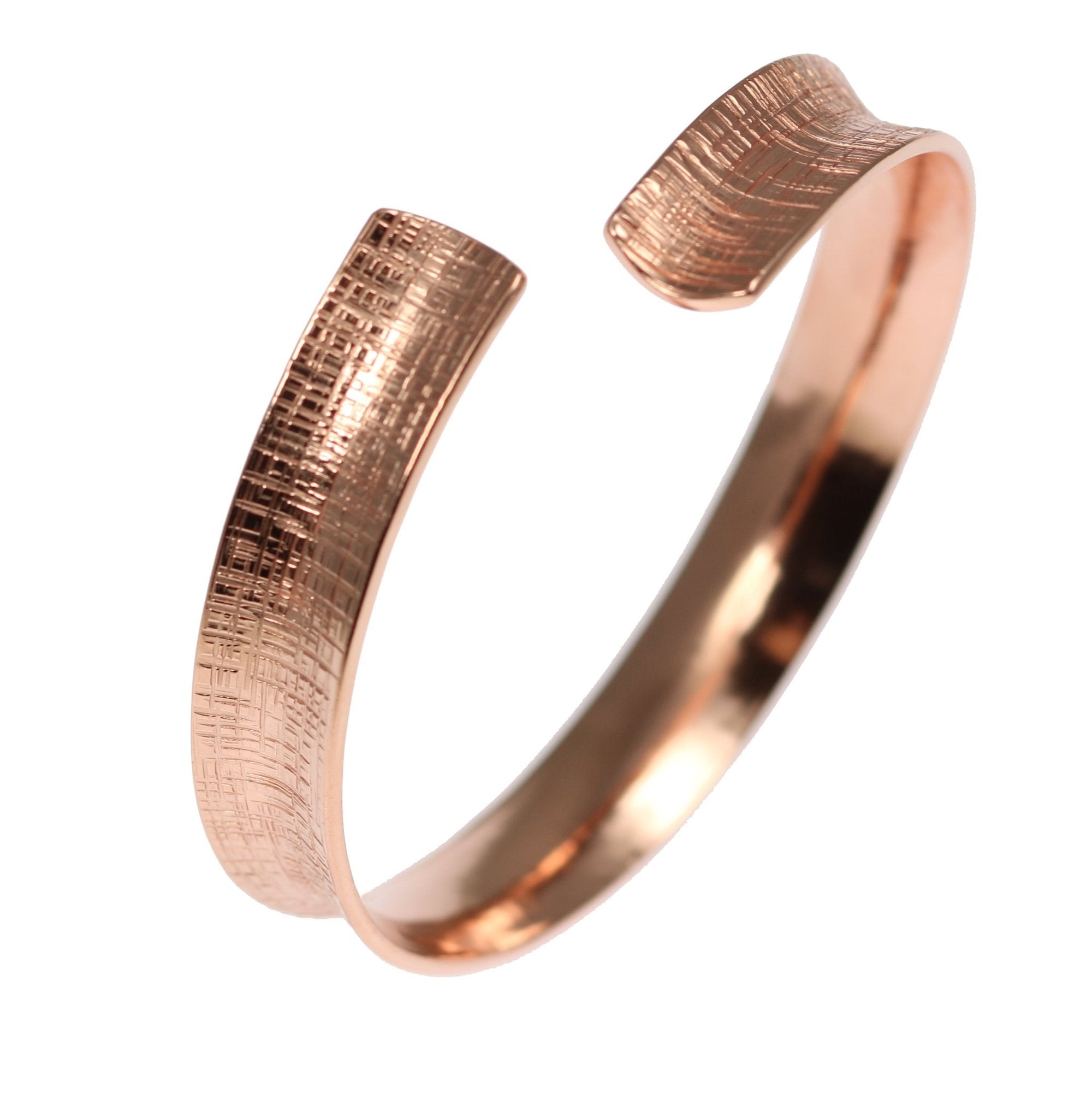
Tiny design note from the bench: texture isn’t just looks. It changes how a cuff hides everyday wear. Linen and bark textures are forgiving. Matte finishes look calm. Faceted edges feel crisp and modern. That’s not theory, that’s what I see when pieces come back years later.
What Have We Learned From Cuffs That Come Back Years Later?
In our experience, texture decides how a cuff ages. The 3.5mm Bark Copper Cuff Bracelet and the 3.5mm Linen Copper Cuff Bracelet come back with scratches that are hard to see. The patina settles into the grooves and makes the pattern stand out.
Smooth finishes show wear first. The 3.5mm Matte Copper Cuff Bracelet stays calm-looking, but small marks show sooner on the flat surface. That is why we suggest textured cuffs for people who wear a cuff every day.
Wide cuffs hold their shape best when they are worked. The Men's Embossed Sea Fan Solid Copper Cuff is pressed with a deep pattern. Embossing work-hardens the copper, so a full inch of metal stays rigid.
The saddle shape adds strength too. The Linen Anticlastic Copper Bangle Bracelet curves in two directions. That double curve keeps thin copper stiff without extra weight.
How to Measure Your Wrist and Choose the Right Copper Cuff (without guessing)

Want the easiest fit mistake? Ordering a cuff like it’s a stretchy bracelet. Cuffs aren’t stretch, they’re shaped metal. You can adjust them a little, but you should not be bending them every week. If you do, the metal gets tired. Metal has feelings. Kidding. But it does fatigue.
Here’s the method I tell customers, because it works and it’s not fancy:
- Wrap a flexible tape around your wrist just above the wrist bone.
- Pull it snug, but don’t crank it like you’re tying a shoe.
- Note that number.
- Add about 1/2 inch for comfort.
Why add extra length? Because cuffs have an opening. That opening matters for comfort and for getting it on and off without wrestling your hand. If you’ve ever had a cuff pinch your wrist, it’s usually sizing, not “bad copper.”
Example (real-world):
- Wrist measures 8 inches
- Add 0.5 inch
- You typically choose a cuff around 8.5 inches
Now the question people skip: “Should I go wider or slimmer?” Wider cuffs feel bolder and they sit more like a statement piece. Slim cuffs feel easy and daily. If the wearer is new to cuffs, a slimmer width can be a safer first pick. If they already wear watches and bracelets, they can handle width.
If you want more care guidance after sizing, I also keep a practical guide here: essential tips for caring for your handmade jewelry.
Fit reality list:
- Adjust once, maybe twice. Then stop fiddling.
- If it slides too much, sizing is off.
- If it bites your wrist, sizing is off.
- If it feels “just right,” do not mess with it.
What to Expect After Your Uncoated Copper Cuff Arrives (patina, skin marks, cleaning)
First wear is always the moment of truth. The cuff comes out bright, warm, and clean. Then real life happens. Air happens. Skin happens. And copper does what copper does.
Color change: how fast does it happen?
Sometimes you’ll see a shift in a few days. Sometimes it takes longer. If you live in a humid place, it can move faster. If you use lotion daily, it can move faster. If you wash your hands a lot and soap gets under the cuff, it can move faster. None of that means the cuff is low quality. It means it’s honest metal.
Skin marks: what’s normal, what’s not
Some wearers get green or dark marks where the cuff sits. That’s a common reaction between copper and sweat or skin oils. It usually washes off with soap and water. If you see a rash, itching, swelling, or pain, stop wearing it and talk to a professional. That’s not the “normal copper mark” situation. That’s your body saying “no thanks.”
Cleaning choices: bright again or let it age?
You get to choose your look. Some people love the deep brown glow that comes with time. Some people like a fresh penny color. Both are valid.
Simple cleaning options (pick one):
- Soft polishing cloth for light cleanup
- Lemon juice + salt for a quick brighten
- A copper cleaner used gently (always rinse and dry)
If you love patina, you can clean only the inside where it touches skin and leave the outside alone. That keeps the outer color rich while reducing marks. It’s a small trick, but it works pretty well, honestly.
If you’re buying copper as a 7th anniversary gift, here’s a focused guide: why copper jewelry is the perfect 7th anniversary gift.
Quick Comparison: John S. Brana Uncoated Copper Cuffs vs Typical Mass-Market “Copper” Bracelets
This is the part shoppers wish existed on every product page. So here it is, simple and blunt.
| Feature | John S. Brana uncoated cuffs | Typical mass-market “copper” bracelets |
|---|---|---|
| Base metal | Solid copper throughout | Often plated over base metals |
| Coating | Uncoated, made to patina | Often lacquered to stay bright |
| Production | Handcrafted in San Francisco studio | Bulk made, generic finishing |
| Design focus | Textured cuffs with comfort edges | Mixed styles, often thin |
| Transparency | Clear sizing and material language | Vague wording, limited sizing |
| Long-term wear | Patina deepens, surface stays true | Plating wears, color goes patchy |
One more question people ask: “Is this too ‘rustic’ for work?” Not if you style it like a clean accent. A slim matte cuff can look calm and modern. A wide embossed cuff looks bolder, so it can be the only jewelry piece in the outfit and still feel balanced.
If you want ideas for office outfits without overthinking it, this is worth a read: accessorizing business casual with copper jewelry.
Final Checklist Before You Click “Order”
If you only remember one thing, remember this: a real copper bracelet should be described clearly, sized clearly, and sold with honest expectations. If any of those are missing, it’s not worth the gamble. Even if the photos are cute. Photos lie sometimes. Words matter more.
Order-ready checklist (copy/paste this into your brain):
- Confirm the listing says solid copper or pure copper
- Confirm whether it is uncoated or coated
- Choose a width that fits the wearer’s style (slim vs bold)
- Pick a texture that fits daily life (hammered and linen hide wear well)
- Measure wrist and add about 1/2 inch for comfort
- Read policies and shipping details before paying
- Expect patina and possible skin marks if it’s uncoated
If you want to browse a full set of cuffs and decide based on texture, start here and compare styles side by side: copper bracelet collection.
Frequently Asked Questions
Q1. How can I tell if a “real copper bracelet” is plated?
Look for vague terms like “copper tone,” “copper finish,” or “copper coated.” Also check reviews for phrases like “turned silver” or “rubbed off.” Plated pieces often show patchy wear at contact points.
Q2. Will an uncoated copper cuff turn my skin green?
It can, for some people. It depends on sweat, skin oils, soaps, and body chemistry. The mark is usually harmless and washes off with soap and water.
Q3. Does copper jewelry have proven health benefits?
People report feeling better sometimes, but solid clinical proof for treating medical conditions is not established. Buy copper for design, symbolism, and the wearing experience.
Q4. How tight should a copper cuff fit?
Snug enough that it doesn’t spin constantly, but not tight enough to pinch. A cuff should sit comfortably and slide a little, not clamp.
Q5. Can I keep it shiny like new?
Yes, but you’ll need occasional cleaning. If you want “always shiny” with minimal care, copper may not be your best metal choice.
Q6. What’s the best copper cuff texture for everyday wear?
Hammered, linen, and bark textures are forgiving. They hide small scratches and fingerprints better than smooth copper.
Q7. Is copper a good 7th anniversary gift?
Yes. Copper is the traditional 7th anniversary material, and a solid cuff is a practical, wearable way to honor that milestone.
References
- Copper Development Association. Copper alloy C11000 and copper properties. https://www.copper.org/
- The Aluminum Association. Aluminum properties. https://www.aluminum.org/
- U.S. Federal Trade Commission. Guides for the Jewelry, Precious Metals, and Pewter Industries, 16 CFR Part 23. https://www.ecfr.gov/current/title-16/chapter-I/subchapter-B/part-23
- Richmond, S. J., et al. "Copper Bracelets and Magnetic Wrist Straps for Rheumatoid Arthritis." PLOS ONE, 2013. https://journals.plos.org/plosone/
- U.S. National Park Service. Statue of Liberty Statistics. https://www.nps.gov/stli/learn/historyculture/statue-statistics.htm

Also in Jewelry News Blog


Copper Bracelet Side Effects: Green Skin, Patina, and What Is Normal
Learn what is normal when wearing a raw copper bracelet, including green skin, patina, and natural color change over time. This article explains why these effects happen, how to reduce them, and how to care for uncoated copper cuffs so you know exactly what to expect from real copper jewelry.


Copper Jewelry Myths Explained: What’s True, What’s Not, and Why People Still Believe Them
Copper jewelry has long been linked to comfort, wellness, and old family stories, but what does the evidence really say? This article clears up common myths about copper bracelets, green skin, patina, arthritis claims, and daily wear, while explaining why copper jewelry still holds meaning through style, ritual, and personal connection.


Copper Bracelets: Placebo Effect Or Measurable Experience?
Do copper bracelets really work, or is it all in the mind? In this article, I take a closer look at the science behind copper cuffs, what wearers actually experience, and how belief and physical sensation can exist side by side. If you’ve ever wondered whether a solid copper bracelet offers real benefits or simply a meaningful ritual, this guide walks you through both perspectives in a clear, practical way.