
Copper Jewelry: What People Want to Know, Feel, and Experience


Key Takeaways
| Question people ask | Short answer | Where to explore next |
|---|---|---|
| Does copper jewelry really “do” anything or is it just pretty? | It looks beautiful and feels meaningful, but any health effect is personal, not promised. | Read this full guide, then check the complete copper jewelry guide. |
| Why does copper turn my skin green sometimes? | Your sweat and skin oils react with the metal and form harmless copper salts that wash off. | Compare different finishes in the copper jewelry collection. |
| Is it safe to wear a copper bracelet every day? | Most healthy adults can wear solid copper daily, unless they have a metal sensitivity or a medical issue that needs a doctor. | Learn more in the article on do copper bracelets really help with arthritis. |
| How do I pick a copper piece that actually feels right? | Focus on fit, width, skin contact, and whether you want raw patina or a sealed finish. | Try browsing focused copper bracelet designs and copper earrings collection. |
| Is copper better for style or for health? | Copper shines most as style, story, and ritual, not as medicine. | Check styling posts in the jewelry blog. |

Why Copper Jewelry Still Grabs People’s Attention
Why does copper jewelry keep showing up on wrists and ears when people could buy so many other metals instead? I ask myself that alot in the studio, and the honest answer is that copper simply feels alive in a way other metals do not. It changes color, it reacts with your skin, it carries stories from very old cultures, and people feel that even if they cannot explain it in fancy words.
As a designer at John S. Brana Handmade Jewelry, I see both men and women pause over copper far more than they plan to. They might come in thinking about silver or gold, but that warm glow pulls their eye back again and again. Why does that color hit so deep? It has a soft, earthy fire to it that looks kind on many skin tones and does not feel cold or distant.
Customers often tell me copper looks more “real life” than mirror bright metals. Do they mean it feels more grounded and less polished-up-perfect? Yes, pretty much. Copper shows small marks of hammering, texture, and time. That texture shows clearly in the wider handmade jewelry collection, where copper sits next to bronze, brass, and other metals, but still draws the eye.
Ancient stories also sit in the back of people’s minds, even if they do not think about them out loud. Who has not heard at least once that copper connects to energy, protection, or love in some old tradition somewhere? Does that prove anything medical? No, it does not. But it does shape how a person feels when they fasten a cuff or hook in an earring.
Here is a quick way to think about why copper still fascinates so many people:
- It looks warm and human, not sharp or icy.
- It changes with you over time, so it feels almost like it is “learning” your body.
- It carries cultural meaning about care, strength, and sometimes even romance.
- It fits casual outfits and more dressy ones without shouting too loud.
If you like reading the deeper roots and modern uses together, the long form copper jewelry articles are a good place to wander a bit.

What People Expect From Copper Jewelry Versus What They Actually Feel
What do most people secretly hope for when they slide on their first copper bracelet or ring? In my studio, the same three ideas come up again and again: less joint pain, better energy, and some kind of “clearing out” or balancing inside the body. Are those hopes wrong? No, they are human, but they are also bigger than what any piece of jewelry can honestly promise.
When I hand over a cuff, a customer might whisper that they heard copper helps arthritis. Another person will ask if a ring can help with thumb stiffness from phone scrolling. So what do I say to them? I tell them this: some people report comfort, some people feel nothing different at all, and science so far stays pretty skeptical.

You can see a deeper breakdown of that gap between marketing and reality in the article on do copper bracelets really help with arthritis. That piece looks at tests that compare copper to placebos, and the results are kinda all over the place in a boring way. Copper does not come out as a strong medical star there.
Here is how expectations often compare to what I hear later from real wearers:
| Area of hope | What people expect | What they usually report back |
|---|---|---|
| Joint pain or stiffness | Fast relief in a few days. | Sometimes gentle comfort after weeks, sometimes no change, sometimes “only my wrist turned green.” |
| Energy and mood | Feeling more balanced or grounded. | Very mixed. Some feel calmer, some feel nothing, some just love the look. |
| “Detox” or cleansing | Body pulling out “bad stuff.” | More of a story than something people can point to clearly in daily life. |
So is it useless to hope for anything at all from copper? I would not say that. If a bracelet makes you feel supported, or gives you a small daily ritual that reminds you to take care of yourself, that does matter in your real life. Emotional support is still a real kind of support, even if it does not come with lab charts.
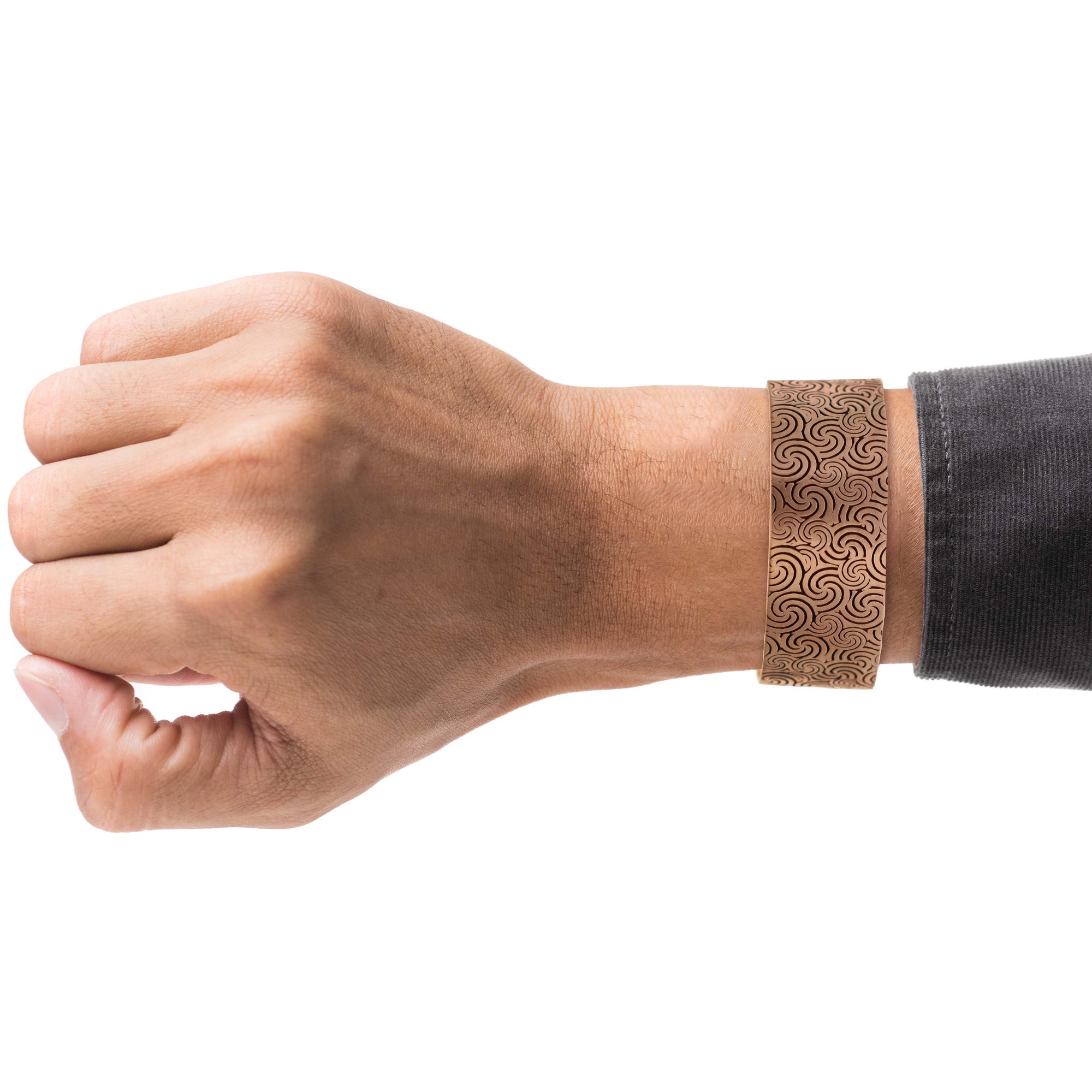
When people want a strong, grounded cuff that feels like a “companion” on the wrist, they often reach for pieces like the mens solid copper wave cuff. They talk about the weight, the pattern, and how it becomes part of their everyday routine, which in turn shapes how they feel, step by small step.
How Copper Jewelry Interacts With Skin, Sweat, And Daily Life
Why does copper turn some people’s skin green while other folks barely see a mark? This question comes up so often that I almost hear it before a customer opens their mouth. The short answer is that everyone’s skin chemistry, sweat, and daily routine are a bit different, and copper reacts with all of that in real time.
When copper sits against warm skin, tiny bits of the metal react with moisture and oils. Does this reaction hurt you in normal jewelry wear? For most healthy adults, no, it does not. It simply forms thin layers of copper salts that can tint the skin green or bluish for a while. Soap and water usually wash it off quite easy.
Slim cuffs like the 3.5mm Chased Copper Cuff Bracelet show this very clearly, because they hug the wrist and pick up sweat where the pulse is strong.

Some people barely notice color changes. Why is that? It might be lighter sweat, less time in the piece, or simply different body chemistry. Other people see deep green bands on the wrist within a day. They often get a bit worried at first, but once I explain what is happening, they relax and either accept it or choose a sealed finish instead.
Here are the main ways copper interacts with your body and environment:
Skin color changes
- Shows up most on wrists and fingers.
- Stronger in hot weather, humid rooms, or during workouts.
Tarnish and patina
- Copper darkens in air and moisture over time.
- Hand washing, cleaning products, and swimming can speed this process.
Light surface wear
- Tiny amounts of metal can gradually leave the surface.
- You may notice this more on very thin cuffs or rings over many years.
If you want to explore pieces that lean into this “living metal” nature, the broader copper jewelry collection and focused copper bracelet designs show how different textures and widths change the whole feel on the arm.
For some people with strong metal sensitivities, copper can cause redness or itch instead of just color marks. Should they keep wearing it anyway? I usually tell them to stop wearing that piece, listen to their body, and talk with a health professional if the reaction lingers or feels intense.

What Copper Jewelry Is And What It Is Not
So what is copper jewelry actually offering you, if we strip away hype and fear both? This is the question I try to answer honestly with every new design, because it shapes how I talk with customers and how I sleep at night too. Copper has strengths, it has limits, and those lines matter a lot for trust.
Copper jewelry is:
- A warm toned metal that reacts with skin and air and builds character over time.
- A carrier of stories about protection, love, strength, and prosperity from many cultures.
- A piece of daily ritual: you put it on, you feel it, you notice it when you move.
Copper jewelry is not:
- A proven cure for arthritis, joint disease, or circulation issues.
- A magic “detox” tool that can replace medical care.
- A good idea if it is very low quality with mystery metals mixed in.
How do I see this line play out in real life? When I craft hammered cuffs and rings, I see how the metal holds up year after year. I see customers come back in with the same bracelet five years later, darker and richer in color yet still solid. They rarely talk about miracles. They talk about memories, outfits, and small comforts.
For a deeper walk through these ideas, you can read the complete copper jewelry guide. That article goes step by step through facts, care tips, and the difference between marketing claims and what we can actually see and test.
Many people also look for copper pieces that match a special life moment, like a wedding year or long relationship. Should copper ever be part of that? Yes, it can fit very well, especially for the 7th wedding anniversary, where copper is a classic theme. If you want ideas there, the article on why copper jewelry makes a strong 7th anniversary gift lays out some simple, real examples.
How To Choose Copper Jewelry That Actually Feels Right On You
How do you know which copper piece will feel right before you even wear it a full day? This might be the biggest practical question people have, and it is where small design details matter more than folks think at first glance.
I usually ask three things:
- Where do you want to feel the copper on your body?
- How snug or loose do you like your jewelry to sit?
- Are you okay with patina and green marks, or do you want things to stay bright?
Rings are a good place to see the difference clearly. A wider band like the 10mm Linen Copper Cuff Ring offers more skin contact and a bolder look.

A slimmer band such as the 5mm Hammered Copper Cuff Ring feels lighter and more subtle. And a design that opens in front, like the 5mm Hammered Copper Bypass Ring, lets you adjust fit around knuckles that swell during the day.


So how do you decide among all these options without getting lost? Here is a simple checklist I share with clients:
Fit and comfort
- Cuffs should touch but not pinch.
- Rings should slide over the knuckle without painful forcing.
Width and visual weight
- Wide pieces feel more like a “statement” on the body.
- Narrow pieces layer well and feel almost like a second skin.
Finish choice
- Raw copper develops patina and more skin color.
- Sealed copper (earrings and necklaces) stays bright longer and leaves fewer marks.
If you want more help picking bracelet widths and shapes, the guide to mens copper bracelets gives clear examples, and the guide to womens copper earrings does the same for different face shapes and earring lengths.
Real Stories From Copper Bracelet Wearers In My Studio
What do real people actually tell me after they have worn copper for months, not just days? These quiet stories are what shape my own view of copper jewelry effects a lot more than any single ad or article.
I hear three main kinds of feedback:
- “It changed how my wrist feels.”
- “It did not change my body, but I love it anyway.”
- “It only changed my skin color, so I stopped.”
Is one of these groups more “right” than the others? I do not think so. Each person brings their own body, history, and hopes to the bracelet. That mix shapes what they feel.
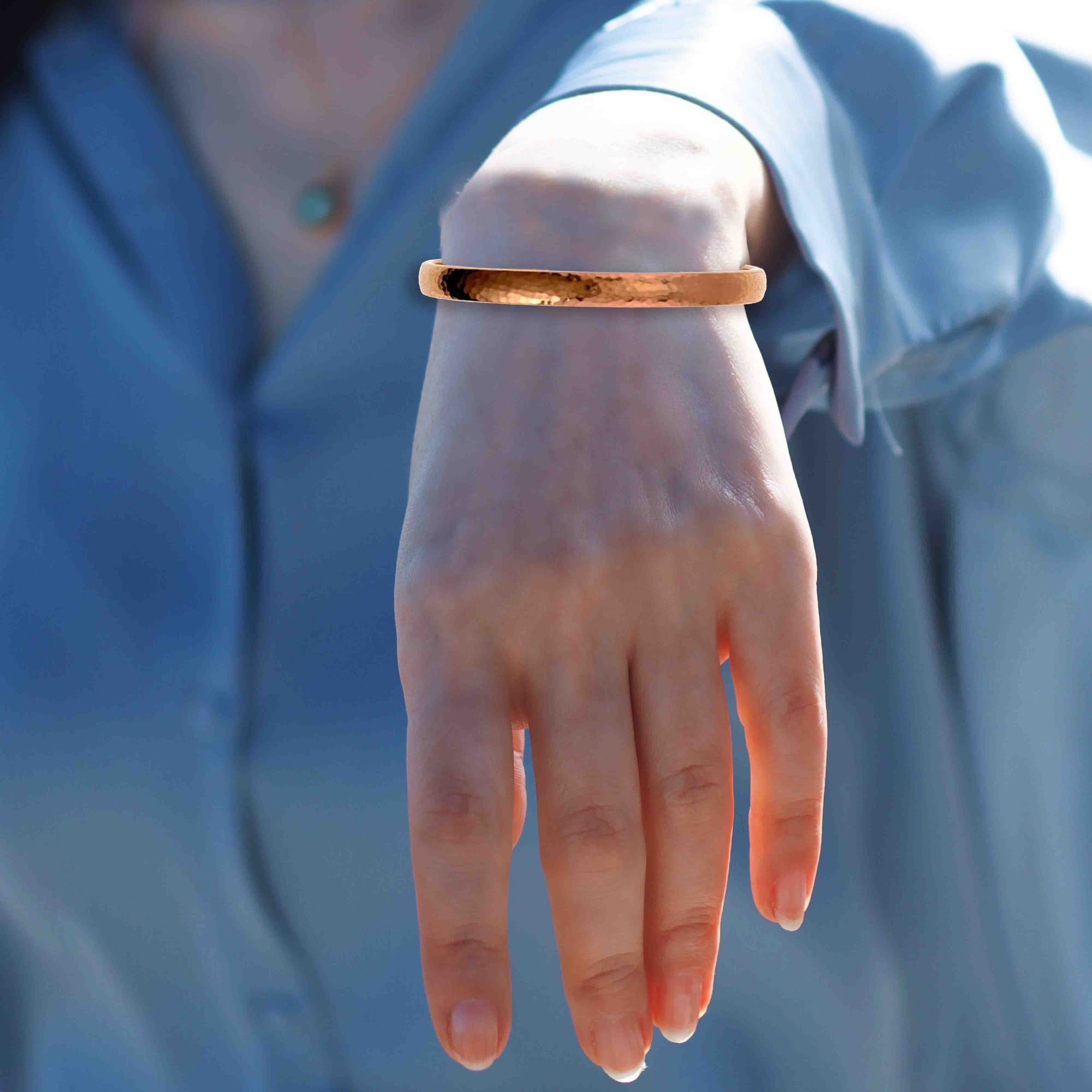
Some long term wearers of the 7mm Domed Hammered Copper Cuff Bracelet tell me their wrist feels warm and “held” in a way they enjoy, though they cannot prove why.

Others bought the same cuff just because they saw a friend wearing one and liked the look. They feel no body change at all, but they still reach for the cuff most mornings out of habit. That habit itself becomes a kind of anchor.
If you prefer to see how bracelets sit and move on real wrists before you decide, the copper bracelet video playlist shows different widths and textures in motion, which answers many small fit questions before you even ask them out loud.
Here is how I mentally sort these stories:
- If someone feels better and still follows their doctor’s plan, that seems okay.
- If someone feels nothing but loves the look, that is also a win in daily life.
- If someone feels worse or very irritated, they should stop wearing copper and talk to a medical professional.
These are simple, human level rules, and they keep expectations honest while still leaving room for personal experience, which matters more than perfect theory in the end.
Styling Copper Jewelry So It Matches Real Life, Not Just Photos
How do you wear copper so it feels like part of you, instead of a costume you only put on for photos? This question hits both style and comfort, and it is one I think about with every new earring sketch on my desk.
For bold, playful days, many clients reach for pieces like the Chili Pepper Copper Drop Earrings. Why do they love these so much? The tapered lines make the neck look graceful, and the warm copper glow sits nicely next to denim, black tops, and even simple dresses.

On softer, more nature inspired days, designs like the Copper Ginkgo Leaf Earrings speak to people who want quiet movement and organic shapes.

For someone who likes plant shapes with a stronger edge, the Monstera Copper Leaf Earrings answer that question. They frame the face with bold cutouts that still feel grounded, not harsh.

So how do you fit these into real outfits without overthinking things too much? Here are a few easy patterns I suggest:
- Pair one statement copper piece with simple clothing.
- Keep other metals on the light side so copper can breathe visually.
- Use copper to warm up cool colors like navy, charcoal, or deep green.
If you want step by step outfit suggestions, you can skim wearing copper jewelry with style, how to style copper earrings for any occasion, and accessorizing business casual with copper jewelry. Those posts show how copper can move from office to dinner without feeling out of place.
For more options, the copper earrings collection and copper necklace styles let you test which shapes and lengths match your face and neckline best.
How Copper Jewelry Changes Over Time And How To Care For It
What will your copper jewelry look like in a year, or five years, if you actually wear it alot? This might sound like a small thing now, but it becomes a big deal later if you either love patina or hate it with a passion.
Copper will darken, spot, and soften in shine over time. Is that a flaw or a feature? That depends on you. Many clients bring in older cuffs that look richer and deeper in tone, and they smile when they show them. Others come in worried that their bracelet has “gone bad” because it no longer shines like new.
Pieces like the 4.75mm Hammered Copper Cuff Bracelet show aging especially well, because the hammered texture catches both dark and bright highlights as the metal changes.
To keep care simple, I usually share this table:
| Your goal | What to do most of the time | What to avoid |
|---|---|---|
| Keep copper bright | Wipe after wear, store dry, use gentle polish when it looks dull. | Harsh cleaners, rough scrubbing pads, long soaks in strong chemicals. |
| Let copper patina | Wear often, wipe lightly, avoid heavy polishing. | Over cleaning, strong dips that strip color you enjoy. |
| Reduce green skin marks | Choose sealed or coated pieces, remove for heavy sweating. | Long hot tub sessions, pool chlorine, strong soaps under cuffs. |
If you want to see how hammered surfaces hold up through seasons, posts like hammered copper jewelry fall trend and top copper cuff bracelets show real pieces styled after plenty of wear.
For people who like to follow seasonal ideas or explore new patina friendly shapes, the articles rising trend of copper cuffs and fall 2025 copper jewelry designs give visual examples that are easy to compare.

Where To Go Next If You Want To Explore Copper Jewelry Deeper
So where should you go from here if copper jewelry still sits in your mind after all this? The answer depends on what you are most curious about right now.
Do you want more earrings first? The articles best copper earrings to brighten your look and top rated handmade copper earrings 2025 pull together designs that real customers keep choosing.
Are you wondering how copper fits into office life without feeling too loud? The piece on accessorizing business casual with copper jewelry gives easy, repeatable outfits.
If you enjoy reading, the main jewelry blog and the focused copper jewelry articles act like a simple library where you can pick topics based on mood.
For people who like video more than text, the John Brana YouTube channel shows pieces moving in real light, and the store details on Google help you confirm that the brand, address, and reviews all line up in a solid way.
Finally, if you just want to scroll through designs at your own pace, the copper bracelet designs, copper earrings collection, copper necklace styles, and full copper jewelry collection make a good quiet evening with a cup of tea.
And if you like mixed metal ideas too, many customers step from these pages into the wider handmade jewelry collection where bronze, brass, and other metals sit side by side with copper in a way that sparks a lot of new outfit ideas.
Frequently Asked Questions About Copper Jewelry
How long should I wear a copper bracelet before I know if it “works” for me?
Most people who feel any effects report it after 2 to 4 weeks of steady wear. If you feel nothing at all by then, it is fair to see it mainly as a style and ritual piece.
Is it okay if my wrist turns green from copper jewelry?
Yes, for most healthy adults that green color is just a surface reaction and washes off with soap and water. If you get itching, pain, or rash instead, stop wearing the piece and talk with a health professional.
Can I sleep in my copper bracelet or ring?
Many people do, but if the piece feels tight at night or catches on bedding, it is better to take it off. Comfort and safe movement matter more than squeezing one more hour of wear.
Should I wear copper on my left wrist or right wrist for better results?
There is no solid proof that one side works better. Most people choose the wrist that feels more natural or less in the way for daily tasks.
Can I shower or swim with copper jewelry on?
A quick shower will not usually hurt solid copper, but it can speed up tarnish. Pools and hot tubs with chlorine are harder on copper, so taking pieces off first is usually the safer call.
Is sealed copper worse than raw copper for “effects”?
Sealed copper touches the skin less, so people who care about “energy” often prefer raw metal. People who dislike green marks usually go for sealed pieces, but there is a tradeoff. I stopped coating my copper cuffs and bangles because the clear finish wore off in patches, left ugly splotches, and made it much harder to polish the metal back to an even shine.
How do I clean copper jewelry at home without ruining it?
Use a soft cloth and gentle copper or jewelry cleaner. Avoid strong dips unless you are okay with stripping patina. Always rinse and dry fully so moisture does not sit on the surface.
Is copper jewelry a good idea for a 7th anniversary gift?
Yes, many couples use copper for the 7th year. It feels personal, warm, and grounded, and you can see more ideas in the article on why copper jewelry makes a strong 7th anniversary gift.

Also in Copper Jewelry Blog


Copper Jewelry Myths That Won’t Die (And Why They Persist)
Copper jewelry myths have been repeated for years, but most of them miss the real story. This guide explains why copper turns skin green, how patina actually protects the metal, and what separates solid handcrafted copper from plated pieces. Clear answers. No hype. Just facts that help you choose with confidence.


What People Mean When They Say Copper Jewelry “Stops Working”
Copper cuff seem to “stop working”? This short guide explains what people really mean when copper jewelry stops working, why green marks fade, how patina and fit change over time, and simple steps to check your bracelet before you give up on it.


How Long Does It Really Take for a Copper Bracelet to Show Results?
Slip on a copper bracelet and the first changes often show up faster than people expect, but not always in the ways they imagine. This guide explains what many wearers notice in the first days, weeks, and months, from surface patina and skin contact to longer-term comfort and everyday wear habits.